
Plantar Fasciitis Home Treatment Not Working? Stretches, Strength, and When to Try Shockwave in Hinsdale
By Dr. Steve Petzel, DC, Adisi Health Center, Hinsdale, IL
If you’ve been stretching, icing, and buying new inserts for plantar fasciitis and your heel still hurts, two home exercises have solid research behind them, and if several weeks of doing them right hasn’t helped, shockwave therapy is the next step. At Adisi Health Center in Hinsdale, Dr. Steve Petzel examines your heel to see if shockwave is a fit.
Most of the plantar fasciitis patients we see in Hinsdale, Oak Brook, Western Springs, and Clarendon Hills have already tried the internet’s to-do list: roll a frozen water bottle, buy a night splint, swap shoes, stretch the calves. Some of that helps. Some of it is done in a way that doesn’t help much. Here’s what the studies say actually works at home, how long to give it, and when plantar fasciitis treatment near me in Hinsdale makes more sense than another month of waiting.
What is plantar fasciitis?
Plantar fasciitis is irritation and breakdown of the plantar fascia, the thick band of tissue running from your heel bone to your toes that supports your arch.
The classic sign is a sharp, stabbing pain under the heel with your first steps in the morning or after sitting, which often eases as you walk and then returns after a long day on your feet. If you’re not sure that’s what you have, read plantar fasciitis or something else? Common causes of heel pain.
What is the best stretch for plantar fasciitis?
The plantar fascia-specific stretch is a seated stretch where you pull your toes back toward your shin to stretch the arch itself, not just the calf.
In a randomized trial of 82 people with chronic heel pain, this stretch beat the standard standing calf (Achilles) stretch for worst pain and first-step pain after eight weeks (DiGiovanni et al., 2003). At a two-year follow-up, 94% of patients reported less pain and 92% were satisfied (DiGiovanni et al., 2006).
How it was done in the studies:
- Sit and cross the sore foot over your other knee.
- Grab your toes and pull them back toward your shin until you feel a stretch in the arch.
- Run your other thumb along the arch. It should feel firm, like a guitar string.
- Hold for 10 seconds. Repeat 10 times.
- Do it 3 times a day, and always before your first steps in the morning and before standing after sitting a long time.
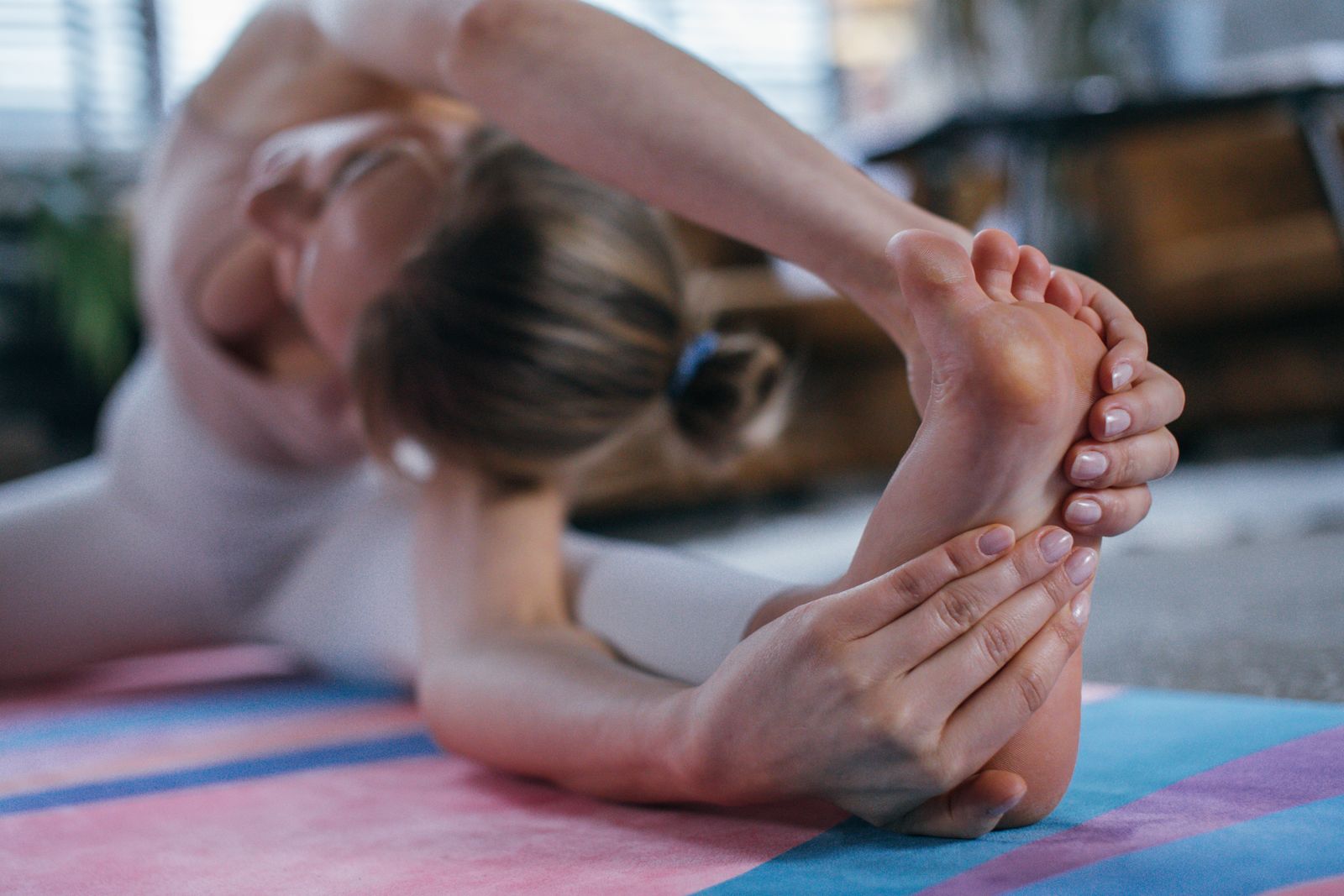
Pulling the toes back stretches the plantar fascia directly. Do it before your first steps out of bed.
Do heel raises help plantar fasciitis?
Yes. Slow, heavy heel raises strengthen the calf and load the plantar fascia in a way that helps it remodel.
In a randomized trial of 48 people, everyone got shoe inserts. One group added the plantar fascia stretch daily; the other did single-leg heel raises with a rolled towel under the toes every other day. At three months, the heel-raise group’s foot function scores were significantly better. By six and twelve months both groups had improved similarly, so strength training may simply get you there faster (Rathleff et al., 2015).
The basic idea:
- Stand on the sore foot with a rolled towel under your toes (on a step if you can).
- Rise up slowly (about 3 seconds), pause, and lower slowly (about 3 seconds).
- Start with a number you can do with good form, every other day, and add load with a backpack as it gets easier.
If heel raises spike your pain, stop and get examined first.
Why isn’t my plantar fasciitis getting better with stretching?
The most common reasons we see:
- Wrong stretch. Calf stretches alone miss the arch.
- Skipping the morning stretch. Those first steps out of bed are when the tissue gets re-irritated.
- Doing it for a week, not months. The studies above measured results at 8 weeks to 3 months.
- Too much load, too soon. Long shifts on hard floors or ramping up running. See plantar fasciitis from standing all day and can you run with plantar fasciitis?
- It’s chronic tissue breakdown. After many months, the fascia can get stuck in a “failed healing” state where stretching alone isn’t enough. Read more in does plantar fasciitis go away on its own?
Supportive shoes and inserts help many people, but they work best alongside the right exercises.
How long should you try home treatment before getting help?
| How long you’ve had heel pain | What we usually suggest |
|---|---|
| Under 6 weeks | Daily plantar fascia stretch, supportive shoes, ease back on the activity that flares it |
| 6 weeks to 3 months, improving | Keep going and add heel raises |
| 3+ months, not improving | Get examined and ask whether shockwave is right for you |
| Pain getting worse, or swelling, numbness, or pain at rest | Get examined now |
Does shockwave therapy work for plantar fasciitis?
Shockwave therapy (extracorporeal shockwave therapy, or ESWT) uses strong acoustic pressure pulses delivered through the skin to calm pain and restart the body’s repair response in tissue that has stopped healing.
For stubborn heel pain, the research is strong:
- FDA multicenter trial (250 patients): Three weekly sessions of focused shockwave reduced heel pain by 69.2%, compared with 34.5% for placebo, at 12 weeks (Gollwitzer et al., 2015).
- Network meta-analysis (22 randomized trials, 2,299 patients): Shockwave at every intensity level studied was more effective than placebo for plantar heel pain (Zhao et al., 2025).
At Adisi Health Center we use FDA-cleared Storz Medical radial and focused shockwave. Our main shockwave therapy in Hinsdale page explains how treatment works, and plantar fasciitis shockwave therapy in Hinsdale goes deeper on the heel.
Should you keep stretching during shockwave therapy?
Yes. Shockwave and stretching work better together than shockwave alone.
In a randomized trial of 152 people who’d had heel pain for at least a year and had already failed three or more treatments, those who did radial shockwave plus the plantar fascia-specific stretch improved significantly more at two and four months than those who had shockwave alone. Nearly twice as many were satisfied (59% vs. 32%). By two years both groups had improved similarly (Rompe et al., 2015).
That’s why we pair shockwave with a home program. Curious how many visits it takes? See how many shockwave sessions do I need? and does shockwave therapy hurt?
Is shockwave therapy safe for heel pain?
Most people feel firm tapping and mild discomfort during treatment, and there’s no downtime. In the FDA trial, temporary pain and swelling were the only device-related side effects (Gollwitzer et al., 2015). Shockwave is generally avoided during pregnancy, over a tumor or infection, and in people with bleeding disorders or on certain blood thinners. More in is shockwave therapy safe?
See a medical doctor promptly if heel pain follows a fall or injury, comes with numbness or tingling, redness and warmth, fever, or pain that’s severe at night or at rest.
Getting plantar fasciitis treatment near me in Hinsdale
Adisi Health Center
534 Chestnut Street, Suite 240, Hinsdale, IL 60521
(630) 887-1900
We’re a short drive from Oak Brook, Clarendon Hills, Western Springs, Downers Grove, La Grange, Burr Ridge, and Westmont. Every visit starts with an exam. No referral is needed, and we offer a free 15-minute phone consult if you’d like to ask questions first.
Frequently asked questions about plantar fasciitis home treatment and shockwave in Hinsdale
What is the best stretch for plantar fasciitis?
The seated plantar fascia-specific stretch, pulling your toes back toward your shin, held 10 seconds, 10 times, 3 times a day. In a randomized trial it beat the standard calf stretch.
Do heel raises help plantar fasciitis?
Yes. In one trial, slow single-leg heel raises with a towel under the toes every other day improved foot function faster than stretching alone at three months.
Why isn’t my plantar fasciitis getting better with stretching?
Common reasons are doing only calf stretches, skipping the morning stretch, not giving it enough weeks, too much standing or running, or long-standing tissue breakdown that needs more than stretching.
How long should I try home treatment before seeing someone?
If heel pain hasn’t improved after about three months of consistent home care, or it’s getting worse, it’s time to be examined.
Does shockwave therapy work for plantar fasciitis?
Yes. In an FDA multicenter trial, focused shockwave cut heel pain by 69.2% versus 34.5% with placebo at 12 weeks.
Should I keep stretching during shockwave therapy?
Yes. A randomized trial found shockwave plus plantar fascia stretching worked better than shockwave alone at two and four months.
I live in Western Springs. Where can I get plantar fasciitis treatment near me?
Adisi Health Center at 534 Chestnut Street, Suite 240, in Hinsdale offers radial and focused shockwave therapy, a short drive from Western Springs, Oak Brook, and Clarendon Hills. No referral is needed.
If your heel still hurts after doing everything right at home, we’d be glad to take a look. Book a visit or call (630) 887-1900.
