
Can You Run With Plantar Fasciitis? Shockwave Therapy for Runners’ Heel Pain in Hinsdale
Short answer: Many runners can keep running with mild plantar fasciitis if they cut back on mileage and the heel pain stays low and doesn’t get worse the next morning, but sharp pain that makes you limp is a sign to stop and get it treated. When heel pain keeps coming back for months, shockwave therapy is a proven, non-surgical way to help the plantar fascia heal. In a placebo-controlled trial of runners with heel pain lasting over a year, shockwave cut their morning heel pain by about 70% at 6 months. At Adisi Health Center in Hinsdale, Dr. Steve Petzel treats runners with Storz Medical radial and focused shockwave, and you can start with our $249 New Patient Special, which includes your exam and first shockwave treatment. Call (630) 887-1900.
Why do so many runners get plantar fasciitis?
The plantar fascia is a thick band of tissue that runs along the bottom of your foot from your heel to your toes. Every time your foot hits the ground on a run, that band stretches and absorbs the load. Over thousands of steps a week, small amounts of damage can add up faster than your body repairs them, especially near the heel bone where the fascia attaches.
It’s one of the most common running injuries there is. A 2021 systematic review of running-related injuries found that plantar fasciitis was one of the five most common injuries in runners, along with Achilles tendinopathy, shin splints, runner’s knee, and ankle sprains (Kakouris et al., Journal of Sport and Health Science, 2021; PubMed 33862272).
Common triggers we hear about from runners in Hinsdale, Western Springs, Downers Grove, and the surrounding suburbs include:
- Ramping up mileage too fast, like when training for a fall half marathon or a Turkey Trot
- Worn-out running shoes or a sudden switch to a very different shoe
- Tight calves and Achilles tendons, which put more pull on the bottom of the foot
- More hills or speed work than your feet are used to
- Standing all day at work and then running on tired feet
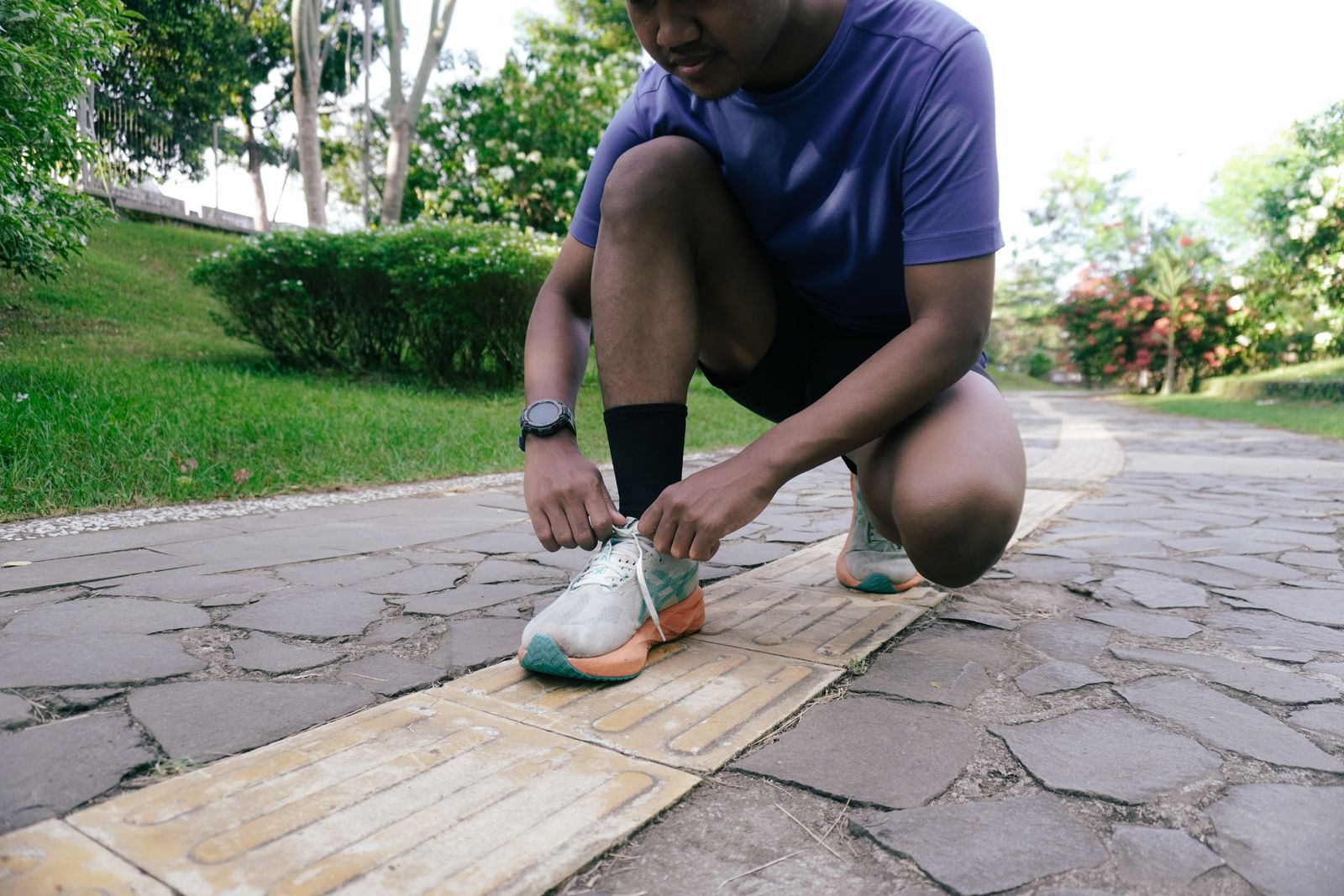
How do I know if my heel pain is plantar fasciitis?
The classic signs of plantar fasciitis are:
- Sharp pain on the bottom of the heel with your first steps in the morning
- Pain that comes back after you sit for a while and then stand up
- Heel pain that often eases during a run once you warm up, then feels worse afterward or the next morning
- Tenderness when you press on the inside bottom of the heel
That “it feels fine once I get going” pattern is exactly why so many runners keep training through it for months. The pain backs off while you run, so it’s easy to ignore until it’s there every morning.
Can you keep running with plantar fasciitis?
It depends on how bad the pain is and which way it’s trending. Here’s a simple way to think about it:
- Probably OK to keep running, with less mileage: The pain is mild, it fades as you warm up, you aren’t limping, and your heel doesn’t feel worse the next morning.
- Time to back off and get it checked: The pain is sharp, you’re changing how you run or walk to avoid it, it hurts more during or after each run, or your first steps in the morning are getting worse week to week.
Running through worsening plantar fasciitis can turn a few weeks of soreness into a problem that lasts many months. While you’re healing, many runners stay fit with lower-impact options like cycling, swimming, or the elliptical. Dr. Petzel will look at your foot, your training, and your goals, and tell you how much running makes sense for your heel right now.
Does shockwave therapy work for runners with plantar fasciitis?
For runners whose heel pain won’t go away with rest, stretching, and new shoes, the research is encouraging:
- A placebo-controlled trial in runners: 45 running athletes who’d had heel pain for more than 12 months got either 3 sessions of low-energy shockwave or a sham (fake) treatment. After 6 months, morning heel pain dropped from an average of 6.9 to 2.1 out of 10 in the shockwave group, compared with 7.0 to 4.7 in the sham group. At 1 year, the shockwave group’s pain had dropped further, to 1.5 out of 10. The authors concluded shockwave was a safe and effective treatment for chronic plantar fasciitis in long-distance runners (Rompe et al., American Journal of Sports Medicine, 2003; PubMed 12642264).
- Lasting results in amateur runners: A 2022 study followed 39 amateur runners, ages 34 to 64 (average age 54), for five years after shockwave for plantar fasciitis. Shockwave reduced how often and how badly their heels hurt, eased pain while walking, and improved both their daily and recreational activity. The authors concluded it’s an effective treatment for amateur runners (Kapusta and Domżalski, Journal of Clinical Medicine, 2022; PubMed 36498501).
For more on what to expect week by week, see how long shockwave takes to work for plantar fasciitis.
How does shockwave help the plantar fascia heal?
Shockwave therapy uses strong sound-wave pulses to stimulate your body’s own healing response. At Adisi Health Center, that means increasing blood flow, breaking down scar tissue, and activating collagen production in the irritated fascia at the heel.
We have both types of Storz Medical shockwave on site:
- Focused shockwave concentrates energy at a precise depth, right where the fascia attaches to the heel bone
- Radial shockwave spreads energy over a broader area, which suits tight calves and the arch of the foot
Many runners benefit from both in the same session. Learn more in radial vs. focused shockwave explained.
How many shockwave sessions does a runner need?
At Adisi Health Center, most patients see significant improvement after 6 sessions, each about 20 minutes and spaced about a week apart. Many people report a noticeable difference by sessions 3 or 4. Dr. Petzel builds your personalized plan from your exam, since heel pain that’s lasted a year may need a different plan than pain that started last month.
Can I run during shockwave treatment?
There’s no downtime after a shockwave session, so you can drive home and go about your day. We do recommend avoiding high-impact activity, including running, for 24 to 48 hours after each session. Beyond that, Dr. Petzel will guide how much running makes sense while you heal, and whether to lower your mileage, skip hills and speed work for a while, or add calf and foot strengthening. The goal is to get you back to running with less pain, not to sideline you for good.
Wondering what a session feels like? Most people feel only mild discomfort, often described as a strong tapping. See does shockwave therapy hurt? for more.
What if I have more than one running injury?
Runners often come in with more than one problem, like a sore heel and an Achilles, or plantar fasciitis and a cranky knee or IT band. If your pain is severe or you have several problem areas, our Recovery Memberships are the most complete way to recover faster. Both plans let you combine up to 4 therapies per visit, including shockwave, Class IV laser, EMTT, and TECAR, so every injured area gets treated at once. It’s a serious, accelerated recovery plan for getting back to running, walking, and sleeping through the night.
What can runners do at home to help plantar fasciitis?
These habits support your progress between visits:
- Stretch your calves and the bottom of your foot every day, especially before your first steps in the morning
- Replace worn running shoes, and make any shoe changes gradually
- Build mileage slowly instead of making big weekly jumps
- Roll the arch of your foot over a ball or a frozen water bottle for a few minutes after runs
- Avoid going barefoot on hard floors while your heel is sore
When should I get help right away?
Shockwave is for ongoing overuse pain, not sudden, serious injuries. Get medical care right away if you feel a sudden pop in the bottom of your foot with sharp pain and bruising (a possible plantar fascia tear), if you can’t put weight on your foot, or if you have pain in the heel bone that gets worse with every step and doesn’t ease with warm-up, which can be a sign of a stress fracture. Numbness, tingling, or burning in the foot, or a red, hot, swollen heel with fever, also need prompt medical attention.
Shockwave also isn’t right for everyone. Dr. Petzel reviews your full health history first and will tell you if another approach makes more sense.
Frequently asked questions
Can you run with plantar fasciitis?
Often yes, if the pain is mild, fades as you warm up, doesn’t make you limp, and isn’t worse the next morning. Cut back on mileage while you heal. If the pain is sharp, worsening, or changing how you run, stop and get it checked.
Will running make plantar fasciitis worse?
It can. Running through pain that keeps getting worse can turn a short flare into a problem that lasts many months. Pain that’s trending worse each week is a sign to back off.
Does shockwave therapy work for plantar fasciitis in runners?
Research is encouraging. In a placebo-controlled trial of runners with heel pain lasting over a year, shockwave lowered morning heel pain from 6.9 to 2.1 out of 10 at 6 months, and to 1.5 at 1 year. A study of amateur runners also found lasting improvement five years after treatment.
Why does my heel feel better once I start running?
Plantar fasciitis often loosens up as you warm up, then hurts more after the run or the next morning. That pattern is why many runners keep training through it for months before getting help.
How many shockwave sessions will I need?
At Adisi Health Center, most patients see significant improvement after 6 sessions, each about 20 minutes and spaced about a week apart. Many notice a difference by sessions 3 or 4.
Can I run after a shockwave session?
There’s no downtime, but we recommend avoiding high-impact activity, including running, for 24 to 48 hours after each session. Dr. Petzel will guide how much running makes sense while you heal.
How much does shockwave therapy cost in Hinsdale?
The $249 New Patient Special includes your exam and first shockwave treatment. A 6-session protocol is $1,050, a 10-pack is $1,650, and a single session is $200 per treatment area. HSA and FSA are accepted.
Do I need a referral?
No. You can book directly, and same-week openings are often available.
Do you treat runners from outside Hinsdale?
Yes. Runners come to our office at 534 Chestnut Street, Suite 240 in downtown Hinsdale from Oak Brook, Burr Ridge, Clarendon Hills, Western Springs, Downers Grove, Westmont, La Grange, and nearby towns.
Related reading: Plantar fasciitis and shockwave therapy, heel spurs and shockwave therapy, shockwave vs. cortisone for plantar fasciitis, Achilles tendinitis and back-of-heel pain, IT band syndrome and shockwave, and shockwave therapy cost in Hinsdale
Ready to run without heel pain?
The sooner you treat stubborn heel pain, the sooner you can get back to your normal miles. Book your $249 New Patient Special, which includes your exam and first shockwave treatment, at adisihealth.com/schedule-an-appointment, call Adisi Health Center at (630) 887-1900, or email DrPetzel@AdisiHealth.com. Learn more about shockwave therapy in Hinsdale.
References
- Kakouris N, Yener N, Fong DTP. A systematic review of running-related musculoskeletal injuries in runners. J Sport Health Sci. 2021;10(5):513-522. PubMed 33862272
- Rompe JD, Decking J, Schoellner C, Nafe B. Shock wave application for chronic plantar fasciitis in running athletes: a prospective, randomized, placebo-controlled trial. Am J Sports Med. 2003;31(2):268-275. PubMed 12642264
- Kapusta J, Domżalski M. Long term effectiveness of ESWT in plantar fasciitis in amateur runners. J Clin Med. 2022;11(23):6926. PubMed 36498501
This article is for education only and is not medical advice. Results vary. Prices are current as of November 2026.
