
Golf Injuries in Hinsdale: Elbow, Shoulder, and Back Pain from Golf, and How Shockwave Therapy Helps in the Off-Season
By Dr. Steve Petzel, DC, Adisi Health Center, Hinsdale, IL
The most common golf injuries are golfer’s and tennis elbow, shoulder tendon pain, and low back pain, and most come from overuse rather than one bad swing. At Adisi Health Center in Hinsdale, Dr. Steve Petzel, DC, treats chronic golf injuries with radial and focused shockwave therapy, often combined with chiropractic care, with no surgery, injections, or downtime.
The courses around Hinsdale, Oak Brook, Burr Ridge, and Western Springs are closing for the winter, and for a lot of golfers that’s when the aches from the season finally get noticed. An elbow that’s sore every time you grip a club, a shoulder that complains on the backswing, a back that stiffens up after 18 holes. This guide covers the golf injuries we see most, why they hang around, and how golf injury shockwave therapy in Hinsdale can help you start next season pain-free. If you’ve been searching “shockwave therapy near me” for an old golf injury, this is for you.
What are the most common golf injuries?
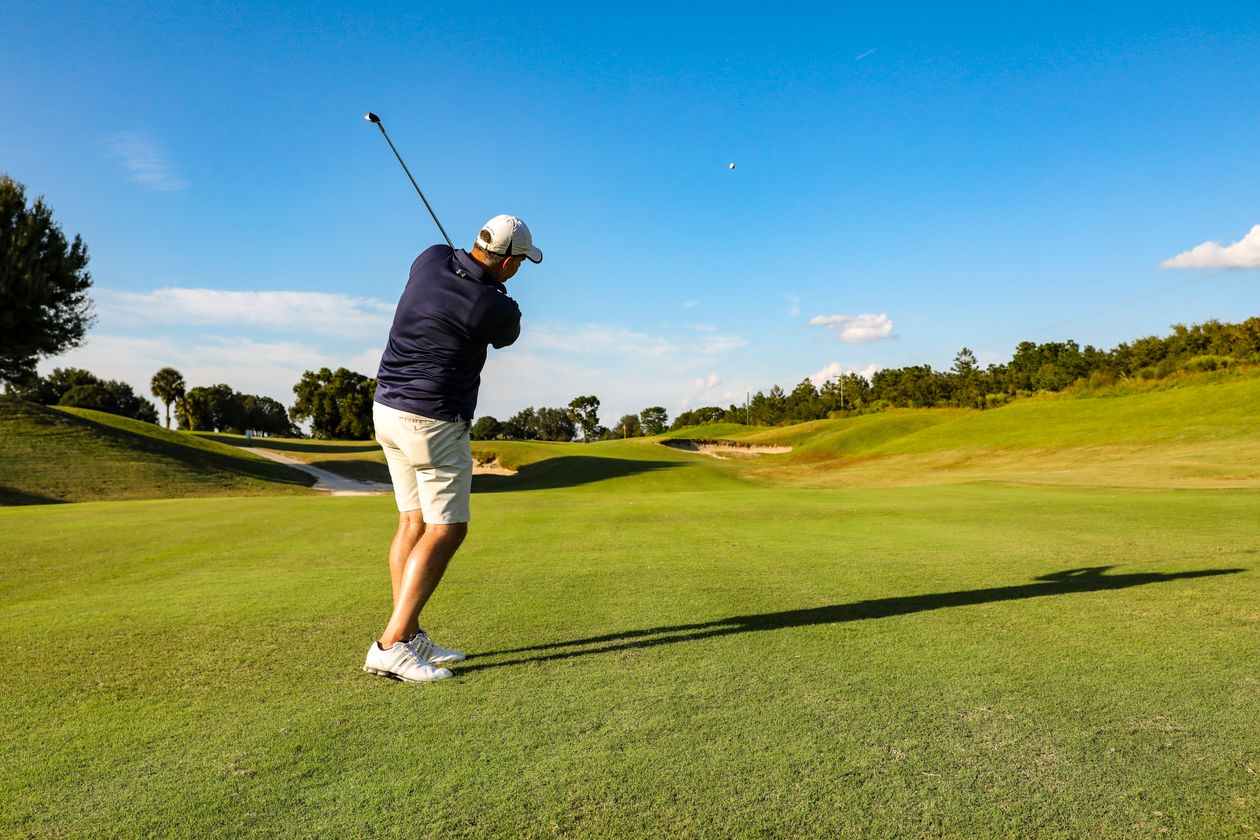
Golf looks gentle, but the swing is a fast, repeated, rotating motion. Over a season of rounds and range sessions, the same tissues get loaded thousands of times. The problems we see most in Hinsdale golfers are:
| Area | Common golf injury | What it feels like |
|---|---|---|
| Inner elbow | Golfer’s elbow (medial epicondylitis) | Pain on the inside of the elbow when gripping, swinging, or carrying the bag |
| Outer elbow | Tennis elbow (lateral epicondylitis) | Pain on the outside of the elbow, often in the lead arm |
| Shoulder | Rotator cuff tendinitis, calcific tendinitis | Pain at the top of the backswing or reaching overhead |
| Low back | Muscle strain, stiff or restricted spinal joints | Stiffness or ache during or after a round, worse bending over to tee up |
| Heel and foot | Plantar fasciitis | Heel pain walking the course or with the first steps in the morning |
Back problems are especially common. In a 2025 survey of 439 professional golfers, about one in three (33.7%) reported a spine injury, and golfers with better shoulder flexibility had a lower risk of mid and low back injuries (Kim 2025).
Why does my elbow hurt after golf?
Golfer’s elbow is irritation and breakdown of the tendons that attach to the inner elbow, the ones that grip the club and flex the wrist. Tennis elbow is the same kind of problem on the outer elbow. Hitting fat shots, practicing off mats, a tight grip, and simply playing a lot can all overload these tendons.
When elbow pain lasts more than a few weeks, it usually isn’t fresh inflammation anymore. It’s a tendon that has stalled in its healing (tendinosis). That’s why rest, ice, and a brace often help for a while, and then the pain comes right back on the first warm weekend.
Can shockwave therapy help golfer’s elbow and tennis elbow in Hinsdale?
Yes, shockwave is one of the most studied non-surgical treatments for chronic elbow tendon pain.
- In a double-blind trial in the Journal of Bone and Joint Surgery, 61% of people with chronic tennis elbow had at least 50% less pain after shockwave, compared with 29% after placebo (Pettrone 2005).
- A 2022 analysis of 40 randomized trials found shockwave beat placebo for both short- and medium-term pain relief, and ranked first of all the treatments compared for getting grip strength back (Liu 2022). Grip strength matters a lot when you’re holding a club.
Shockwave therapy is a non-invasive treatment that sends strong acoustic pulses into injured tissue to restart the body’s own healing response. At our Hinsdale clinic we use Storz Medical radial and focused shockwave. Golfer’s and tennis elbow are both on the list of conditions we treat; read more in our golfer’s elbow treatment and tennis elbow shockwave therapy posts.
Why does my shoulder hurt when I swing a golf club?
The rotator cuff tendons keep the shoulder stable through the whole swing. When they’re irritated, you’ll often feel it at the top of the backswing, on the follow-through, or reaching for something on a high shelf. Some golfers also have calcific tendinitis, a condition where calcium deposits build up inside a rotator cuff tendon and cause sharp, stubborn pain.
Shockwave has strong research for this. In a randomized trial published in JAMA, people with calcific shoulder tendinitis who got shockwave had better shoulder function, less pain, and smaller calcium deposits than those who got a sham treatment, with results holding at 12 months (Gerdesmeyer 2003). Learn more about calcific tendinitis of the shoulder and rotator cuff tendinitis.
Why does my lower back hurt after golf?
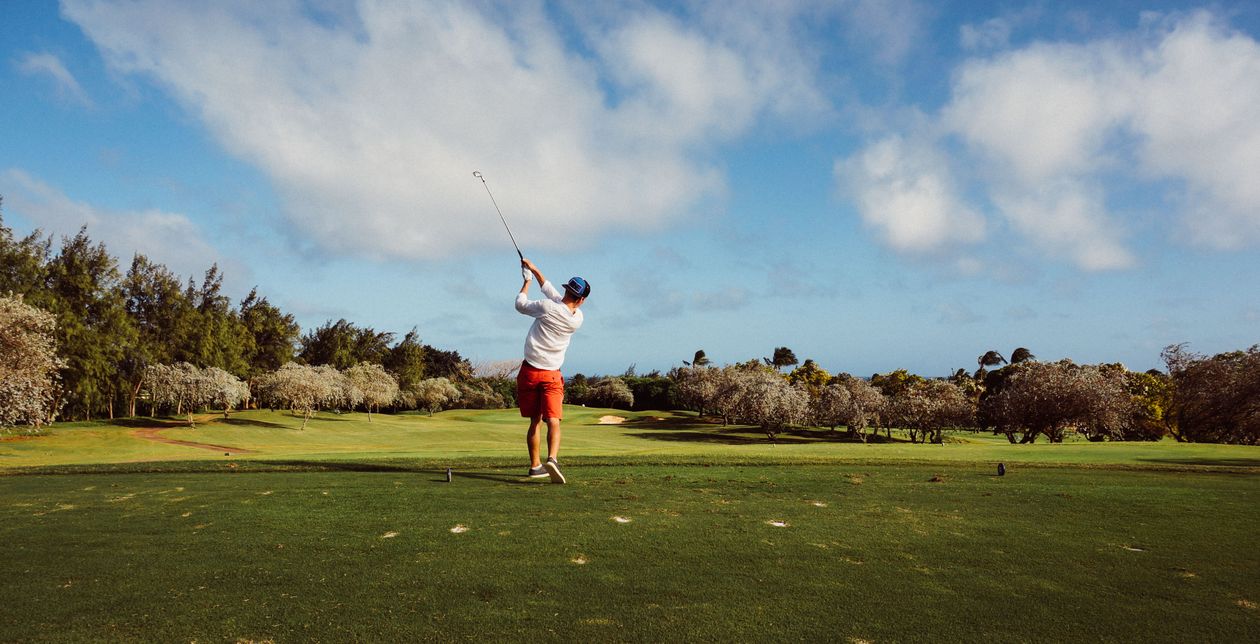
The golf swing twists the spine hard and fast, many times a round. If some spinal joints are stiff and not moving well, other areas and the surrounding muscles take on extra load, and they get sore, tight, and guarded.
For golf-related back pain, we look at both pieces:
- How your spine is moving. As chiropractors, we find the restricted segments and work to restore normal motion so the load is shared more evenly.
- The muscles that are holding on. For back pain that has hung around, shockwave can help. A 2026 review of nine randomized trials found that radial shockwave significantly reduced pain in people with chronic low back pain (Stachelski 2026).
Our shockwave page notes that for persistent back pain, we combine shockwave with chiropractic care. More here: shockwave therapy for chronic low back pain.
What about heel pain from walking the course?
Walking 18 holes is a lot of steps on uneven ground, and plantar fasciitis is a common complaint among golfers who walk. It has some of the best shockwave research of any condition: in a large trial in the Journal of Bone and Joint Surgery, focused shockwave cut heel pain by 69.2%, compared with 34.5% for placebo, at 12 weeks (Gollwitzer 2015). See our full guide to plantar fasciitis shockwave therapy in Hinsdale.
Is the off-season a good time to treat a golf injury?
Yes. It’s the best time. Chronic tendon problems heal on their own timeline, and shockwave works by kick-starting a healing process that keeps going in the weeks after your sessions. Starting in late fall or winter means:
- You’re not playing through it, so the tissue gets a real chance to recover.
- You have time to finish a full series. Most patients follow a series of sessions; see how many shockwave sessions you need.
- You can rebuild strength and mobility before your first spring round instead of starting the season already sore.
If you have more than one problem area, like an elbow and a back, or the pain is severe, our memberships are a serious, accelerated recovery option that lets us treat everything on a regular schedule.
Should I stop golfing to let my elbow heal?
Not always completely, but playing through sharp pain usually keeps the tendon irritated. A common approach is to cut back on range sessions and hitting off mats, loosen your grip, and get the tendon properly treated rather than just resting and hoping. During your exam we’ll talk about how much golf is reasonable while you recover.
Is shockwave therapy safe for golfers?
Shockwave is very low risk, but it isn’t for everyone. It’s commonly avoided or postponed with:
- Pregnancy
- Cancer or a tumor in or near the treatment area
- A bleeding disorder or blood-thinning medication (this needs to be discussed first)
- An infection, open wound, or skin condition over the area
- A pacemaker or other implanted device near the area
- Pain that suggests something more serious, like a fracture, nerve problem, or circulation issue
The most common side effects are temporary redness, tenderness, or soreness in the treated area for a day or two. For the full picture, read is shockwave therapy safe?
Where can I get golf injury shockwave therapy near me in Hinsdale?
Adisi Health Center is at 534 Chestnut Street, Suite 240, Hinsdale, IL 60521, (630) 887-1900, a short drive from Oak Brook, Burr Ridge, Clarendon Hills, Western Springs, and La Grange. Dr. Steve Petzel, DC, has served Hinsdale since 2012 and offers both radial and focused shockwave on site. No referral is needed, and your first visit starts with an exam to make sure shockwave is the right fit. Learn more on our shockwave therapy page, or see our post on pickleball injuries if you play both.
Frequently asked questions
What are the most common golf injuries?
Golfer’s and tennis elbow, rotator cuff and other shoulder tendon pain, low back pain, and plantar fasciitis in golfers who walk the course. Most are overuse injuries that build up over a season.
Can shockwave therapy help golfer’s elbow?
Yes. Shockwave is one of the most studied non-surgical treatments for chronic elbow tendon pain, and a 2022 analysis of 40 trials ranked it first for restoring grip strength.
Why does my lower back hurt after golf?
The swing twists the spine quickly and repeatedly. Stiff spinal joints and overworked muscles are common causes. Chiropractic care to restore movement, combined with shockwave for stubborn muscle pain, can help.
Is the off-season a good time to treat a golf injury?
Yes. You aren’t playing through the pain, you have time to complete a full series of sessions, and you can rebuild strength before spring.
Is shockwave therapy safe?
For most people, yes. It’s usually avoided during pregnancy, over cancer or a tumor, over an infection or open wound, and near a pacemaker or implanted device. Bleeding disorders and blood thinners need to be discussed first.
Do I need a referral for shockwave therapy in Hinsdale?
No. You can book directly with Adisi Health Center. Your first visit starts with an exam.
I golf in Oak Brook. Where can I get shockwave therapy near me?
Adisi Health Center at 534 Chestnut Street, Suite 240, in Hinsdale offers radial and focused shockwave therapy, a short drive from Oak Brook, Burr Ridge, and Western Springs.
If a golf injury is still bothering you, we’d be glad to help you get ready for next season. Book a visit or call (630) 887-1900.
