
Sciatica Treatment
That Goes to the Root
Shooting pain, numbness, burning down the leg — sciatica demands more than rest and painkillers. We combine five evidence-based therapies to decompress the nerve, reduce inflammation, and restore pain-free movement.

Condition
What Is Sciatica &
Why Won't It Go Away?
The sciatic nerve is the longest nerve in the human body — running from your lower lumbar spine through the gluteal region, down the back of each leg to the foot. When it becomes compressed or chemically irritated, the result is unmistakable: electric, burning pain that follows the entire nerve path.
Sciatica doesn't respond well to rest or anti-inflammatories because it's a nerve compression problem — not a soft tissue sprain. True relief requires decompressing the nerve, calming the neurogenic inflammation, and healing the structure causing the compression.
Where the sciatic nerve originates — disc herniations, stenosis, and vertebral slippage compress nerve roots here.
A tight piriformis muscle can entrap the sciatic nerve as it passes beneath — often misdiagnosed as a disc problem.
Pain, numbness, tingling, or weakness radiating anywhere along the nerve's path — from buttock to calf to foot.
Electric pain radiating from lower back through buttock and down the leg
Intense burning along the sciatic nerve path, worse with sitting
Pins and needles or complete numbness in the leg or foot
Difficulty walking, climbing stairs, or standing due to nerve compromise
Symptoms that worsen at rest or during sleep, disrupting recovery
What's Really Causing
Your Sciatica?
We identify your specific cause before building your treatment plan — because a disc herniation, piriformis entrapment, and spinal stenosis all require different approaches.
Disc material leaks and presses directly onto a lumbar nerve root. The most common cause — often at L4–L5 or L5–S1.
Age-related narrowing of the spinal canal compresses nerve roots, causing symptoms that worsen with walking and standing.
A tight or spasmed piriformis muscle entraps the sciatic nerve in the gluteal region — often missed on imaging studies.
A vertebra slips forward over the one below it, narrowing the nerve canal and placing traction stress on the sciatic nerve.
Chronic tightness in hip flexors, hamstrings, or lumbar extensors alters spinal mechanics and loads nerve structures unevenly.
Falls, accidents, or heavy lifting that acutely herniates a disc or fractures a vertebral segment compressing the sciatic nerve.
Five Therapies. One
Coordinated Healing Plan.
Each modality targets a different mechanism — nerve compression, inflammation, tissue damage, muscle spasm. Combined, they work faster and more completely than any single approach.
Spinal Adjustments
& Nerve Decompression
Precise chiropractic adjustments restore proper vertebral alignment, directly reducing the mechanical pressure on compressed nerve roots. As the nerve is decompressed, many patients experience rapid relief from the radiating leg pain that defines sciatica. This is the structural foundation of every effective sciatica treatment plan.
- Restores proper segmental motion and vertebral alignment at the pain source
- Reduces direct mechanical compression on lumbar nerve roots
- Improves disc hydration and nutrient exchange to support healing
- In-network with BCBS PPO — most accessible entry point for new patients
- Dramatically more effective when combined with advanced modalities
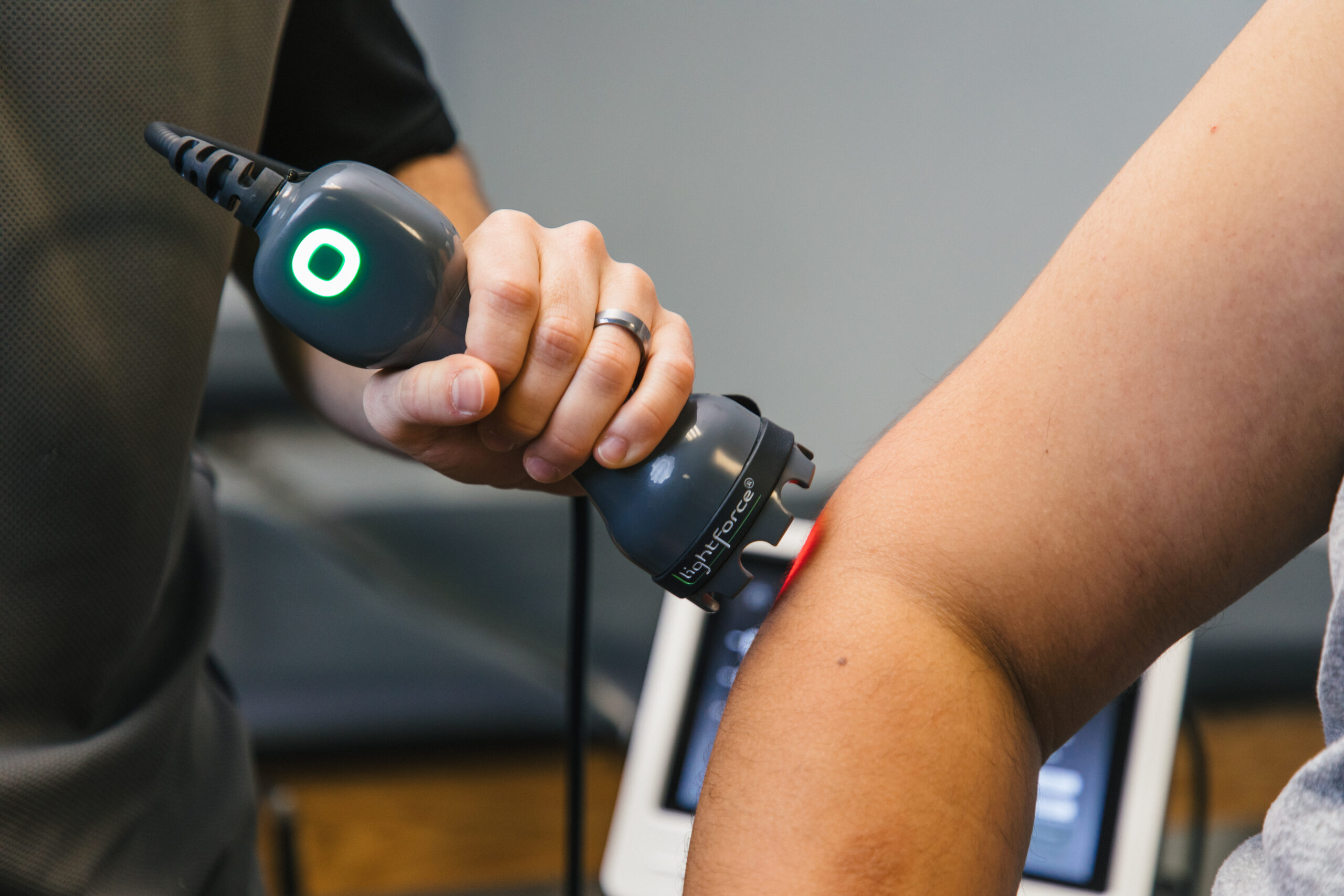
LightForce® XLi 40W
Deep Tissue Photobiomodulation
Our 40-watt LightForce Class IV laser is one of the most powerful clinical tools available for nerve pain. High-intensity photons penetrate several centimeters into tissue, directly reaching the inflamed nerve root and surrounding structures — delivering dramatic reduction in neurogenic inflammation and rapid pain relief.
- Reduces prostaglandin and cytokine activity at the inflamed nerve root
- Stimulates Schwann cell activity for peripheral nerve repair
- Elevates endogenous endorphins for immediate pain modulation
- Accelerates disc and ligament tissue healing around the compression site
- Comfortable, warming sessions — just 8–12 minutes
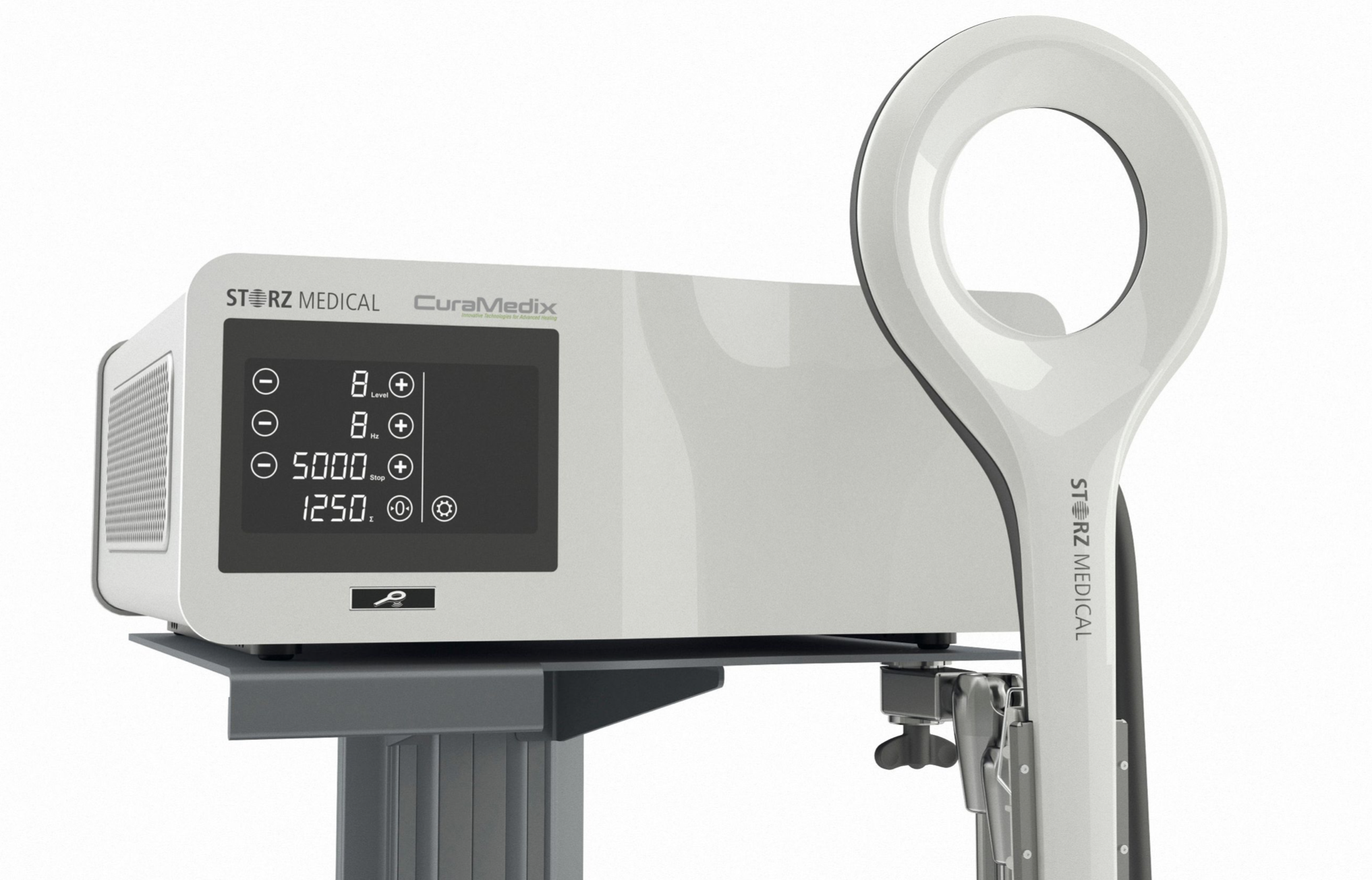
Storz Magnetolith®
High-Energy Magnetic Pulse Therapy
EMTT generates magnetic fields at 100× the intensity of standard PEMF devices. These pulses penetrate deep through the lumbar spine without skin contact, directly modulating the electrochemical environment around compressed nerve tissue. For patients who have tried everything else, EMTT often delivers the breakthrough results they've been searching for.
- Modulates ion channels to reduce nerve hypersensitivity and central sensitization
- Promotes disc matrix regeneration at the molecular level
- Reduces neurogenic inflammation in the epidural space around compressed roots
- No skin contact — effective even over post-surgical or sensitive areas
- Synergistically powerful when combined with shockwave in the same session
Capacitive & Resistive
Energy Transfer
TECAR uses targeted radiofrequency energy to generate deep endogenous heat within tissue. For sciatica driven by piriformis tension or deep lumbar muscle spasm, TECAR is uniquely effective — it relaxes the compressing muscle tissue while simultaneously boosting cellular repair in the affected nerve pathway.
- Deep thermal release of piriformis and deep gluteal muscle tightness
- Dramatically improves tissue extensibility and lumbar range of motion
- Reduces inflammatory exudate around nerve roots and adjacent joints
- Boosts microcirculation in chronically ischemic lumbar soft tissue
- Patients typically feel significant loosening and pain reduction mid-session

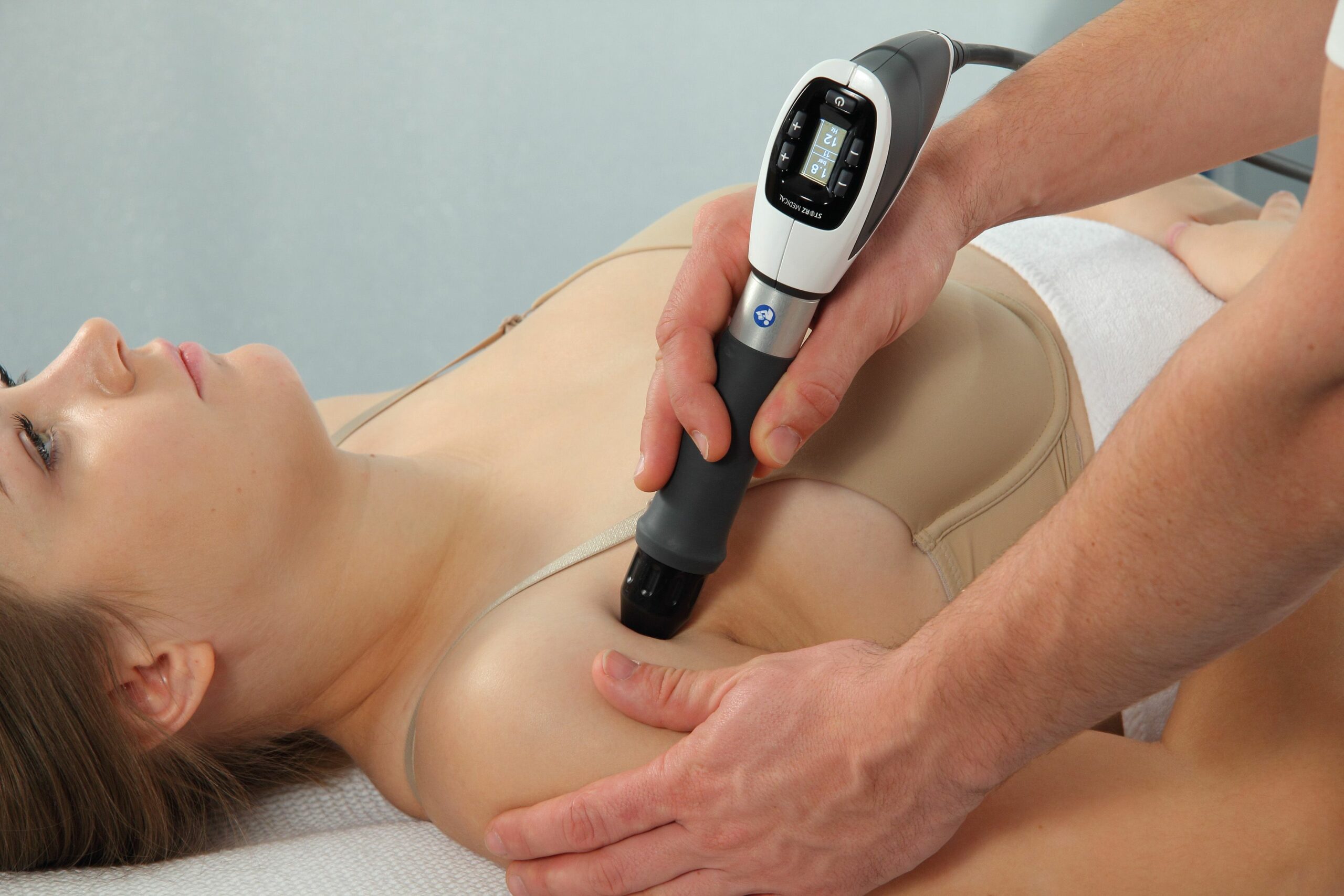
Storz Medical Focused
& Radial Shockwave
Radial shockwave disperses tension through the gluteal and lumbar musculature, while focused shockwave can precisely target scar tissue or adhesions entrapping the nerve. For sciatica driven by myofascial compression, shockwave delivers results that no other modality can replicate.
- Breaks up myofascial adhesions and scar tissue compressing the sciatic nerve
- Releases trigger points in piriformis and deep gluteal muscles
- Stimulates local tissue regeneration and reduces chronic inflammation
- Upregulates nitric oxide to improve tissue oxygenation along the nerve path
- 6-session protocol — most patients notice meaningful change by session 3
Your Sciatica Treatment Visit
Every visit layers therapies strategically — decompressing the nerve structurally, then reducing neurogenic inflammation, then promoting tissue healing. The sequence matters as much as the modalities.
A Typical Sciatica Protocol Session
Orthopedic and neurological evaluation to confirm compression level, identify cause, and personalize therapy selection.
Prime the nerve and reduce baseline neurogenic inflammation before structural work begins.
Targeted spinal manipulation to restore alignment and decompress the nerve root — amplified by pre-treatment priming.
Deep tissue therapy targeting muscular tension, piriformis tightness, or scar tissue compressing the nerve distally.
Pain scores, range of motion, and neurological function charted each visit — your protocol adapts as you heal.
Adisi Health Center
Hinsdale's Advanced Clinic
Most sciatica patients have already tried chiropractors, physical therapy, or pain management by the time they find us. What makes the difference here is the depth of technology and the coordinated, stacked approach — targeting every layer of the problem simultaneously.
We identify your specific compression source — disc, stenosis, piriformis, or other — before building your protocol. Same symptoms, different causes require different care.
No other clinic in the area combines chiropractic with hospital-grade shockwave, laser, EMTT, and TECAR. The stacked effect is dramatically more powerful than any single therapy.
Chiropractic is covered by your BCBS PPO. Advanced modalities are cash-pay — often less expensive per session than specialist co-pays at a hospital-based PT clinic.
Whether you're an athlete, weekend warrior, or working professional, we build your plan around getting you back to full function — not just "manageable" pain.
Treatment Pricing
In-Network
Serving the Western Suburbs
Hinsdale Oak Brook Burr Ridge Clarendon Hills Downers Grove Western SpringsWhat Our Patients
Are Saying
"Dr. Petzel is great! The office has an awesome vibe — super clean and he plays great music which helps you relax. He has all the equipment there to fit your needs. I trust his expertise completely."
"Dr. Steve is a highly skilled clinician proficient in many techniques. I have referred a handful of patients to him and all have had great results — improved posture and increased range of motion."
"I felt pampered in this upscale office. The treatment was wonderful — truly unlike anything I'd experienced before. I would refer anyone to this facility without hesitation."
Frequently Asked
Questions
Sciatica Won't Heal on Its Own.
Let's Address the Root Cause.
Don't wait for a flare to become a disability. Our team will identify exactly what's compressing your sciatic nerve and build a precise, stacked treatment plan to resolve it — without surgery, injections, or prolonged medication use.