
Does Shockwave Therapy Hurt? What a Shockwave Session Really Feels Like in Hinsdale
Short answer: Shockwave therapy can be uncomfortable, but most people find it very manageable. You’ll feel a fast tapping or pulsing that’s strongest right over the sore spot. Sessions take about 20 minutes, and any tenderness usually fades within a day or two. At Adisi Health Center in Hinsdale, Dr. Steve Petzel adjusts the intensity of our Storz Medical radial and focused shockwave therapy based on your comfort level, and there’s no downtime afterward. Call (630) 887-1900 or schedule an appointment.

Does shockwave therapy hurt? The honest answer
“Does it hurt?” is one of the first questions we hear from patients in Hinsdale, Oak Brook, Burr Ridge, and the surrounding towns. Here’s our honest answer: most patients feel only mild discomfort. Healthy tissue around the problem area usually just feels a strong tapping. The tender, irritated spot is where you’ll feel it most, whether that’s the bottom of your heel, the outside of your elbow, or a sore shoulder tendon.
Sessions are short, there are no needles, and you can tell Dr. Petzel at any point if you need the intensity turned down.
What does a shockwave therapy session feel like?
Here’s what usually happens during a shockwave visit:
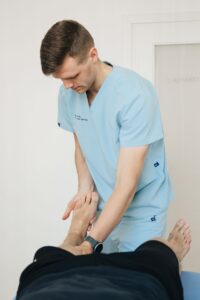
- Finding the spot. Dr. Petzel presses around the area to find exactly where it’s tender. A gel goes on the skin so the pressure waves can pass through.
- The first pulses. The applicator rests against your skin and starts delivering pulses. You’ll hear a clicking or tapping sound and feel a rhythmic pulse, a bit like a very fast, firm finger tap.
- Adjusting to you. Dr. Petzel adjusts the intensity based on your comfort level and moves the applicator across the tender area and the tight tissue around it.
- Done in about 20 minutes. Follow-up sessions take about 20 minutes, and you walk out and go about your day.
Does radial or focused shockwave feel different?
Adisi has both Storz Medical radial and focused shockwave units on-site, and they feel a little different:
- Radial shockwave spreads energy over a broader area. Most people feel it as a rapid tapping across the muscle or tendon, which is useful for tight, sore tissue and trigger points.
- Focused shockwave concentrates energy at a precise depth. It tends to feel more pinpoint, like a deeper pulse right where the tendon is irritated.
Many patients get both in the same session. For a deeper comparison, read radial vs. focused shockwave explained.
Why does shockwave therapy hurt most right over the sore spot?
Long-term tendon and fascia problems, like plantar fasciitis, tennis elbow, and hip, Achilles, and knee tendon pain, leave the area sensitive. So that’s where the pulses register most. Feeling it there is actually helpful, because it shows Dr. Petzel exactly where to focus.
Should shockwave therapy be numbed first? What the research says
You might expect a numbing shot to make shockwave easier. Research on shockwave for chronic heel pain suggests numbing the area may actually make it work less well:
- 2005 randomized trial (86 patients with chronic plantar fasciitis). Patients got three weekly sessions of low-energy shockwave, either with or without a local anesthetic. At three months, the group treated without numbing had lower pain (an average of 2.2 vs. 4.1 out of 10 with first steps in the morning). Many more of them had cut their pain at least in half (67% vs. 29%). The authors concluded shockwave should be done without local anesthesia for chronic heel pain, because numbing reduced how well it worked (Rompe et al., Journal of Orthopaedic Research, 2005; PubMed 16023010).
- 2017 meta-analysis (9 randomized trials). Compared with placebo, shockwave done without local anesthesia worked better for stubborn plantar fasciitis. It improved heel pain with first morning steps and during daily activities at 12 weeks. The authors said shockwave should be considered when traditional treatments have failed (Lou et al., American Journal of Physical Medicine & Rehabilitation, 2017; PubMed 27977431).
- 2015 systematic review of shockwave for orthopedic conditions. The authors concluded shockwave is effective and safe for tendon and other musculoskeletal problems. They suggested an optimal approach uses weekly sessions at the highest energy level the patient can tolerate (Schmitz et al., British Medical Bulletin, 2015; PubMed 26585999).
The takeaway: some discomfort is a normal part of effective shockwave, and your feedback helps set the right intensity for you. Results vary from person to person, and a proper exam always comes first.
Is it normal to be sore after shockwave therapy?
Yes. Mild soreness for 24 to 48 hours is normal, and the area may look a little red or feel tender or slightly swollen. There’s no downtime, and most patients get back to their daily activities right away. We recommend avoiding high-impact activity for 24 to 48 hours after each session, so skip the hard run or long tennis match for a day or two.
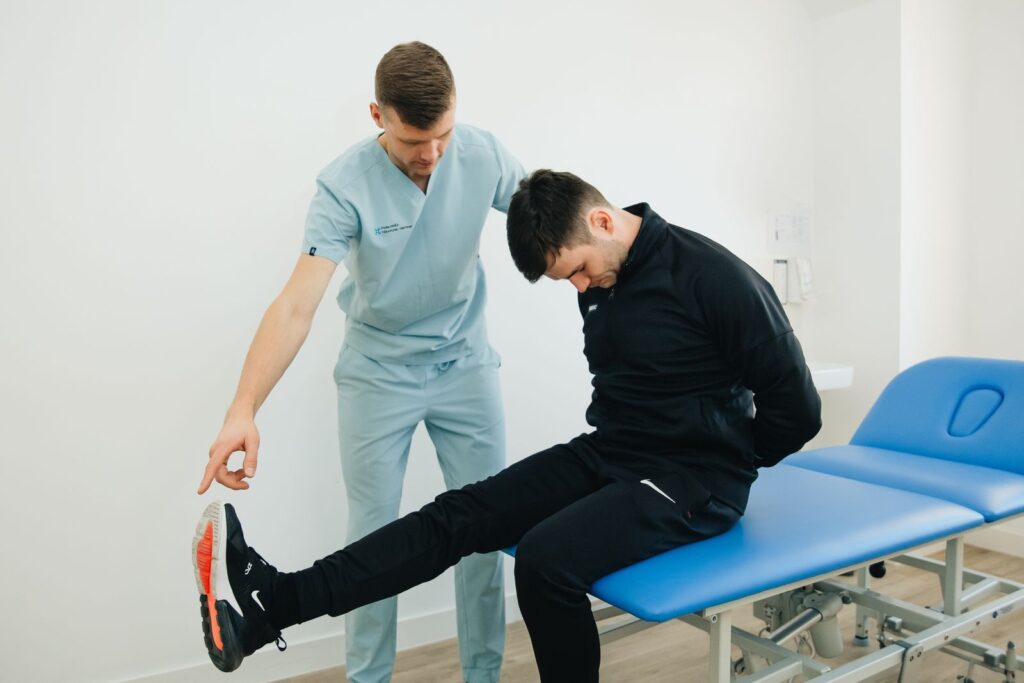
Sessions are usually spaced about one week apart. Many patients notice real improvement by sessions 3 to 4 of our 6-session protocol, with the best results after finishing the full series.
How can I make shockwave therapy more comfortable?
- Speak up. Tell Dr. Petzel how it feels. He adjusts the intensity based on your comfort level.
- Breathe and relax. Tensing the muscle around the area makes it feel stronger.
- Plan your day. Book your session before a lighter day, not before a race, a big match, or a long day on your feet.
- Do your home program. The exercises Dr. Petzel gives you help the tissue respond between visits.
- Pair it with other therapies. Shockwave is often combined with Class IV laser therapy or Winback TECAR as part of a full plan.
Who shouldn’t get shockwave therapy?
Shockwave is non-invasive, but it isn’t right for everyone. It may not be a good fit if you:
- Are pregnant
- Have a bleeding disorder or take blood thinners
- Have an infection, open wound, or tumor in the treatment area
- Have a pacemaker or other implanted device near the treatment site
- Have had a cortisone shot in the area recently. You must wait at least 6 weeks after your last cortisone shot before starting shockwave. Tell Dr. Petzel when and where you had it.
Get medical care first if your pain started with a fall, a pop, or an injury you can’t put weight on, or if the area is hot, red, and swollen, or you have a fever. Dr. Petzel reviews your health history before any treatment and will tell you honestly if you need imaging or a specialist.
What does a shockwave visit at Adisi cost in Hinsdale?
From our shockwave and pricing pages:
- Free phone consultation with Dr. Petzel to see if shockwave is a good fit
- New patient evaluation: $249, about 45 minutes, including a full exam, a health history review, and your first shockwave treatment
- Single shockwave session: $200 per treatment area (about 20 minutes, radial or focused)
- 6-session protocol: $1,050 (radial and focused combined, about $175 per session)
Want to heal faster? Our membership plans are a serious, accelerated-recovery option, combining up to 4 therapies per visit. The Recovery Membership ($1,299/month) includes up to 20 minutes of shockwave per week, and Premium ($2,199/month) includes 2 shockwave sessions per week.
Shockwave is cash pay, HSA and FSA cards are accepted, and no referral is needed.
Frequently asked questions
Does shockwave therapy hurt?
Most patients feel only mild discomfort: a strong, fast tapping that’s most noticeable right over the sore spot. Dr. Petzel adjusts the intensity based on your comfort level, and sessions take about 20 minutes.
What does shockwave therapy feel like?
It feels like a rapid, rhythmic tapping or pulsing with a clicking sound. Radial shockwave feels like tapping spread over a wider area, and focused shockwave feels like a deeper, more pinpoint pulse.
Will I be numbed before shockwave?
Shockwave doesn’t need a numbing shot. A 2005 randomized trial in chronic heel pain found shockwave worked better without local anesthesia than with it.
How long does soreness last after shockwave therapy?
Mild soreness, redness, or tenderness usually lasts 24 to 48 hours. There’s no downtime, but we recommend avoiding high-impact activity for 24 to 48 hours after each session.
Can I drive and go back to work after shockwave?
Yes. Most patients return to their normal daily activities right after treatment.
Can I get shockwave after a cortisone shot?
Yes, but you must wait at least 6 weeks after your last cortisone shot before starting shockwave. Tell Dr. Petzel when and where you had the injection.
Do you see shockwave patients from outside Hinsdale?
Yes. Patients come to our office at 534 Chestnut Street, Suite 240 in downtown Hinsdale from Oak Brook, Burr Ridge, Clarendon Hills, Western Springs, Downers Grove, Westmont, La Grange, and nearby towns. See our local pages for Burr Ridge, Clarendon Hills, Western Springs, and La Grange.
Related reading: Shockwave vs. cortisone for plantar fasciitis, heel spur or plantar fasciitis? How shockwave helps, shockwave for shoulder pain, and shin splints and shockwave therapy.
Ready to find out if shockwave is right for you?
If a nagging heel, elbow, shoulder, knee, or Achilles problem is holding you back and the fear of “will it hurt?” is the only thing stopping you, let’s talk it through. Call Adisi Health Center at (630) 887-1900, email DrPetzel@AdisiHealth.com, or book your visit online.
This article is for education only and is not medical advice. Results vary.
