
Tendinitis vs. Tendinosis: Why Chronic Tendon Pain Lingers and How Shockwave Therapy in Hinsdale Helps
By Dr. Steve Petzel, DC, Adisi Health Center, Hinsdale, IL
Tendinitis is a short-term, irritated tendon. Tendinosis is a longer-term breakdown of the tendon’s structure that often isn’t inflamed at all. That’s why chronic tendon pain often doesn’t clear up with rest and ice. At Adisi Health Center in Hinsdale, Dr. Steve Petzel uses shockwave therapy to restart healing in tendinosis.
If you’ve been told you have “tendinitis” in your elbow, heel, knee, or shoulder, and it’s still there months later, you’re not alone. It’s one of the most common things I hear from patients who come to our office at 534 Chestnut Street from Hinsdale, Oak Brook, Clarendon Hills, and Western Springs. In many cases, the label itself is part of the problem. Here’s what’s really going on, and why shockwave therapy in Hinsdale is often a good fit for tendon pain that won’t quit.
What is the difference between tendinitis and tendinosis?
Tendinitis is inflammation of a tendon, usually after a recent overload or injury. Tendinosis is degeneration of the tendon’s collagen fibers, which builds up over months of repeated strain.
| Tendinitis | Tendinosis | |
|---|---|---|
| How long it’s been there | Days to a few weeks | Usually 3 months or more |
| What’s happening in the tissue | Inflammation from a recent overload | Disorganized, weakened collagen with little or no inflammation |
| How it usually behaves | Often settles with rest and a smarter workload | Tends to linger or keep coming back |
| What it needs | Time, relative rest, gradual return | Stimulus to rebuild the tendon, plus progressive loading |
In 2002, a group of tendon researchers wrote in the BMJ that chronic overuse tendon pain is usually tendinosis, a degenerative problem, not true inflammation. They called it “time to abandon the ‘tendinitis’ myth” (Khan et al., 2002). Today many clinicians use the umbrella term tendinopathy for both.
Why won’t my tendinitis go away?
If your tendon pain has lasted longer than about three months, there’s a good chance it has become tendinosis. A few reasons it lingers:
- Rest takes the load off, but it doesn’t rebuild the tendon. Pain eases, then comes right back when you return to activity.
- Anti-inflammatory approaches are aimed at inflammation, which often isn’t the main issue in a chronic tendon.
- Tendons have a fairly limited blood supply, so repair is slow.
- The same strain keeps happening. Running, gripping, lifting, standing at work, or a weekend of golf or pickleball keeps stressing the area.
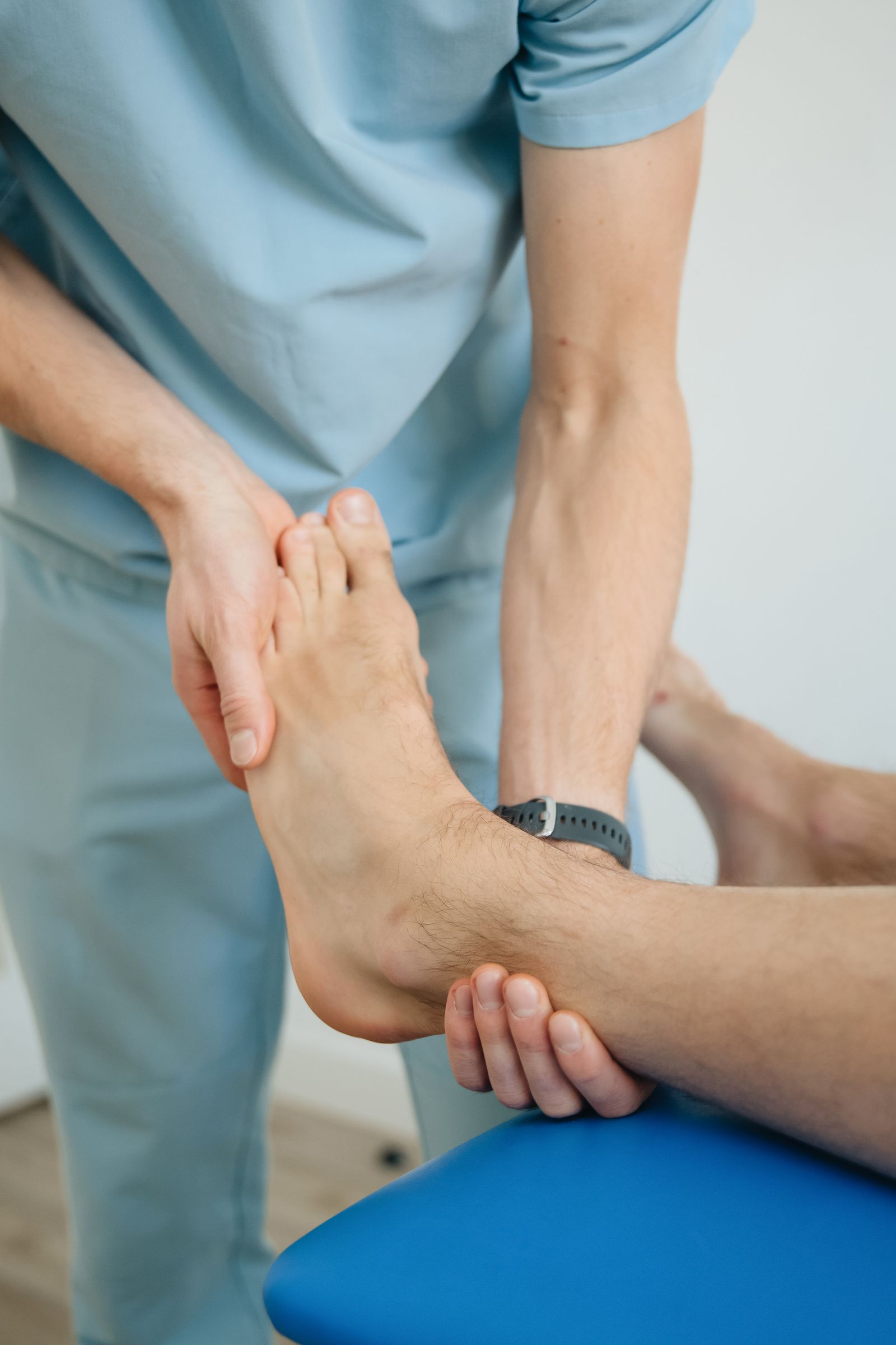
A hands-on exam helps tell a recent tendon flare from long-standing tendinosis.
How do I know if I have tendinosis?
Only an exam can tell you for sure, but these signs point toward tendinosis:
- Pain has lasted 3 months or longer.
- It’s stiff and sore first thing in the morning or when you start moving, then warms up.
- It flares the day after activity.
- The tendon feels tender, thickened, or “knotty” when pressed.
- Rest, ice, or a brace helped for a while, but the pain came back.
Common spots include the elbow (tennis and golfer’s elbow), the Achilles tendon, the patellar tendon below the kneecap, the rotator cuff, the outer hip, and the bottom of the heel.
How does shockwave therapy help tendinosis in Hinsdale?
Shockwave therapy (extracorporeal shockwave therapy, or ESWT) sends acoustic pressure waves into the injured tendon to trigger the body’s own repair response. Because tendinosis is a healing problem more than an inflammation problem, that kind of stimulus makes sense.
In an animal study, shockwave applied near the Achilles tendon’s attachment to bone led to significantly more new blood vessels and growth-related markers than in the untreated side (Wang et al., 2003). Better blood supply may help the tendon repair itself.
At Adisi Health Center we use Storz Medical radial and focused shockwave devices. Learn how the two differ in radial vs. focused shockwave.
What does the research say about shockwave for chronic tendon pain?
Several clinical trials in people with long-standing tendon pain have shown positive results:
- Insertional Achilles tendinopathy (back of the heel): In a randomized trial of 50 patients whose pain hadn’t improved with injections, medication, and physical therapy, 64% of the shockwave group were completely recovered or much improved at 4 months, compared with 28% of the eccentric exercise group (Rompe et al., 2008).
- Midportion Achilles tendinopathy: Adding shockwave to calf exercises produced better results than exercise alone, 82% vs. 56% much improved or recovered at 4 months (Rompe et al., 2009).
- Tennis elbow: 61% of patients treated with shockwave got at least 50% pain relief at 12 weeks, compared with 29% on placebo (Pettrone & McCall, 2005).
- Lower-limb tendons overall: A systematic review found shockwave effective for hip, patellar, and Achilles tendinopathy (Mani-Babu et al., 2015).
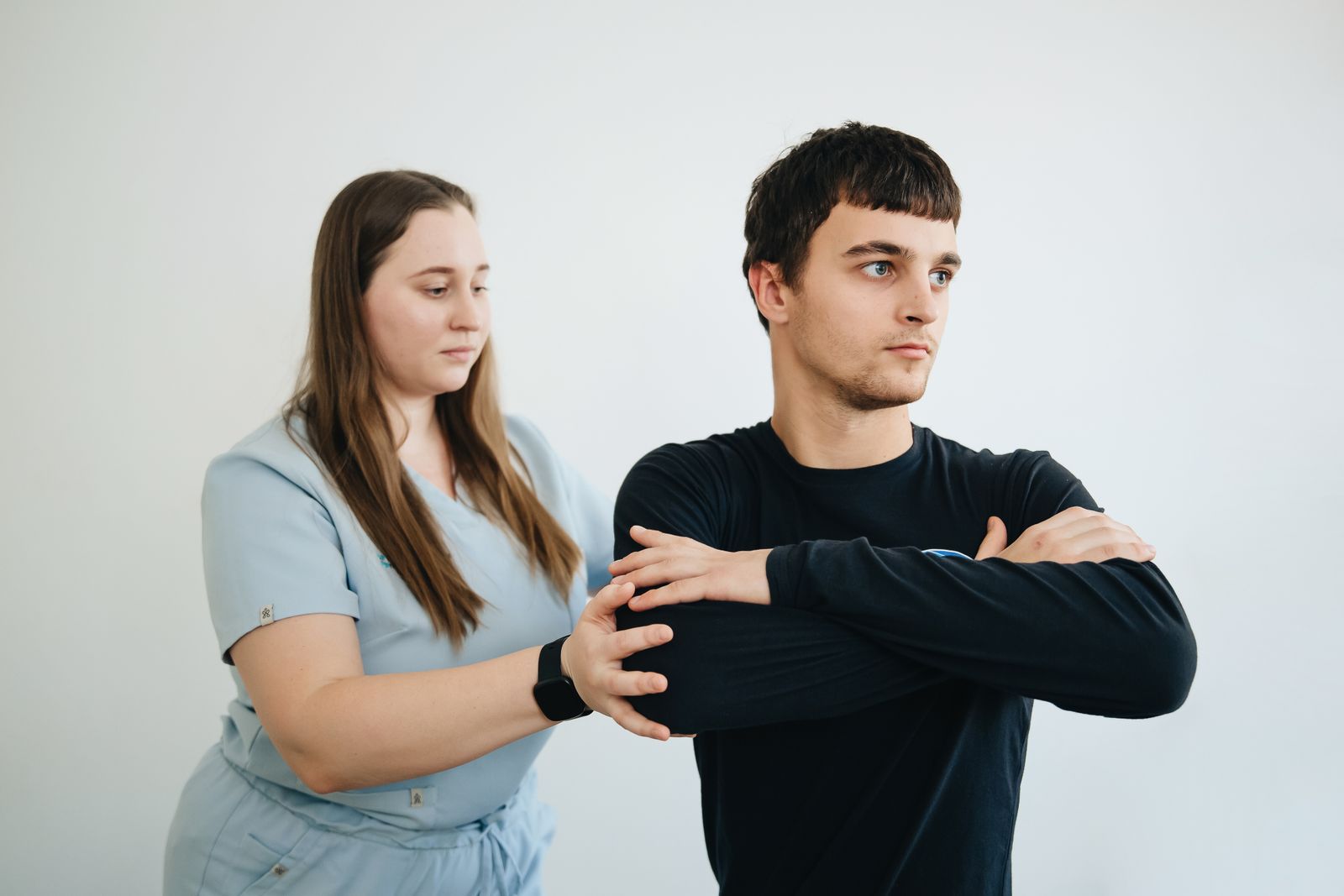
Elbow, shoulder, knee, hip, and heel tendons are among the areas we check.
Which tendons can shockwave therapy treat?
We see patients for many tendon problems. You can read more about each one here:
- Tennis elbow and golfer’s elbow
- Achilles tendinitis and back-of-heel pain
- Jumper’s knee (patellar tendinitis)
- Rotator cuff tendinitis and calcific shoulder tendinitis
- High hamstring tendinopathy
- Outer hip pain
What does a shockwave plan for tendinosis look like?
Most plans at our Hinsdale office involve about 6 sessions, spaced about a week apart, with each follow-up session taking about 20 minutes. Most patients go back to normal daily activities right after each visit. For more detail, see how many shockwave sessions you may need.
Shockwave works best alongside the right exercise. A tendon with tendinosis needs gradual, progressive load to rebuild, and the research above shows the two together can beat exercise alone. Read more in shockwave therapy plus exercise for tendon recovery.
Is shockwave therapy safe?
Shockwave therapy is non-invasive and well tolerated. Most people feel only mild discomfort during treatment, and there’s no downtime. Some people notice temporary soreness or redness in the treated area. Shockwave isn’t right for everyone. It’s typically avoided over the abdomen or low back during pregnancy, over open wounds or active infection, over tumors, and in people with certain bleeding disorders or on blood thinners. That’s why Dr. Petzel does a full exam and health history first. Learn more in Is shockwave therapy safe? and Does shockwave therapy hurt?
Where can I get shockwave therapy for tendon pain near me in Hinsdale?
Adisi Health Center offers radial and focused shockwave therapy in downtown Hinsdale, a short drive from Oak Brook, Clarendon Hills, Western Springs, Burr Ridge, Downers Grove, Westmont, and La Grange. No referral is needed. Visit our shockwave therapy page to learn more.
Adisi Health Center
534 Chestnut Street, Suite 240
Hinsdale, IL 60521
(630) 887-1900
Frequently asked questions
What is the difference between tendinitis and tendinosis?
Tendinitis is short-term inflammation of a tendon after a recent overload. Tendinosis is a longer-term breakdown of the tendon’s collagen, usually with little or no inflammation.
Why won’t my tendinitis go away?
If tendon pain lasts more than about three months, it has often become tendinosis. Rest eases the pain but doesn’t rebuild the tendon, so the pain tends to return with activity.
Can shockwave therapy help tendinosis?
Yes. Shockwave therapy stimulates the body’s repair response, and clinical trials have shown positive results for chronic Achilles, elbow, knee, and hip tendon pain.
Is rest enough to heal tendinosis?
Rest alone usually isn’t enough. A tendon with tendinosis needs gradual, progressive loading to rebuild, and shockwave therapy can be added to help restart healing.
How many shockwave sessions are needed for chronic tendon pain?
Most plans at Adisi Health Center in Hinsdale involve about 6 sessions spaced about a week apart. Dr. Petzel sets your exact plan after an exam.
I live in Oak Brook. Where can I get shockwave therapy for tendon pain near me?
Adisi Health Center at 534 Chestnut Street, Suite 240, in Hinsdale offers radial and focused shockwave therapy, a short drive from Oak Brook, Clarendon Hills, and Western Springs.
Do I need a referral for shockwave therapy in Hinsdale?
No referral is needed. You can book directly with our office.
If a tendon has been bothering you for months, we’d be glad to take a look. You can book a visit or call (630) 887-1900.
References
- Khan KM, Cook JL, Kannus P, Maffulli N, Bonar SF. Time to abandon the “tendinitis” myth. BMJ. 2002. PubMed 11895810
- Wang CJ, et al. Shock wave therapy induces neovascularization at the tendon-bone junction. A study in rabbits. J Orthop Res. 2003. PubMed 14554209
- Rompe JD, Furia J, Maffulli N. Eccentric loading compared with shock wave treatment for chronic insertional Achilles tendinopathy. A randomized, controlled trial. J Bone Joint Surg Am. 2008. PubMed 18171957
- Rompe JD, Furia J, Maffulli N. Eccentric loading versus eccentric loading plus shock-wave treatment for midportion Achilles tendinopathy. Am J Sports Med. 2009. PubMed 19088057
- Pettrone FA, McCall BR. Extracorporeal shock wave therapy without local anesthesia for chronic lateral epicondylitis. J Bone Joint Surg Am. 2005. PubMed 15930540
- Mani-Babu S, et al. The effectiveness of extracorporeal shock wave therapy in lower limb tendinopathy: a systematic review. Am J Sports Med. 2015. PubMed 24817008
