
How Long Does Shockwave Therapy Take to Work for Plantar Fasciitis? A Week-by-Week Timeline From Hinsdale
Short answer: Most people with plantar fasciitis notice a real change in heel pain by their 3rd or 4th shockwave session, and get their best results after finishing a 6-session protocol spaced about a week apart. The good news is that healing usually keeps going after the last session: in one study that followed patients for a year, heel pain kept dropping at every check-in, from 62 out of 100 before treatment to 13 out of 100 at 12 months. At Adisi Health Center in Hinsdale, you can start with our $249 New Patient Special, which includes your exam and your first shockwave treatment. Call (630) 887-1900.
Why doesn’t shockwave fix plantar fasciitis in one visit?
Shockwave therapy doesn’t numb the heel or mask the pain the way a cortisone shot or pain pill does. It works by restarting your body’s own repair process in the plantar fascia, the thick band of tissue along the bottom of your foot. That means better blood flow, breakdown of old scar tissue, and new, healthier collagen.
Rebuilding tissue takes time. Long-lasting plantar fasciitis is usually more about worn-down, poorly healing tissue than simple inflammation, and that kind of tissue remodels over weeks and months, not hours. That’s why the results of shockwave tend to build gradually and last.
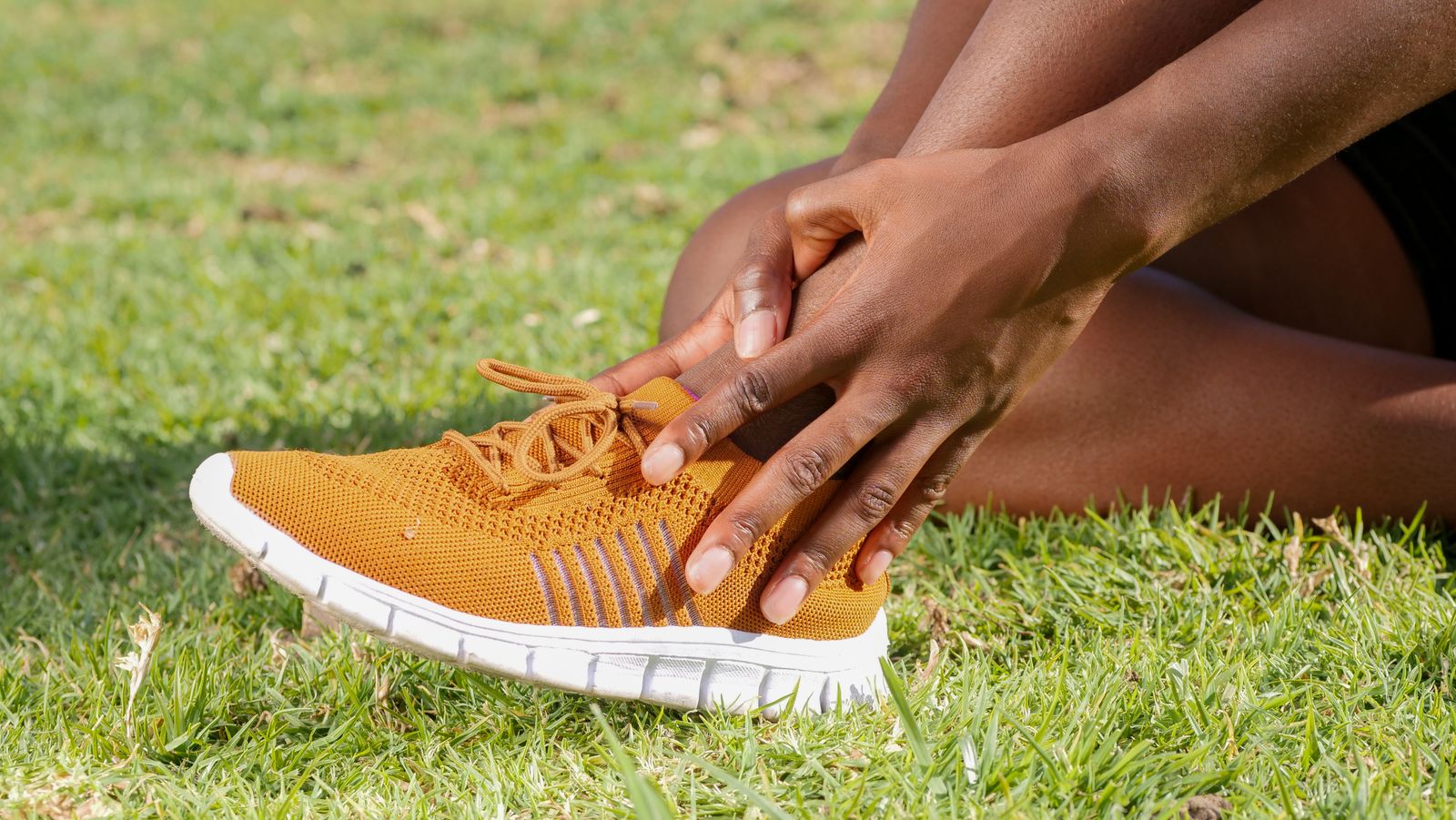
What is the shockwave timeline for plantar fasciitis, week by week?
Everyone heals at their own pace, but here’s what a typical course looks like at Adisi Health Center:
- Visit 1 (your New Patient Special): Dr. Steve Petzel examines your foot, ankle, calf, and the way you stand and walk, reviews your health history, and gives your first shockwave treatment. Some people notice a difference early, and others feel a little sore for a day or two, which is normal.
- Weeks 2 and 3 (sessions 2 and 3): Each follow-up session takes about 20 minutes. Many people start noticing that the first steps out of bed in the morning aren’t as sharp, or that pain after a long day on their feet settles faster.
- Weeks 4 and 5 (sessions 4 and 5): This is when most patients notice a clear difference. Walking the dog, a round of golf, or a shift on your feet is usually more comfortable.
- Week 6 (session 6): You complete the protocol. Most patients see significant improvement by this point.
- The months after: Your tissue keeps remodeling. Research shows heel pain often continues to improve for months after the last session, so your foot can keep getting better even after treatment ends.
How many shockwave sessions does plantar fasciitis need?
At Adisi Health Center, most patients see significant improvement after 6 sessions, spaced about one week apart. Dr. Petzel builds your personalized plan from your exam, since a heel that has hurt for two years may need a different plan than one that started last spring.
Research supports giving shockwave enough sessions to work. In a 2021 randomized trial of 94 people with plantar fasciitis, a group that received 7 higher-energy sessions improved more in pain, foot function, fatigue, and quality of life than a group that received only 3 sessions (Gezginaslan and Başar, Journal of Foot and Ankle Surgery, 2021; PubMed 33191061). Stopping after one or two visits because you don’t feel “fixed” yet is one of the most common reasons people think shockwave didn’t work for them.
For more on the session count, see how many sessions and what it costs.
Does plantar fasciitis keep improving after shockwave therapy ends?
Yes, and this is one of the most encouraging things about shockwave. A 2020 study from National Taiwan University Hospital followed 22 people with stubborn plantar fasciitis for a full year after shockwave and measured their heel pain on a 0 to 100 scale (Wu et al., Scientific Reports, 2020; PubMed 32054959):
- Before treatment: 62
- 1 week after: 49
- 1 month after: 38
- 3 months after: 28
- 6 months after: 19
- 12 months after: 13
Pain dropped significantly at every single check-in compared with before treatment, and by 6 months ultrasound showed the thickened plantar fascia had gotten significantly thinner, a sign of healing tissue. In other words, finishing your sessions is not the finish line. It’s the point where your body takes over.
Does focused or radial shockwave work faster for plantar fasciitis?
Adisi Health Center has both Storz Medical radial and focused shockwave units on-site, and many patients benefit from a combination of both. Radial shockwave spreads energy over a broader area, which suits the tight calf and arch muscles. Focused shockwave concentrates energy at a precise depth, which helps reach the plantar fascia where it attaches to the heel bone.
A 2019 meta-analysis of placebo-controlled trials found that medium-energy shockwave gave plantar fasciitis patients better success rates than placebo at 3, 6, and 12 months, and that focused shockwave seemed to be more effective than radial when each was compared with placebo (Wang et al., Journal of Clinical Medicine, 2019; PubMed 31546912). Learn more in radial vs. focused shockwave explained.
What can slow down plantar fasciitis healing?
A few things can make the timeline longer:
- Having pain for a long time before starting treatment
- Unsupportive shoes, like flat sandals, worn-out sneakers, or going barefoot on hard floors
- Long days standing on hard surfaces, common for nurses, teachers, and retail workers (see heel pain from standing all day)
- Jumping back into running or long walks too fast once the heel starts feeling better
- Tight calves, which pull on the heel and plantar fascia
- A recent cortisone shot, since you need to wait at least 6 weeks after your last shot before starting shockwave
What can I do at home to speed up recovery?
These habits support the plantar fascia between visits:
- Wear supportive shoes, including around the house, especially for those first steps in the morning
- Do gentle calf and arch stretches Dr. Petzel recommends, before getting out of bed and through the day
- Roll your arch over a ball or frozen water bottle if it feels good
- Avoid high-impact activity for 24 to 48 hours after each session
- Build back activity gradually, adding a little more walking, golf, or running each week instead of all at once
Does shockwave therapy hurt, and is there downtime?
Most people feel only mild discomfort, often described as a strong tapping on the heel. Sessions are quick and non-invasive, and there’s no downtime, so you can drive home and go about your day. See does shockwave therapy hurt? for more.
How much does shockwave for plantar fasciitis cost in Hinsdale?
Shockwave at Adisi Health Center is simple cash-pay pricing, with HSA and FSA accepted:
- $249 New Patient Special: includes a full exam, health history review, and your first shockwave treatment
- 6-session protocol: $1,050 (about $175 per session, saves $150)
- 10-pack: $1,650 (about $165 per session)
- Single session: $200 per treatment area
No referral is needed and same-week openings are often available.
What if my plantar fasciitis is severe, or I have pain in more than one area?
If your heel pain has been going on for a long time, is severe, or comes with other problems like knee, hip, Achilles, or back pain, our Recovery Memberships are the most complete way to recover faster. Both plans let you combine up to 4 therapies per visit, including shockwave, Class IV laser, EMTT, and TECAR, and the Premium plan includes 2 shockwave sessions per week. It’s a serious, accelerated recovery plan for people who want to treat every problem area at once and get back to golf, walking, and sleeping through the night.
Who shouldn’t get shockwave therapy?
Shockwave is non-invasive, but it isn’t right for everyone. It may not be a good fit if you:
- Are pregnant
- Have a bleeding disorder or take blood thinners
- Have an infection, open wound, or tumor in the treatment area
- Have a pacemaker or other implanted device near the treatment site
- Have had a cortisone shot in the area recently. You must wait at least 6 weeks after your last cortisone shot before starting shockwave.
Dr. Petzel reviews your health history and examines your foot before any treatment. Get checked promptly rather than waiting if your heel pain started after a fall or hard landing, if you can’t put weight on the foot, or if you have numbness, tingling, redness, warmth, or swelling, since those can point to something other than plantar fasciitis.
Frequently asked questions
How long does shockwave therapy take to work for plantar fasciitis?
Most people notice a real change by their 3rd or 4th session and get their best results after a 6-session protocol spaced about a week apart. Heel pain often keeps improving for months after the last session.
How many shockwave sessions do I need for plantar fasciitis?
At Adisi Health Center, most patients see significant improvement after 6 sessions. A 2021 randomized trial found 7 sessions worked better than 3, so finishing the full plan matters.
Will I feel better after my first shockwave session?
Some people notice a difference early, and others feel a little sore for a day or two. Either is normal. The biggest changes usually show up over the next few weeks as the tissue heals.
Does plantar fasciitis keep getting better after shockwave ends?
Often, yes. In a study that followed patients for a year, heel pain dropped from 62 out of 100 before treatment to 13 out of 100 at 12 months, improving at every check-in.
What if my heel still hurts after a few sessions?
That’s common early on, since shockwave works by helping tissue rebuild, which takes time. Dr. Petzel checks your progress at each visit and can adjust your plan, such as combining radial and focused shockwave or adding other therapies.
How much does shockwave for plantar fasciitis cost in Hinsdale?
The $249 New Patient Special includes your exam and first shockwave treatment. A 6-session protocol is $1,050, a 10-pack is $1,650, and a single session is $200 per treatment area. HSA and FSA are accepted.
Do I need a referral?
No. You can book directly, and same-week openings are often available.
Do you treat patients from outside Hinsdale?
Yes. Patients come to our office at 534 Chestnut Street, Suite 240 in downtown Hinsdale from Oak Brook, Burr Ridge, Clarendon Hills, Western Springs, Downers Grove, Westmont, La Grange, and nearby towns.
Related reading: Shockwave therapy for plantar fasciitis, shockwave vs. a cortisone shot, heel spur vs. plantar fasciitis, do you need surgery for plantar fasciitis?, and heel pain from standing all day
Ready to start your heel pain timeline?
The sooner you start, the sooner those first steps out of bed stop hurting. Book your $249 New Patient Special, which includes your exam and first shockwave treatment, at adisihealth.com/schedule-an-appointment, call Adisi Health Center at (630) 887-1900, or email DrPetzel@AdisiHealth.com. Learn more about shockwave therapy in Hinsdale.
References
- Wu CH, Lin YY, Chen WS, Wang TG. Sonoelastographic evaluation of plantar fascia after shock wave therapy for recalcitrant plantar fasciitis: a 12-month longitudinal follow-up study. Sci Rep. 2020;10(1):2571. PubMed 32054959
- Gezginaslan Ö, Başar G. Comparison of effectiveness of density and number of sessions of extracorporeal shock wave therapy in plantar fasciitis patients: a double-blind, randomized-controlled study. J Foot Ankle Surg. 2021;60(2):262-268. PubMed 33191061
- Wang YC, Chen SJ, Huang PJ, Huang HT, Cheng YM, Shih CL. Efficacy of different energy levels used in focused and radial extracorporeal shockwave therapy in the treatment of plantar fasciitis: a meta-analysis of randomized placebo-controlled trials. J Clin Med. 2019;8(9):1497. PubMed 31546912
This article is for education only and is not medical advice. Results vary. Prices are current as of October 2026.
