
Plantar Fasciitis Myths in Hinsdale: 7 Beliefs That Keep Heel Pain Hanging Around (and What Actually Helps)
By Dr. Steve Petzel, DC, Adisi Health Center, Hinsdale, IL
The biggest plantar fasciitis myths are that it’s just inflammation, that the heel spur is the problem, and that surgery is the only fix when rest fails. Chronic plantar fasciitis is usually tissue breakdown, and at Adisi Health Center in Hinsdale, research-backed shockwave therapy helps restart healing without surgery.
Almost every week, someone in our Hinsdale office tells us, “I’ve done everything for my plantar fasciitis, and it still hurts.” When we dig in, the problem usually isn’t effort. It’s advice built on myths. This guide sorts fact from fiction on plantar fasciitis treatment in Hinsdale for patients from Oak Brook, Western Springs, Clarendon Hills, Burr Ridge, Downers Grove, and Westmont, and for anyone searching “plantar fasciitis treatment near me” who is tired of first-step heel pain.
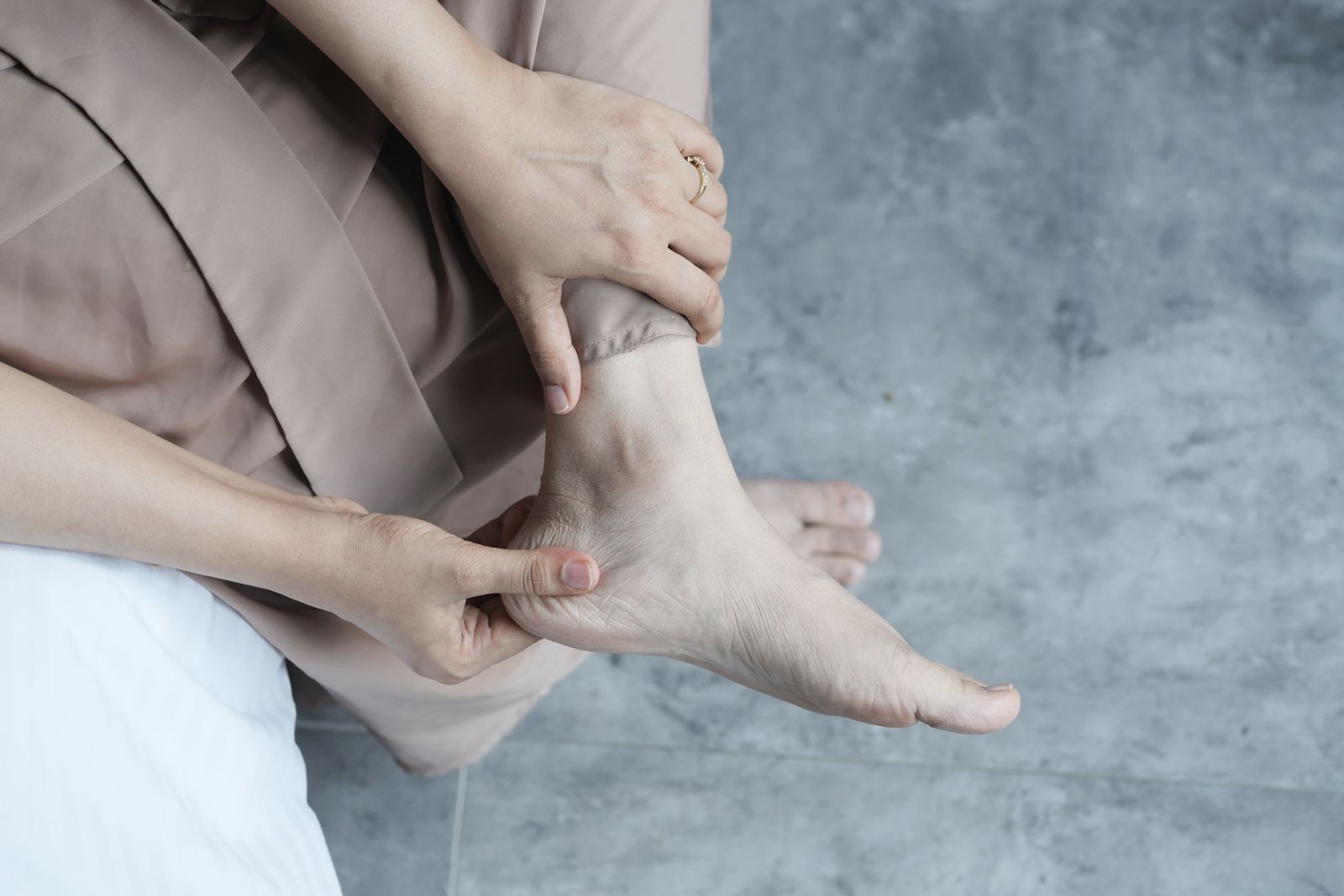
What is plantar fasciitis?
Plantar fasciitis is irritation and breakdown of the plantar fascia, the thick band of tissue that runs from your heel bone to your toes and supports your arch. The classic sign is sharp heel pain with your first steps in the morning or after sitting, which eases a bit as you move and then builds again after long periods on your feet.
Myth 1: “Plantar fasciitis is just inflammation”
The name ends in “-itis,” so most people assume it’s an inflammation problem that ice and anti-inflammatories should fix. For long-standing heel pain, the evidence points elsewhere. When researchers examined tissue from 50 people who had surgery for chronic plantar fasciitis, they found degeneration and fragmentation of the fascia, not inflammation. They concluded it is better described as a degenerative “fasciosis” (Lemont 2003).
The fact: chronic plantar fasciitis is usually a tissue repair problem. That’s why treatments that stimulate healing, rather than just quiet the pain, make sense once it has lasted for months. For more on this idea, read tendinitis vs. tendinosis.
Myth 2: “The heel spur is causing my pain”
An X-ray that shows a heel spur can feel like the answer. But a spur is a bony change where the fascia attaches. It isn’t the whole story, and the painful, degenerated tissue around it is what we treat. Many people with heel spurs get relief without ever having the spur removed.
The fact: finding a spur doesn’t mean you need surgery. We explain this in more detail in heel spur shockwave therapy in Hinsdale.
Myth 3: “If I just rest it, it’ll go away”
Short-term rest can calm a flare. But for most adults, total rest isn’t realistic, and once heel pain has lasted for months, rest alone often doesn’t finish the job. In one major stretching trial, the researchers noted that about 10% of people with plantar fasciitis go on to have persistent, often disabling symptoms (DiGiovanni 2003).
The fact: if your heel pain has lasted 3 months or more, it’s time for a plan, not just more waiting. See does plantar fasciitis go away on its own?
Myth 4: “Stretching doesn’t work for plantar fasciitis”
Stretching works, but the right stretch matters. In a randomized trial of 101 people who had chronic heel pain for at least 10 months, a stretch that targets the plantar fascia itself (pulling the toes back toward the shin while seated) led to better results for worst pain and first-step morning pain at 8 weeks than a standard calf and Achilles stretch (DiGiovanni 2003).
The fact: a plantar fascia-specific stretch, done consistently, is one of the most useful things you can do at home, and it pairs well with shockwave. Our plantar fasciitis home treatment guide walks through it.
Myth 5: “Only runners get plantar fasciitis”
Runners get it, but so do teachers, nurses, retail workers, contractors, and anyone who spends long days on hard floors. In a matched case-control study, three things independently raised the risk of plantar fasciitis (Riddle 2003):
- Tight ankles: limited upward ankle motion was the strongest risk factor
- Body weight: a body-mass index over 30
- Time on your feet: spending most of the workday standing or walking
The fact: your job and your ankle flexibility matter as much as your mileage. If you’re on your feet all day, read plantar fasciitis from standing all day.
Myth 6: “A cortisone shot will fix it for good”
A cortisone shot can calm pain for a while, but it doesn’t repair degenerated tissue. The researchers who described plantar fasciitis as a non-inflammatory “fasciosis” suggested that repeated steroid injections into the plantar fascia should be reconsidered, given the lack of inflammation and the potential risk of fascia rupture (Lemont 2003).
The fact: if you’ve had a cortisone shot and are considering shockwave, you must wait at least 6 weeks after your last cortisone shot before starting shockwave treatment. Compare the two approaches in shockwave vs. cortisone for plantar fasciitis.
Myth 7: “If nothing else works, surgery is my only option”
This is the myth that keeps people suffering the longest, because they put off care until they feel ready for surgery. There is a well-studied, non-surgical option in between: shockwave therapy.
Shockwave therapy (extracorporeal shockwave therapy, or ESWT) is a non-invasive treatment that sends acoustic pressure waves into injured tissue to restart the body’s own healing response.
What the research shows for chronic plantar fasciitis:
- Focused shockwave: in a randomized trial of 250 patients, heel pain dropped 69.2% with focused shockwave vs. 34.5% with placebo at 12 weeks (Gollwitzer 2015).
- Radial shockwave: in a trial of 245 patients, pain dropped 72.1% vs. 44.7% with placebo, and the overall success rate was 61.0% vs. 42.2% at 12 weeks, with no relevant side effects (Gerdesmeyer 2008).
- Compared with surgery: in an earlier comparison, 82% of feet treated with shockwave had a successful result, compared with 83% of a similar group who had a percutaneous plantar fasciotomy, with no complications in the shockwave group (Weil 2002). That study used an older shockwave device with sedation.
- The bigger picture: a 2025 network meta-analysis of 22 randomized trials (2,299 patients) found that every shockwave intensity level studied was more effective than placebo for treatment success (Zhao 2025).
The fact: surgery isn’t the next step after home care fails. For many people, shockwave is. Read more in plantar fasciitis surgery vs. shockwave.
Myth vs. fact: plantar fasciitis at a glance
| Myth | Fact |
|---|---|
| It’s just inflammation | Chronic cases show tissue degeneration (“fasciosis”) |
| The heel spur is the problem | The painful tissue around the spur is what needs treatment |
| Rest will cure it | Long-standing cases often need an active plan |
| Stretching doesn’t help | A plantar fascia-specific stretch beat a standard calf stretch |
| Only runners get it | Tight ankles, body weight, and standing all day raise risk |
| Cortisone fixes it for good | It may calm pain but doesn’t repair tissue; wait 6 weeks before shockwave |
| Surgery is the only option left | Shockwave is a research-backed, non-surgical step |
How do we treat plantar fasciitis in Hinsdale?
At Adisi Health Center, plantar fasciitis care starts with an exam to confirm what’s really causing your heel pain. If shockwave is a good fit, Dr. Petzel combines both radial and focused shockwave in each session, using FDA-cleared Storz Medical devices:
- Radial shockwave treats the broader, more surface-level tissue of the arch and heel.
- Focused shockwave reaches the deeper spot where the plantar fascia attaches to the heel bone.
Sessions are spaced about one week apart. There’s no downtime, and most patients return to normal activities right away, though we recommend avoiding high-impact activity for 24 to 48 hours after each session. Many patients report significant improvement by sessions 3 to 4. We also pair treatment with simple home exercises, because shockwave plus plantar fascia-specific stretching outperformed shockwave alone in a randomized trial of 152 people with chronic heel pain (Rompe 2015). For severe, long-standing heel pain, or if you’re dealing with more than one painful area, ask about our recovery memberships, a structured option for patients who want accelerated recovery.
Learn more on our shockwave therapy page and our plantar fasciitis page. Curious what treatment feels like? Read does shockwave therapy hurt?
Who should not have shockwave therapy?
Shockwave is low risk, but it isn’t right for everyone. It’s commonly avoided or postponed with:
- Pregnancy
- Cancer or a tumor in or near the treatment area
- A bleeding disorder or blood-thinning medication (this needs to be discussed first)
- An infection, open wound, or skin condition over the area
- A pacemaker or other implanted device near the area
- A cortisone shot in the last 6 weeks
- Heel pain that may be something else, like a stress fracture, nerve entrapment, or circulation problem
Seek medical care right away if your heel pain started after a fall or injury, if you can’t bear weight, or if you have numbness, fever, or a red, hot, swollen foot. For a full overview, read is shockwave therapy safe?
Where can I find plantar fasciitis treatment near me in Hinsdale?
Adisi Health Center is at 534 Chestnut Street, Suite 240, Hinsdale, IL 60521, (630) 887-1900. We’re a short drive from Oak Brook, Western Springs, Clarendon Hills, Burr Ridge, Downers Grove, Westmont, and La Grange. Dr. Steve Petzel, DC, has served Hinsdale since 2012, offers both radial and focused shockwave on site, and no referral is needed.
Frequently asked questions
Is plantar fasciitis an inflammation?
Early on there may be some inflammation, but chronic plantar fasciitis usually involves tissue degeneration without inflammation, often called “fasciosis.” That’s why treatments that stimulate healing tend to make more sense for long-standing heel pain.
Does a heel spur cause plantar fasciitis pain?
A heel spur is a bony change where the fascia attaches, but the painful, degenerated tissue around it is usually what needs treatment. Many people with spurs get relief without having the spur removed.
Do stretches really help plantar fasciitis?
Yes. In a randomized trial, a stretch aimed at the plantar fascia itself beat a standard calf and Achilles stretch for first-step morning pain and worst pain at 8 weeks.
Is surgery the only option for chronic plantar fasciitis?
No. Shockwave therapy is a well-studied, non-surgical option. Large randomized trials show it reduces chronic plantar fasciitis pain significantly more than placebo.
How long after a cortisone shot can I have shockwave for plantar fasciitis?
Wait at least 6 weeks after your last cortisone shot before starting shockwave treatment.
Who gets plantar fasciitis besides runners?
Anyone who spends long days on their feet. Research links plantar fasciitis to tight ankles, a body-mass index over 30, and standing or walking for most of the workday.
I live in Western Springs. Where can I get plantar fasciitis treatment near me?
Adisi Health Center at 534 Chestnut Street, Suite 240, in Hinsdale offers radial and focused shockwave for plantar fasciitis, a short drive from Western Springs, Oak Brook, and Clarendon Hills. No referral is needed.
If heel pain is still slowing you down, book a visit or call (630) 887-1900 to find out whether shockwave is right for you.
