
Can Shockwave Therapy Release Trigger Points? Relief for Chronic Neck and Upper Shoulder Muscle Knots in Hinsdale
Short answer: Yes, shockwave therapy is one of the better-studied options for stubborn trigger points, the tight, tender “knots” in the neck, upper traps, and between the shoulder blades that keep coming back. A meta-analysis of 11 randomized trials found shockwave relieved neck and shoulder trigger point pain better than other treatments it was compared with. At Adisi Health Center in Hinsdale, we use Storz Medical radial shockwave, which is best suited to myofascial pain and trigger points, and you can start with a free 20-minute phone call with Dr. Steve Petzel at (630) 887-1900.

What is a trigger point, and why won’t my neck knots go away?
A trigger point is a small, irritable spot in a tight band of muscle. Press on it and it’s tender, and it often sends pain somewhere else, like up into the back of your head, across the top of your shoulder, or down toward your shoulder blade. When trigger points stick around and cause ongoing pain, it’s called myofascial pain syndrome.
The muscles that get hit hardest are the upper trapezius (the “traps” between your neck and shoulder), the muscles along the neck, and the ones between the shoulder blades. Long hours at a laptop, looking down at a phone, driving, carrying bags, poor sleep, and stress all keep these muscles switched on. Massage and stretching can feel great, but for many people the knot is back by the next day.
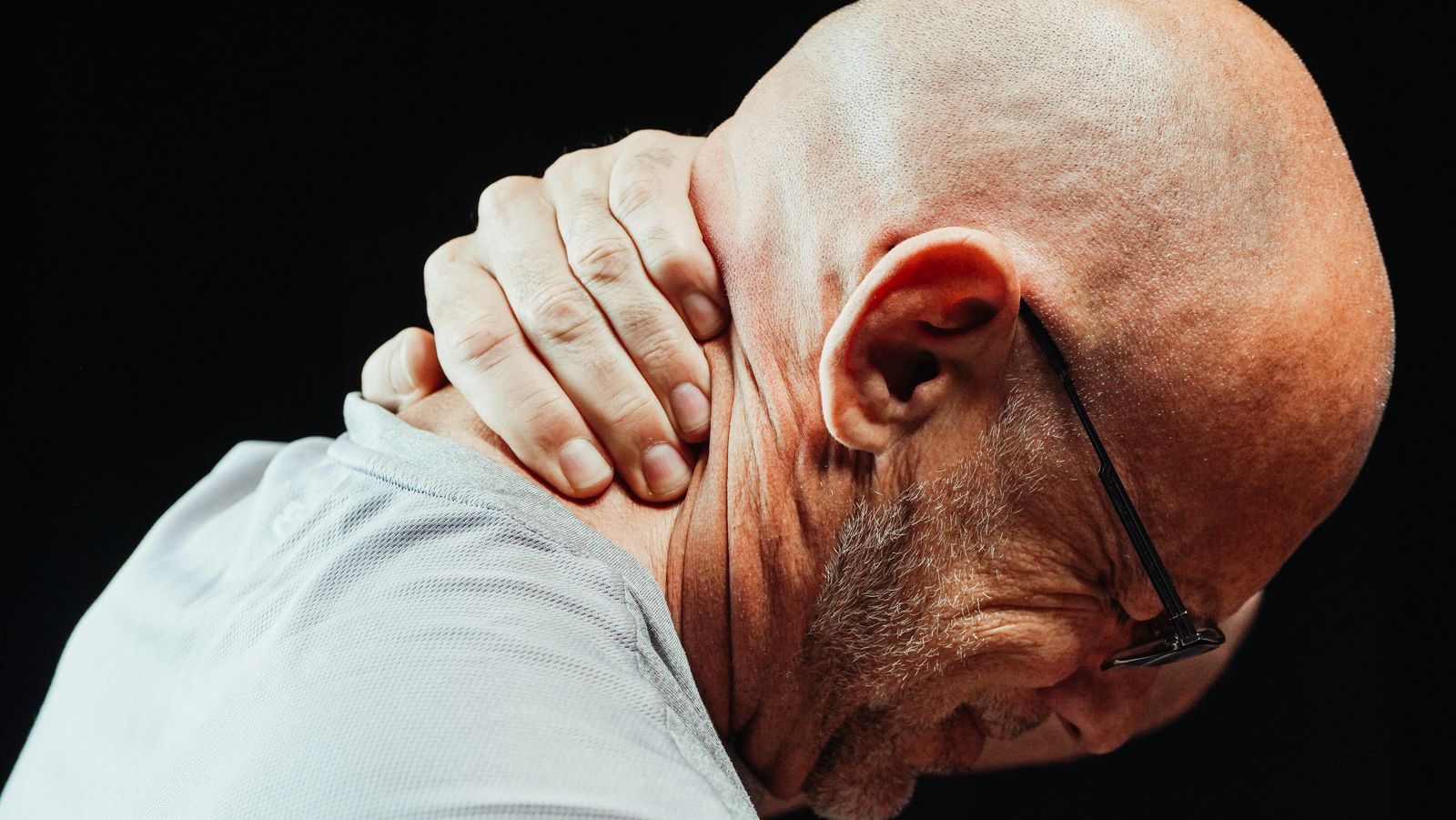
How does shockwave therapy treat trigger points?
Shockwave therapy sends acoustic pressure waves into the tissue to restart your body’s own healing response: more blood flow, breakdown of scar tissue, and new collagen production. On a trigger point, that means working directly on the tight, tender band that hands and stretching haven’t been able to change.
Adisi has both Storz Medical radial and focused shockwave units on-site. Radial shockwave spreads its energy over a broader area, which is why our shockwave page describes it as best for myofascial pain and trigger points. Focused shockwave concentrates energy at a precise depth, and many patients benefit from both in the same session. Read more in radial vs. focused shockwave explained.
What does the research say about shockwave for neck and shoulder trigger points?
- Meta-analysis of 11 randomized trials (2021): Shockwave was better than the other treatments it was compared with at reducing pain intensity and raising the pressure people could tolerate on the sore spot (pressure pain threshold) in neck and shoulder myofascial pain. Focused shockwave in particular showed significant pain relief (Jun et al., American Journal of Physical Medicine & Rehabilitation, 2021; PubMed 32520797).
- Randomized trial, 72 patients with neck and upper back myofascial pain (2021): Shockwave was compared with standard care (ultrasound, hot packs, and stretching) and with stretching alone. Shockwave patients’ pain dropped by an average of 4 points on a 10-point scale over four weeks, and at one month shockwave reduced pain significantly more than the ultrasound-based standard care (Rahbar et al., Clinical Rehabilitation, 2021; PubMed 32731757).
- Radial vs. focused vs. sham, 57 patients with upper trapezius trigger points (2025): After 4 sessions, both radial and focused shockwave improved pain significantly more than a sham treatment, with improvement still seen out to the 6-month follow-up. Radial and focused worked equally well for pain (Şenlikci et al., Lasers in Medical Science, 2025; PubMed 41042302).
- Neck-related headaches, 135 adults aged 40 to 60 (2026): In people whose headaches came from the neck, adding radial shockwave to the upper trapezius trigger points alongside neck stretching and strengthening exercises led to the best improvement in headache disability, pain, and trapezius muscle activity at a medium dose (Hammam et al., American Journal of Physical Medicine & Rehabilitation, 2026; PubMed 42476123). If headaches are part of your picture, see how a chiropractor can help headaches.
Is shockwave better than massage or dry needling for knots?
They aren’t either/or. Massage and stretching feel good and help in the short term, and the trial above found stretching on its own was less effective than shockwave. Shockwave is a good next step when knots keep coming back, because it works on the tissue itself with no needles. If you’d rather start with a gentler heat-based option, read about TECAR therapy for muscle knots. Dr. Petzel can combine shockwave with chiropractic care, Class IV laser, EMTT, or TECAR based on your exam.
Who is a good candidate for shockwave for neck and shoulder muscle pain?
You may be a good fit if you:
- Have tight, tender knots in your traps, neck, or between your shoulder blades that keep returning
- Feel pain that spreads from your neck into your head, shoulder, or upper back
- Work long hours at a desk or computer, drive a lot, or look down at a screen most of the day
- Have tried massage, stretching, or heat with only short-lived relief
- Want a drug-free, needle-free option with no downtime
What does a session feel like, and how many will I need?
Most patients feel only mild discomfort, often described as a strong tapping over the sore spot, and many say it hits the exact knot they’ve been trying to reach. Sessions take about 20 minutes, and you go straight back to your day. See does shockwave therapy hurt? for more.
Most patients see significant improvement after 6 sessions, each about 20 minutes and spaced about one week apart, with many noticing a real change by sessions 3 to 4. Dr. Petzel builds a personalized plan based on your exam.
How much does shockwave for trigger points cost in Hinsdale?
Shockwave at Adisi Health Center is simple cash-pay pricing, with HSA and FSA accepted:
- New patient evaluation: $249, a 45-minute visit with a full exam, health history review, and your first shockwave treatment
- 6-session protocol: $1,050 (about $175 per session, saves $150)
- Single session: $200 per treatment area
No referral is needed and same-week openings are often available. Full details are in how much does shockwave therapy cost in Hinsdale?
Is there a faster way to get my neck and shoulders back?
Yes. Our wellness memberships are our most committed option for accelerated recovery. Both plans let you combine up to 4 therapies per visit, including shockwave, Class IV laser, EMTT, and TECAR, and the Premium plan includes 2 shockwave sessions per week.
Who shouldn’t get shockwave therapy?
Shockwave is non-invasive, but it isn’t right for everyone. It may not be a good fit if you:
- Are pregnant
- Have a bleeding disorder or take blood thinners
- Have an infection, open wound, or tumor in the treatment area
- Have a pacemaker or other implanted device near the treatment site
- Have had a cortisone shot in the area recently. You must wait at least 6 weeks after your last cortisone shot before starting shockwave.
Dr. Petzel reviews your health history and examines your neck before any treatment. We recommend avoiding high-impact activity for 24 to 48 hours after each session. Get checked promptly rather than waiting if your neck pain follows a fall or car accident, or comes with numbness, tingling, or weakness in your arms, a sudden severe headache, fever, or dizziness, since those can point to a nerve, disc, or other problem that needs a different approach. If your pain started with a crash, see car accident injuries in Hinsdale.
Frequently asked questions
Can shockwave therapy break up trigger points?
Shockwave works directly on the tight, tender band of muscle to boost blood flow and restart healing. A meta-analysis of 11 randomized trials found it reduced neck and shoulder trigger point pain better than the other treatments it was compared with.
Does shockwave work for neck pain from muscle knots?
For neck pain coming from muscle trigger points (myofascial pain), studies show shockwave reduces pain and tenderness. Dr. Petzel will examine you first to confirm your pain is muscular and not coming from a nerve or disc.
Is radial or focused shockwave better for trigger points?
Radial shockwave is generally best suited to myofascial pain and trigger points, and a 2025 trial found radial and focused shockwave relieved upper trapezius trigger point pain equally well. Many patients benefit from both in the same session.
How many shockwave sessions do I need for trigger points?
Most patients see significant improvement after 6 sessions of about 20 minutes, spaced about a week apart. Many notice change by sessions 3 to 4.
Can shockwave help headaches that start in my neck?
A 2026 trial in adults aged 40 to 60 with neck-related headaches found that adding radial shockwave to upper trapezius trigger points, along with neck exercises, gave the best improvement in headache disability and pain.
Is there downtime after shockwave for neck and shoulder pain?
No. You go back to your day right after each session. We recommend avoiding high-impact activity for 24 to 48 hours.
How much does shockwave cost in Hinsdale?
At Adisi Health Center, a 6-session protocol is $1,050 and a single session is $200 per treatment area. The first visit is a $249 new patient evaluation that includes an exam and your first treatment. HSA and FSA are accepted.
Do you treat patients from outside Hinsdale?
Yes. Patients come to our office at 534 Chestnut Street, Suite 240 in downtown Hinsdale from Oak Brook, Burr Ridge, Clarendon Hills, Western Springs, Downers Grove, Westmont, La Grange, and nearby towns.
Related reading: Can shockwave therapy help chronic low back pain?, TECAR therapy for muscle knots, calcific tendinitis of the shoulder, and does shockwave therapy hurt?
Ready to finally loosen those knots?
Start with a free 20-minute phone call with Dr. Petzel to find out if shockwave is right for your neck and shoulder pain. Call Adisi Health Center at (630) 887-1900, email DrPetzel@AdisiHealth.com, or book your visit online.
References
- Jun JH, Park GY, Chae CS, Suh DC. The Effect of Extracorporeal Shock Wave Therapy on Pain Intensity and Neck Disability for Patients With Myofascial Pain Syndrome in the Neck and Shoulder: A Meta-Analysis of Randomized Controlled Trials. Am J Phys Med Rehabil. 2021;100(2):120-129. PubMed 32520797
- Rahbar M, Samandarian M, Salekzamani Y, Khamnian Z, Dolatkhah N. Effectiveness of extracorporeal shock wave therapy versus standard care in the treatment of neck and upper back myofascial pain: a single blinded randomised clinical trial. Clin Rehabil. 2021;35(1):102-113. PubMed 32731757
- Şenlikci HB, Yücealp Ö, Borman P, et al. Comparison of the efficacy of radial and focused extracorporeal shock-wave therapy (ESWT) in myofascial pain syndrome: a randomized, sham-controlled study. Lasers Med Sci. 2025;40(1):404. PubMed 41042302
- Hammam RF, Moustafa EBS, Ibrahim NA, et al. Dose Related Effects of Radial Extracorporeal Shock Wave Therapy on Upper Trapezius Trigger Points in Patients With Cervicogenic Headache: A Randomized Controlled Trial. Am J Phys Med Rehabil. 2026. PubMed 42476123
This article is for education only and is not medical advice. Results vary. Prices are current as of October 2026.
