
Do You Need Surgery for Plantar Fasciitis? Shockwave Therapy vs. Surgery for Stubborn Heel Pain in Hinsdale
Short answer: Most people with plantar fasciitis never need surgery, and even stubborn heel pain that hasn’t improved with stretching, inserts, or injections can often be treated with shockwave therapy first. In clinical studies of chronic plantar fasciitis, shockwave produced success rates close to plantar fascia release surgery, without an incision, anesthesia, or time off your feet. At Adisi Health Center in Hinsdale, a typical shockwave course is 6 sessions of about 20 minutes, and you can start with a free 20-minute phone call with Dr. Steve Petzel at (630) 887-1900.

When do doctors recommend surgery for plantar fasciitis?
Surgery for plantar fasciitis is usually a last resort. The most common procedure is a plantar fascia release (also called a plantar fasciotomy), where a surgeon partly cuts the tight band of tissue under your foot to relieve tension, either through an open incision or with a small camera (endoscopic). A family medicine review in American Family Physician notes that about 80% of people with plantar fasciitis improve within 12 months with proper treatment, and that surgery is generally reserved for people whose pain still limits activity after nonsurgical options are exhausted (Trojian and Tucker, 2019; PubMed 31194492).
If you’ve been dealing with heel pain for months and someone has mentioned surgery, the good news is there’s a powerful nonsurgical step to try first.
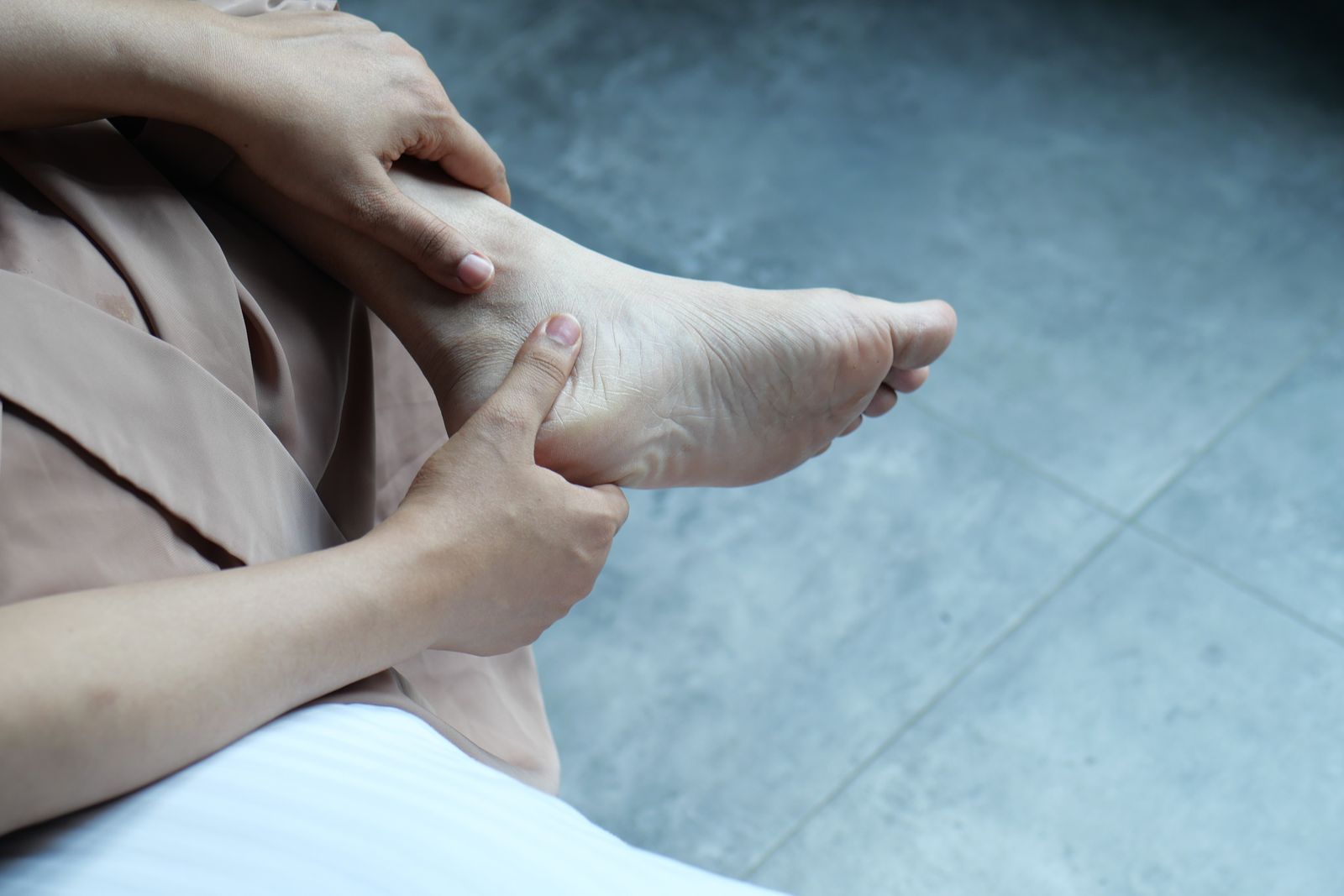
Can shockwave therapy help you avoid plantar fasciitis surgery?
For many patients, yes. Shockwave therapy sends acoustic pressure waves into the damaged tissue to restart your body’s own healing response: more blood flow, breakdown of scar tissue, and new collagen production. Our shockwave page notes that focused shockwave by Storz Medical has helped a significant number of patients with plantar fasciitis avoid surgical intervention entirely.
Shockwave is not a cut, a shot, or a medication. There’s no hospital stay, no stitches, no boot or crutches afterward, and you walk out of the office on your own two feet.
What does the research say about shockwave vs. surgery?
Researchers have compared the two head to head in people whose heel pain had already failed standard care:
- Randomized trial, 65 patients (2012): People with chronic heel pain that hadn’t responded to conservative treatment were randomly assigned to high-energy shockwave or endoscopic plantar fascia release. Both groups improved at 3 weeks, 3 months, and 12 months. At 12 months, the success rate was 70.6% with shockwave and 77.4% with surgery, a difference that was not statistically significant (Radwan et al., International Orthopaedics, 2012; PubMed 22782376).
- Prospective comparison, 37 patients (2010): Average pain scores dropped from 9 to 2.1 out of 10 with shockwave and from 9.1 to 1.6 with endoscopic surgery. The authors pointed to shockwave’s benefits of no complications, no immobilization, and an early return to full activity, and concluded it’s a reasonable earlier line of treatment before surgery (Othman and Ragab, Archives of Orthopaedic and Trauma Surgery, 2010; PubMed 20033696).
- Illinois foot and ankle study (2002): At the Weil Foot & Ankle Institute in Des Plaines, 82% of chronic plantar fasciitis patients were successfully treated with shockwave, compared with 83% of similar patients treated with percutaneous plantar fasciotomy, with no complications in the shockwave group (Weil et al., Journal of Foot and Ankle Surgery, 2002; PubMed 12075904). That study used an older, single high-energy treatment given under sedation; today’s shockwave sessions are done in the office, with no needles.
The takeaway: for heel pain that won’t go away, shockwave gives results in the same range as surgery in these studies, with far less disruption to your life. That’s why many patients choose to try it first.
Shockwave therapy vs. plantar fascia release: how do they compare?
| Shockwave therapy at Adisi | Plantar fascia release surgery | |
|---|---|---|
| Incision or anesthesia | None | Yes |
| Needles or medication | None | Typically yes |
| Downtime | Zero downtime | Recovery period off your feet |
| Treatment time | About 20 minutes per session | Surgery plus post-op follow-up |
| Typical course | 6 sessions, about a week apart | One procedure plus rehab |
| Referral needed | No | Usually requires a surgeon consult |
Who is a good candidate for shockwave instead of surgery?
You may be a good fit for shockwave if you:
- Have had heel or arch pain for several months that hasn’t gone away with stretching, inserts, night splints, or rest
- Feel sharp pain with your first steps in the morning or after sitting
- Have been told you have a heel spur along with plantar fasciitis
- Had a cortisone shot that wore off (see shockwave vs. cortisone for plantar fasciitis)
- Are a runner, walker, teacher, nurse, or anyone who spends long days on their feet and can’t afford time off for surgery recovery
- Want to try every reasonable nonsurgical option before an operation
Dr. Petzel will examine your foot at your first visit and tell you honestly whether shockwave makes sense or whether you should see a foot and ankle surgeon.
How many shockwave sessions does stubborn plantar fasciitis need?
Most patients see significant improvement after 6 sessions, each about 20 minutes and spaced about one week apart. Many people notice a real change by sessions 3 to 4, with the best results after finishing the full course. Adisi has both Storz Medical radial and focused shockwave units on-site, and the 6-session protocol combines both: focused shockwave reaches deep into the fascia where it attaches to the heel bone, and radial shockwave treats the tight calf and arch muscles that pull on it. Learn more in radial vs. focused shockwave explained.

What does shockwave cost compared with surgery?
At Adisi Health Center, shockwave pricing is simple and cash pay, with HSA and FSA accepted:
- New patient evaluation: $249, a 45-minute visit with a full exam, health history review, and your first shockwave treatment
- 6-session protocol: $1,050 (about $175 per session, saves $150)
- Single session: $200 per treatment area
No referral is needed and same-week openings are often available. See the full breakdown in how much does shockwave therapy cost in Hinsdale?
Is there a faster path back to full activity?
Yes. Our wellness memberships are our most committed option for accelerated recovery, built for patients who want to get back to running, training, or long workdays on their feet as quickly as possible. Both plans let you combine up to 4 therapies per visit, including shockwave, Class IV laser, EMTT, and TECAR. The Premium plan includes 2 shockwave sessions per week.
Who shouldn’t get shockwave therapy?
Shockwave is non-invasive, but it isn’t right for everyone. It may not be a good fit if you:
- Are pregnant
- Have a bleeding disorder or take blood thinners
- Have an infection, open wound, or tumor in the treatment area
- Have a pacemaker or other implanted device near the treatment site
- Have had a cortisone shot in the area recently. You must wait at least 6 weeks after your last cortisone shot before starting shockwave.
Dr. Petzel reviews your health history before any treatment. Most patients feel only mild discomfort during a session; read does shockwave therapy hurt? for what to expect. We recommend avoiding high-impact activity for 24 to 48 hours after each session. If your heel pain came from a sudden injury, you can’t put weight on your foot, or you have numbness, swelling, or redness, get it checked promptly, since those can point to a fracture, nerve problem, or infection rather than plantar fasciitis.
Frequently asked questions
Do I need surgery for plantar fasciitis?
Most people don’t. About 80% of plantar fasciitis cases improve within a year with proper care, and surgery is usually reserved for pain that still limits activity after nonsurgical treatments, including shockwave, have been tried.
Is shockwave therapy as effective as plantar fasciitis surgery?
In a randomized trial of 65 people with stubborn heel pain, shockwave had a 70.6% success rate at 12 months versus 77.4% for endoscopic surgery, a difference that was not statistically significant. Other studies have found similar results, with shockwave avoiding surgical complications and downtime.
Should I try shockwave before plantar fascia release surgery?
For many patients, yes. Researchers comparing the two concluded shockwave is a reasonable earlier line of treatment before surgery because it has no incision, no immobilization, and allows an early return to activity.
How many shockwave sessions do I need for chronic plantar fasciitis?
Most patients see significant improvement after 6 sessions of about 20 minutes, spaced about a week apart. Many notice change by sessions 3 to 4.
Is there downtime after shockwave therapy?
No. You walk out of the office after each session. We recommend avoiding high-impact activity for 24 to 48 hours afterward.
How much does shockwave for plantar fasciitis cost in Hinsdale?
At Adisi Health Center, a 6-session protocol is $1,050 and a single session is $200. The first visit is a $249 new patient evaluation that includes an exam and your first treatment. HSA and FSA are accepted.
Can I get shockwave if I’ve had a cortisone shot?
Yes, but you must wait at least 6 weeks after your last cortisone shot before starting shockwave.
Do you treat plantar fasciitis patients from outside Hinsdale?
Yes. Patients come to our office at 534 Chestnut Street, Suite 240 in downtown Hinsdale from Oak Brook, Burr Ridge, Clarendon Hills, Western Springs, Downers Grove, Westmont, La Grange, and nearby towns.
Related reading: Shockwave therapy for plantar fasciitis in Hinsdale, heel spur or plantar fasciitis?, shockwave vs. cortisone for plantar fasciitis, and how much does shockwave therapy cost?
Ready to try shockwave before surgery?
Start with a free 20-minute phone call with Dr. Petzel to find out if shockwave is right for your heel pain. Call Adisi Health Center at (630) 887-1900, email DrPetzel@AdisiHealth.com, or book your visit online.
References
- Radwan YA, Mansour AM, Badawy WS. Resistant plantar fasciopathy: shock wave versus endoscopic plantar fascial release. Int Orthop. 2012;36(10):2147-56. PubMed 22782376
- Othman AM, Ragab EM. Endoscopic plantar fasciotomy versus extracorporeal shock wave therapy for treatment of chronic plantar fasciitis. Arch Orthop Trauma Surg. 2010;130(11):1343-7. PubMed 20033696
- Weil LS Jr, Roukis TS, Weil LS, Borrelli AH. Extracorporeal shock wave therapy for the treatment of chronic plantar fasciitis: indications, protocol, intermediate results, and a comparison of results to fasciotomy. J Foot Ankle Surg. 2002;41(3):166-72. PubMed 12075904
- Trojian T, Tucker AK. Plantar Fasciitis. Am Fam Physician. 2019;99(12):744-750. PubMed 31194492
This article is for education only and is not medical advice. Results vary. Prices are current as of October 2026.
