
Is a Massage Gun the Same as Shockwave Therapy? Shockwave vs. Massage Gun in Hinsdale
By Dr. Steve Petzel, DC, Adisi Health Center, Hinsdale, IL
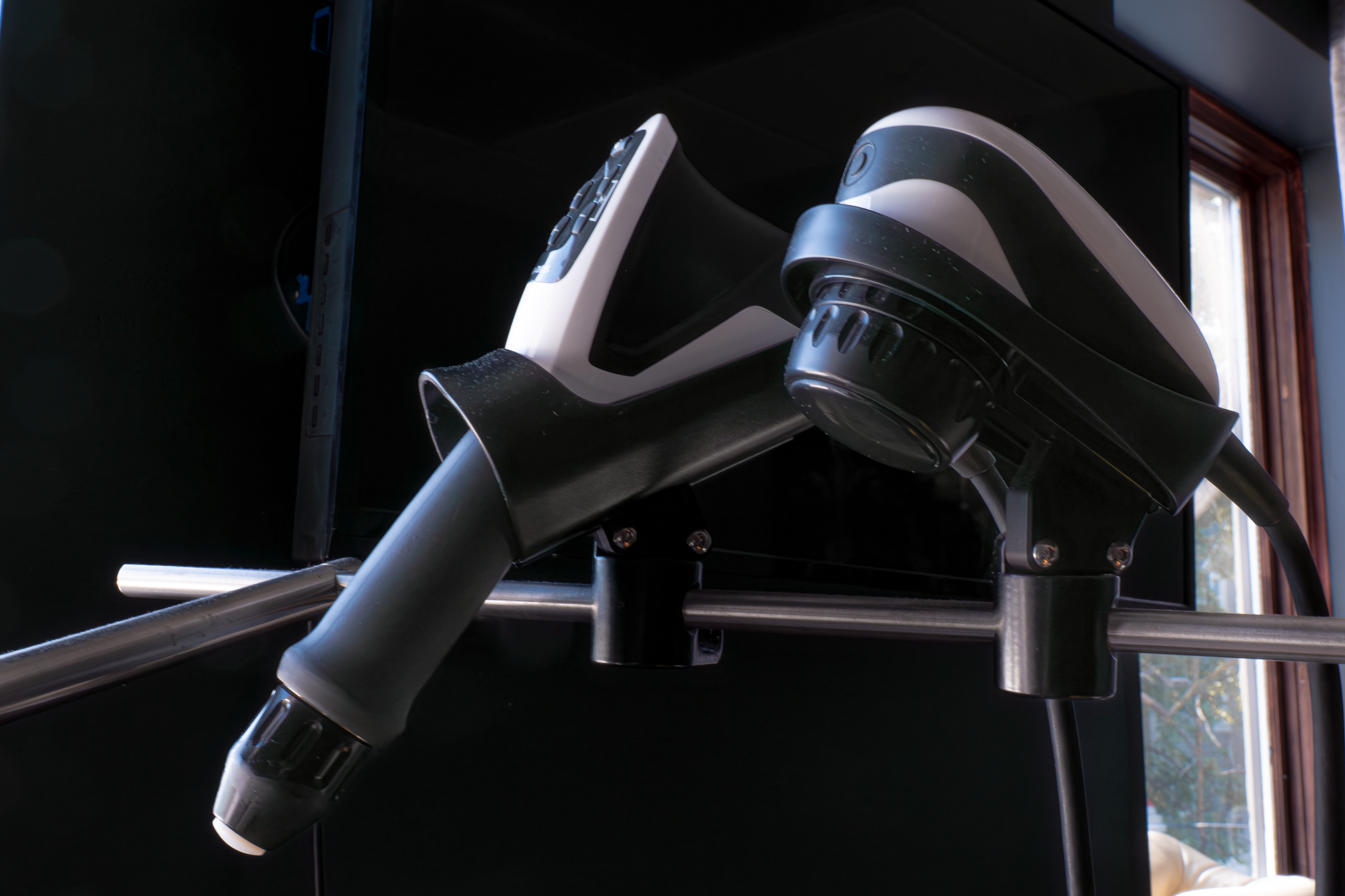
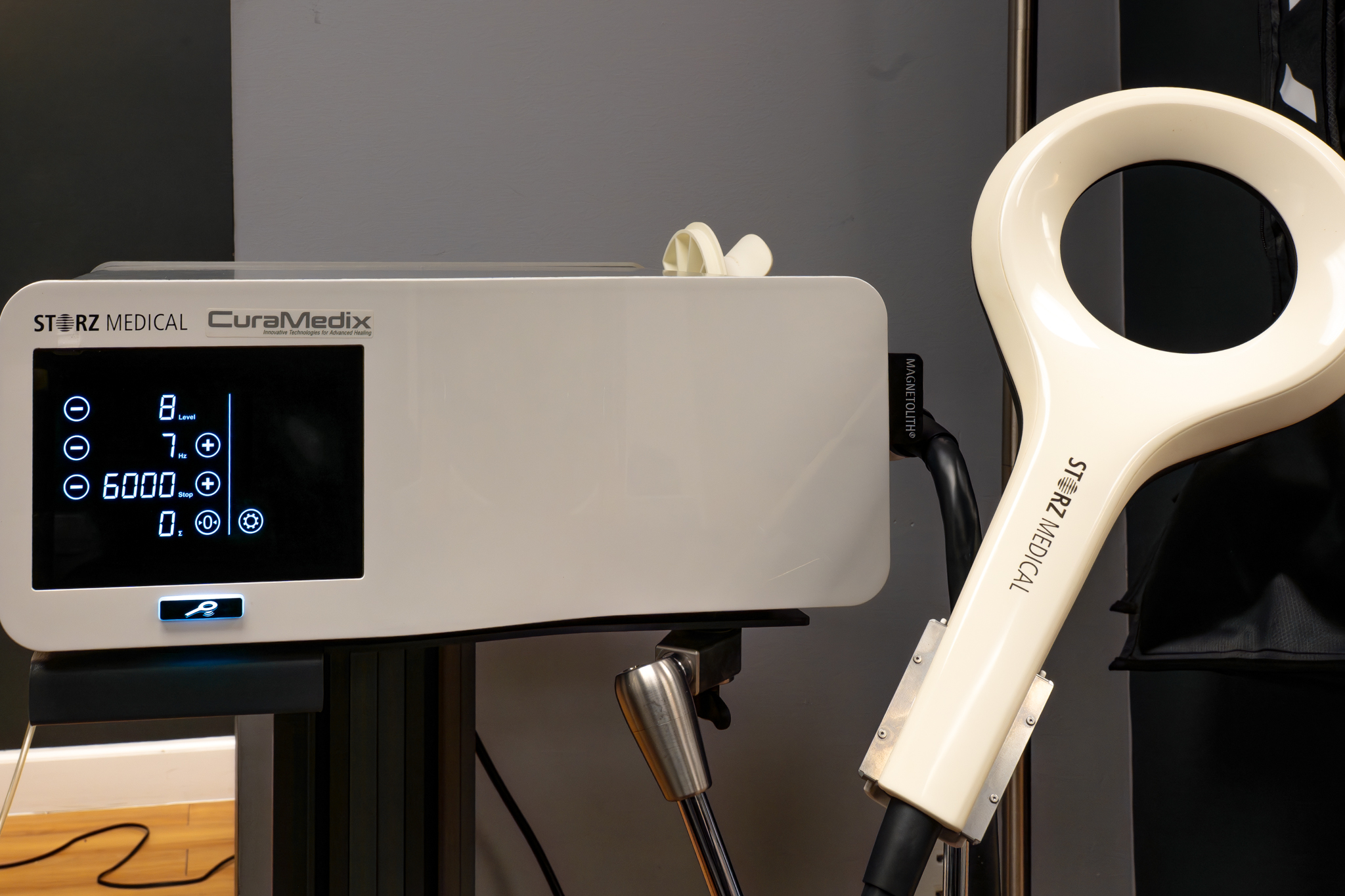
No. They are very different tools. A massage gun is a handheld percussion massager that taps on tight muscles for short-term relief. Shockwave therapy uses medical-grade acoustic pressure waves to stimulate healing in chronic tendon, fascia, and muscle pain. At Adisi Health Center in Hinsdale, Dr. Steve Petzel, DC, uses Storz Medical radial and focused shockwave.
Massage guns are everywhere now: gym bags, kitchen counters, holiday gift lists. So it’s no surprise that people searching for “shockwave therapy near me in Hinsdale” often ask, “Isn’t that just a stronger massage gun?” It’s a fair question, because both devices are held against the body and both create a rapid pulsing feeling. But how they work, what they’re built to treat, and the research behind them are not the same. This guide explains the difference for patients in Hinsdale, Oak Brook, Western Springs, Clarendon Hills, Burr Ridge, Downers Grove, Westmont, and La Grange.
Is a massage gun the same as shockwave therapy?
No. A massage gun moves a padded head back and forth against your muscle, while shockwave therapy sends acoustic pressure waves into tissue to trigger a healing response. A massage gun is a mechanical massage. Shockwave is a medical treatment that a provider aims at a specific, diagnosed problem, like a degenerated tendon or a stubborn trigger point.
What is shockwave therapy?
Shockwave therapy, also called extracorporeal shockwave therapy (ESWT), is a non-invasive treatment that delivers acoustic pressure waves into injured tissue to stimulate blood flow, tissue repair, and pain relief. There are two main types:
- Radial shockwave spreads energy over a broader, shallower area. On our shockwave therapy page, we note it’s best for myofascial pain and trigger points.
- Focused shockwave concentrates energy at a precise depth, which makes it a good fit for deep tendon problems and calcific deposits.
Many patients benefit from both in the same session. For a deeper comparison, see radial vs. focused shockwave: which one do you need?
What is a massage gun?
A massage gun is a handheld, battery-powered device that rapidly taps a padded attachment against your muscles, often called percussive massage. People use them to loosen tight muscles before or after workouts or at the end of a long day. They’re consumer devices made for home use, not tools for diagnosing or treating a specific injury.
What’s the difference between a massage gun and shockwave therapy?
Here’s a simple side-by-side:
| Massage gun | Shockwave therapy | |
|---|---|---|
| What it is | Handheld percussion massager | Medical acoustic pressure-wave treatment (ESWT) |
| How it works | Padded head taps the muscle surface | Acoustic waves travel into tendon, fascia, and muscle |
| Main goal | Short-term loosening and comfort | Stimulate healing in chronic, stubborn problems |
| Typical uses | General muscle tightness, warm-up, cool-down | Plantar fasciitis, tendinopathy, calcific shoulder, trigger points |
| Who uses it | Anyone, at home | A trained provider after an exam |
| Research base | Not built around treating specific injuries | Randomized trials and meta-analyses for many conditions |
| Depth targeting | None | Radial (broader) or focused (precise depth) |
The biggest difference is the goal. A massage gun can feel great on a tight muscle, but chronic tendon and fascia problems usually need more than temporary loosening. Shockwave is designed to kick-start repair in tissue that has stalled.
Can a massage gun fix plantar fasciitis or tennis elbow?
A massage gun may make tight calf or forearm muscles feel better for a while, but it isn’t designed to treat the degenerated tissue behind chronic plantar fasciitis or tennis elbow. These conditions often involve tissue that has stopped healing properly, which is why they can drag on for months.
Shockwave has been studied directly for these problems. In a large FDA multicenter, double-blind trial of 250 patients with chronic plantar fasciitis, focused shockwave reduced heel pain by 69.2% at 12 weeks, compared with 34.5% for placebo (Gollwitzer 2015, PubMed). Read more in our guides to shockwave for plantar fasciitis and tennis elbow, shockwave, and trigger points.
Does shockwave therapy work for muscle knots and trigger points?
Yes, research supports shockwave for myofascial pain, the medical term for painful muscle knots called trigger points. A trigger point is a tight, tender spot in a muscle that can refer pain to other areas, like a knot in the upper shoulder that causes neck pain or headaches.
What the studies show:
- A 2024 network meta-analysis of 40 randomized trials found shockwave reduced pain, raised the pressure-pain threshold (how much pressure a spot can take before it hurts), and lowered pain-related disability compared with no treatment (Liu 2024, PubMed).
- A 2022 meta-analysis of 8 studies and 571 patients, mostly with neck and upper-back muscle pain, found lower pain, a higher pain threshold, and better neck disability scores after shockwave than after the other treatments compared (Wu 2022, PubMed).
- A 2021 meta-analysis of 11 randomized trials in neck and shoulder muscle pain found shockwave improved pain intensity and pressure-pain threshold right after treatment, with focused shockwave showing significant benefit (Jun 2021, PubMed).
If stubborn knots in your neck, shoulders, or low back keep coming back no matter how much you roll or massage them, see our posts on shockwave for neck and shoulder trigger points and shockwave for chronic low back pain.
Does shockwave therapy feel like a massage gun?
It can feel a little similar at first, a fast tapping or pulsing, but shockwave is more targeted and you’ll feel it most right over the sore spot. Most patients describe mild, tolerable discomfort, and the intensity can be adjusted during the session. There’s no downtime, though we recommend avoiding high-impact activity for 24 to 48 hours afterward. More detail: does shockwave therapy hurt? and what to do after a shockwave session.
When should I see someone instead of using a massage gun?
A massage gun is fine for everyday tightness. Consider getting checked if:
- Pain has lasted more than 6 to 8 weeks or keeps coming back
- Heel, elbow, shoulder, knee, or hip pain is worse with first steps, lifting, or reaching
- A sore spot is sharp, not just tight, or you’re avoiding activities you love like golf, walking, or running
- You’ve tried home care (stretching, rolling, massage, rest) and you’re not improving
Getting the right diagnosis matters. Heel pain, for example, isn’t always plantar fasciitis, and Adisi has on-site X-ray to help rule out other causes when needed.
Where can I get shockwave therapy near me in Hinsdale?
Adisi Health Center offers Storz Medical radial and focused shockwave therapy at 534 Chestnut Street, Suite 240, Hinsdale, IL 60521. Call (630) 887-1900. Dr. Steve Petzel, DC, has practiced in Hinsdale for 14 years and performs every treatment himself. No physician referral is needed for shockwave. We’re a short drive from Oak Brook, Western Springs, Clarendon Hills, Burr Ridge, Westmont, Downers Grove, and La Grange.
At your visit, Dr. Petzel will examine the area, find the source of the pain, and decide whether radial shockwave, focused shockwave, or both make sense. Shockwave can also be paired with other therapies at the clinic, such as Winback TECAR for muscle knots, Class IV laser, EMTT, and chiropractic care. For patients with severe pain or several problem areas, our membership plans offer a serious accelerated-recovery option.
Who should not have shockwave therapy?
Shockwave is non-invasive and well tolerated, but it isn’t for everyone. Tell Dr. Petzel if you:
- Are pregnant
- Have cancer or a tumor in or near the treatment area
- Have a bleeding disorder or take blood thinners
- Have a pacemaker or other implanted device
- Have an infection, open wound, or numbness in the area
Massage guns have their own cautions: don’t use them over the front of the neck, over bony areas, on a fresh injury, or on an area that’s numb or swollen. Learn more in is shockwave therapy safe?
Frequently asked questions
Is a massage gun the same as shockwave therapy?
No. A massage gun is a home percussion massager for short-term muscle relief. Shockwave therapy is a medical treatment that delivers acoustic pressure waves into injured tissue to stimulate healing.
Can I use a massage gun after shockwave therapy?
Ask Dr. Petzel at your visit, since it depends on the area and condition being treated. After shockwave, we recommend avoiding high-impact activity for 24 to 48 hours.
Can a massage gun cure plantar fasciitis?
It may ease tight calf and foot muscles for a while, but it isn’t designed to treat chronic plantar fasciitis. Focused shockwave has been tested for plantar fasciitis in a large FDA multicenter, placebo-controlled trial.
Does shockwave therapy work for muscle knots?
Yes. Meta-analyses of randomized trials show shockwave reduces pain and improves pressure tolerance in myofascial trigger points, especially in the neck and shoulders.
Which is better for trigger points, radial or focused shockwave?
Radial shockwave is generally best for myofascial pain and trigger points, while focused shockwave reaches deeper tendons. Many patients benefit from both in the same session.
Do I need a referral for shockwave therapy in Hinsdale?
No. You can book shockwave therapy at Adisi Health Center without a physician referral.
I live in Western Springs. Where can I get shockwave therapy near me?
Adisi Health Center at 534 Chestnut Street, Suite 240, in Hinsdale offers radial and focused shockwave therapy, a short drive from Western Springs, La Grange, and Oak Brook. Call (630) 887-1900.
Medical disclaimer: This article is for education only and isn’t a substitute for an exam or personal medical advice.
If a sore spot isn’t letting go, you’re welcome to book a visit or call (630) 887-1900.
