
Shockwave vs. Cortisone Shot for Plantar Fasciitis: Which Works Better? A Hinsdale Guide
Short answer: A cortisone shot can calm plantar fasciitis pain quickly, but research shows shockwave therapy tends to do better a few months out. A 2024 review of 16 randomized trials found shockwave beat cortisone injections for heel pain and foot function at both three and six months. At Adisi Health Center in Hinsdale, Dr. Steve Petzel treats plantar fasciitis with Storz Medical radial and focused shockwave therapy, with no needles or medication. Call (630) 887-1900 or schedule an appointment.

Why are people comparing shockwave and cortisone for plantar fasciitis?
Plantar fasciitis is one of the most common causes of heel pain: a sharp, stabbing pain under the heel that’s worst with your first steps in the morning or after sitting. When stretching, new shoes, and rest haven’t fixed it, the two options people hear about most are a cortisone (steroid) injection and shockwave therapy. They work in very different ways, so it helps to know what each one is actually doing.
How does a cortisone shot work for heel pain?
A cortisone shot puts a strong anti-inflammatory medicine directly into the painful area of the heel. It’s meant to quiet pain and inflammation, and for many people it does that fairly fast. It doesn’t strengthen or rebuild the worn-down tissue in the plantar fascia, so it’s mainly a way to calm symptoms.
How does shockwave therapy work for plantar fasciitis?
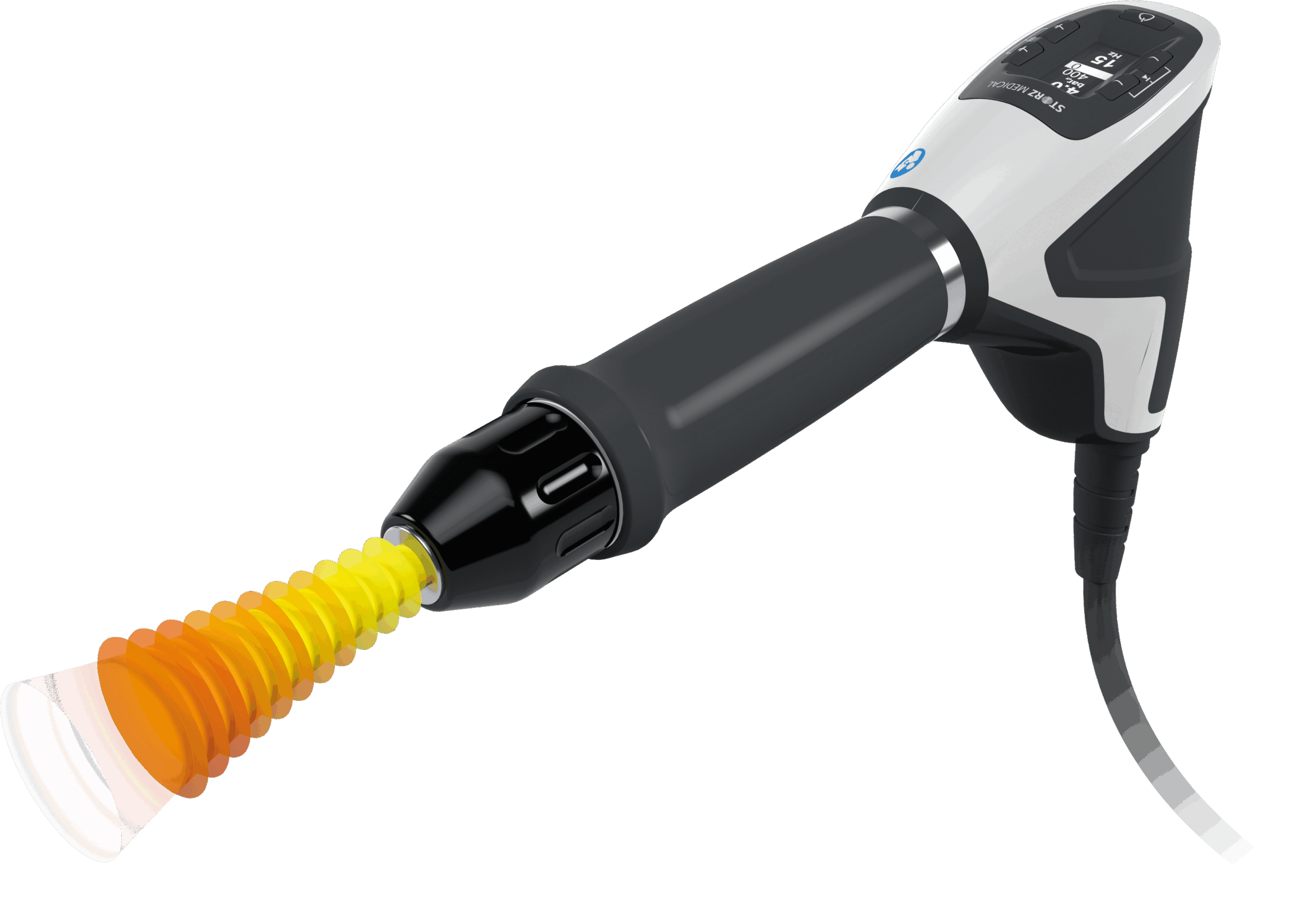
Shockwave therapy sends acoustic pressure waves through the skin into the sore tissue. The goal is to restart the body’s own healing response in tissue that has stopped healing on its own. It’s non-invasive, with no needles, injections, or medication, and there’s no downtime afterward.
Adisi has both Storz Medical radial and focused shockwave units on-site:
- Radial shockwave spreads energy over a wider area, which suits the broad, sore band of fascia and the tight calf and arch muscles that feed into heel pain.
- Focused shockwave reaches deeper and more precisely, right where the fascia attaches to the heel bone.
Many plantar fasciitis plans combine the two.
Is shockwave better than a cortisone shot for plantar fasciitis? What the research says
- 2024 systematic review and meta-analysis (16 randomized trials, 1,121 patients). At three months, shockwave was better than cortisone injections at reducing pain, reducing plantar fascia thickness, and improving foot function. At six months, shockwave was still more effective for pain and foot function. The most common side effects of shockwave were local soreness and mild redness, and the authors concluded shockwave is a safe therapy that’s more effective than cortisone injections at mid-term (Cortés-Pérez et al., Clinical Rehabilitation, 2024; PubMed 38738305).
- 2023 randomized trial (90 feet with chronic plantar fasciitis). People were randomly assigned to shockwave, a cortisone injection, or kinesio taping. The cortisone group had less pain at six weeks, the groups were even on pain at three months, and foot function was already better in the shockwave group. By six months, the shockwave group had the lowest pain and the best foot function scores. The authors concluded that cortisone can relieve pain faster early on, but shockwave gave the most improvement at six months (Orhan et al., Turkish Journal of Physical Medicine and Rehabilitation, 2023; PubMed 38766588).
The takeaway: if you want quick, short-term relief, a cortisone shot may help sooner. If you want relief that’s still holding up months later, the research favors shockwave. Results vary from person to person, and a proper exam always comes first.
Shockwave vs. cortisone at a glance
| Shockwave therapy | Cortisone shot | |
|---|---|---|
| How it’s given | Pressure waves through the skin | Needle injection into the heel |
| Main goal | Restart the body’s healing response | Calm pain and inflammation |
| Medication | None | Steroid medicine |
| Speed of relief | Builds over several sessions | Often faster at first |
| Research at 3 to 6 months | Better pain and foot function in the 2024 review | Less effective than shockwave in the 2024 review |
| Downtime | None | Usually little |
Can I get shockwave if I’ve already had a cortisone shot?
Yes, many of our plantar fasciitis patients come in after a shot that helped for a while and then wore off. We wait at least 6 weeks after your last cortisone shot before starting shockwave, so tell Dr. Petzel when and where you had your injection.
How many shockwave sessions does plantar fasciitis need?
Our standard shockwave plan is a 6-session protocol, with follow-up sessions taking about 20 minutes. Many patients report noticeable improvement by sessions 3 to 4, with the best results after finishing the full protocol. Dr. Petzel adjusts the plan to how long you’ve had heel pain and how your foot responds. Shockwave is often paired with Class IV laser therapy or Winback TECAR, along with calf and foot exercises and footwear advice.
What does a plantar fasciitis visit at Adisi look like?
- Free phone consultation. A short call with Dr. Petzel to see if shockwave is a good fit.
- New patient evaluation ($249, about 45 minutes). A full history and hands-on exam of your foot, ankle, calf, and how you walk, plus your first shockwave treatment.
- Targeted shockwave sessions. Radial, focused, or both, about 20 minutes, with no downtime. You see Dr. Petzel at every visit.
- Home program. Calf and arch stretching and strengthening, and simple changes to shoes and standing time.

How much does shockwave for plantar fasciitis cost in Hinsdale?
From our shockwave and pricing pages:
- New patient evaluation: $249, including your first shockwave treatment
- Single shockwave session: $200 per treatment area (about 20 minutes, radial or focused)
- 6-session protocol: $1,050 (radial and focused combined, about $175 per session)
Want to heal faster? Our membership plans are built for accelerated recovery and let you combine up to 4 therapies per visit:
- Recovery Membership, $1,299/month: includes shockwave, up to 20 minutes per week
- Premium, $2,199/month: includes 2 shockwave sessions per week
Treatments are cash pay, HSA and FSA cards are accepted, and no referral is needed.
Is shockwave therapy safe?
Shockwave is non-invasive. During treatment you’ll feel a tapping or pulsing that can be uncomfortable right over the sore spot, and the heel may be red, tender, or a little swollen for a day or two afterward. Most people walk out and go about their day.
Shockwave may not be right for you if you:
- Are pregnant
- Have a bleeding disorder or take blood thinners
- Have an infection, open wound, or tumor in the area
- Have a pacemaker or other implanted device near the treatment site
- Have had a cortisone injection in the heel within the last 6 weeks
Dr. Petzel reviews your health history before any treatment.
When should heel pain be checked by a doctor right away?
Get medical care first if your heel pain started with a fall or a pop, you can’t put weight on the foot, the heel is hot, red, and swollen, you have a fever, or you have numbness, tingling, or burning in the foot, especially if you have diabetes. Dr. Petzel will tell you honestly if you need imaging or a specialist.
Frequently asked questions
Is shockwave better than a cortisone shot for plantar fasciitis?
A 2024 review of 16 randomized trials found shockwave did better than cortisone injections for pain and foot function at three and six months. A cortisone shot may bring faster relief in the first few weeks.
Does shockwave hurt more than a cortisone shot?
Shockwave can be uncomfortable over the tender spot, but there’s no needle, sessions are short, and the intensity is adjusted to you.
How fast does shockwave work for heel pain?
Many patients report noticeable improvement by sessions 3 to 4 of our 6-session protocol, with the best results after finishing it.
Can I keep running or working on my feet during shockwave treatment?
Usually yes, with some changes. Dr. Petzel will tell you how much running or standing is okay while your heel heals.
Do I need a referral or a cortisone shot first?
No. You don’t need a referral, and you don’t have to try an injection before shockwave.
Do you see plantar fasciitis patients from outside Hinsdale?
Yes. Patients come to our office at 534 Chestnut Street, Suite 240 in downtown Hinsdale from Oak Brook, Burr Ridge, Clarendon Hills, Western Springs, Downers Grove, Westmont, La Grange, and nearby towns. See our local pages for Burr Ridge, Clarendon Hills, and Western Springs.
Related reading: Heel spur or plantar fasciitis? How shockwave helps, plantar fasciitis and shockwave therapy, shockwave for hip, Achilles and knee tendon pain, and radial vs. focused shockwave explained.
Ready to walk without heel pain?
If plantar fasciitis keeps coming back after a cortisone shot, or you’d rather skip the needle, let’s see if shockwave is right for you. Call Adisi Health Center at (630) 887-1900, email DrPetzel@AdisiHealth.com, or book your visit online.
This article is for education only and is not medical advice. Results vary.
