
Heel Spur or Plantar Fasciitis? How Shockwave Therapy Treats Heel Spur Pain in Hinsdale Without Surgery
Short answer: A heel spur is a small bony ledge on the bottom of the heel bone, and plantar fasciitis is irritation of the thick band of tissue that attaches right next to it. The two often show up together, but the pain usually comes from the overloaded tissue, not the spur itself, which is why heel spur pain can often be treated without surgery. At Adisi Health Center in Hinsdale, Dr. Steve Petzel treats heel spur pain with Storz Medical radial and focused shockwave therapy, and a 2023 randomized trial found both types reduced heel spur symptoms more than a sham treatment. Call (630) 887-1900 or schedule an appointment.

What is a heel spur?
A heel spur (doctors call it a calcaneal spur) is a bony growth on the underside of the heel bone, close to where the plantar fascia and the small muscles of the foot attach. It builds up slowly over months or years when that spot is pulled and stressed again and again. Spurs show up on an X-ray, and many people who have one never feel it at all.
Heel spur vs. plantar fasciitis: what’s the difference?
| Heel spur | Plantar fasciitis | |
|---|---|---|
| What it is | A bony growth on the heel bone | Irritated, worn-down tissue in the plantar fascia |
| How it’s found | X-ray | Your history and a hands-on exam |
| Does it always hurt? | No, many spurs cause no pain | Yes, pain is the main sign |
| Typical pain | Sharp heel pain with first steps, or after sitting | Sharp heel pain with first steps, or after sitting |
Because the symptoms are nearly identical and the two often happen together, “heel spur pain” and “plantar fasciitis” are frequently the same problem with two different labels. What matters most is calming the painful tissue and getting the heel to handle load again.
What does heel spur pain feel like?
- A sharp or stabbing pain under the heel, often toward the inside
- Pain that is worst with your first steps in the morning
- Pain when you stand up after sitting for a while
- An ache after a long day on your feet, a long walk, or a run
- A tender spot when you press on the bottom of the heel
We see heel spur pain in runners and walkers, nurses, teachers, retail and warehouse workers, and anyone who stands on hard floors all day. Tight calves, flat feet or high arches, unsupportive shoes, and extra body weight all add stress to the heel.
Can shockwave therapy get rid of a heel spur?
Shockwave therapy isn’t meant to “blast away” the bone, and a spur may still show on a future X-ray. The goal is to treat the painful tissue around it. Shockwave sends acoustic pressure waves into the heel to restart the body’s own healing response in tissue that has stopped healing on its own. In the studies below, patients had meaningful drops in pain and big gains in foot function, whether or not the spur itself changed.
Radial or focused shockwave for a heel spur?
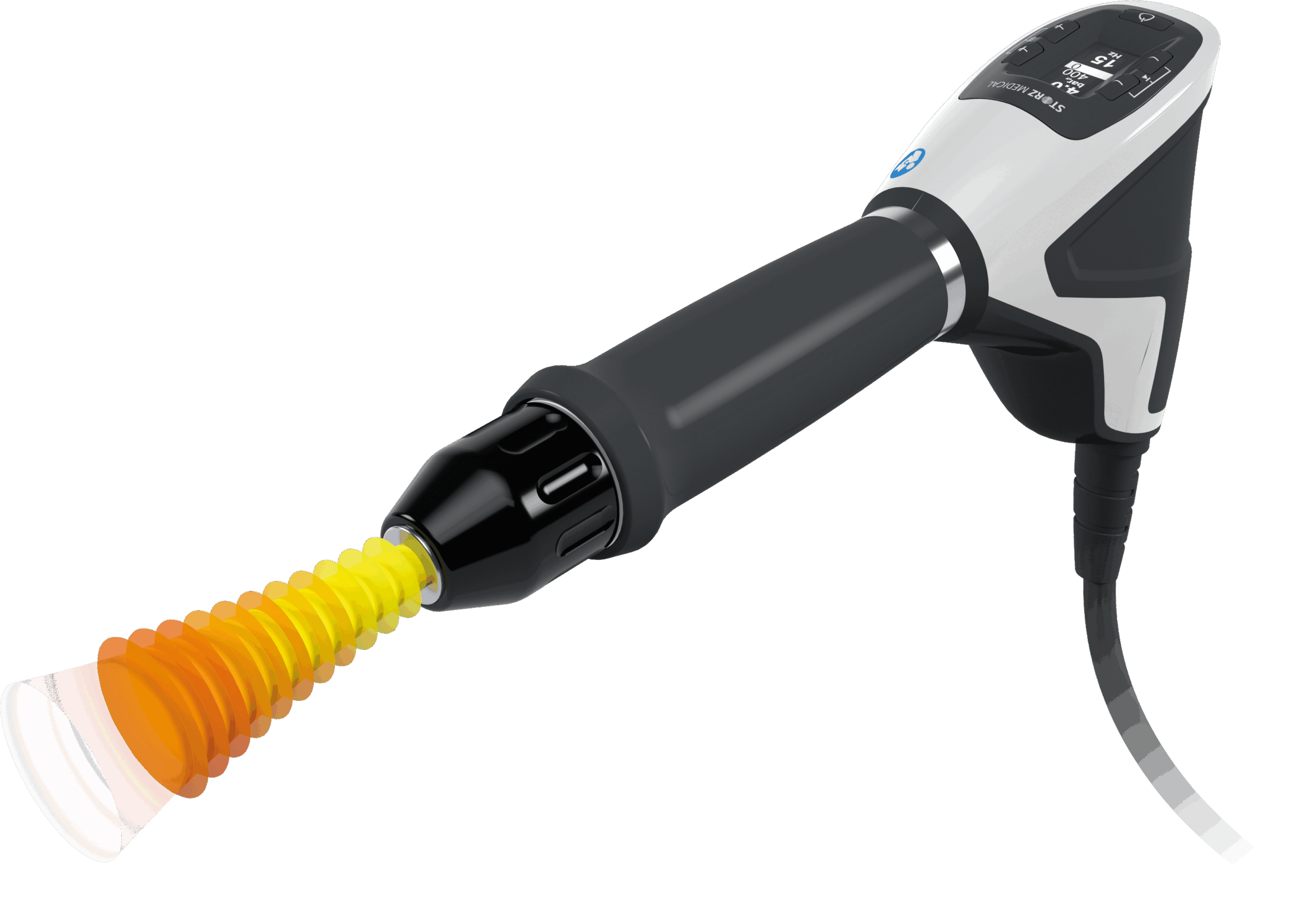
Adisi has both Storz Medical radial and focused shockwave units on-site, which lets Dr. Petzel match treatment to your heel:
- Radial shockwave spreads energy over a wider area. It works well for the broad, sore band of fascia and the tight calf and arch muscles that feed into heel pain.
- Focused shockwave concentrates energy deeper and more precisely, right at the attachment on the heel bone.
Many heel spur plans combine the two. Learn more on our shockwave therapy page and our plantar fasciitis page.
What does the research say about shockwave for heel spurs?
- Radial and focused shockwave vs. sham (2023 randomized trial). Researchers randomly assigned 99 people with a plantar heel spur to focused shockwave, radial shockwave, or a sham treatment, given as three sessions. Both real shockwave groups had significantly better Foot Function Index scores than the sham group at 5 and 13 weeks, and the radial group improved the most. The authors concluded both types are effective for heel spurs (Şah et al., The Physician and Sportsmedicine, 2023; PubMed 35713119).
- Shockwave vs. high-intensity laser (2025 randomized trial). In people with an X-ray-confirmed heel spur, both shockwave and high-intensity laser, each paired with exercise, lowered first-step heel pain and improved foot function through three months. In the shockwave group, first-step pain dropped from about 7.8 to 3.4 out of 10, and foot function scores improved from 58.8 to 19.7 (lower is better). No significant side effects were reported in either group (Karakuzu Güngör, Journal of Orthopaedic Surgery and Research, 2025; PubMed 40251681).
Results vary from person to person, and a proper exam always comes first.
How many shockwave sessions does a heel spur need?
Our standard shockwave plan is a 6-session protocol, with follow-up sessions taking about 20 minutes. Many patients report noticeable improvement by sessions 3 to 4, with the best results after finishing the full protocol. Dr. Petzel adjusts the plan to how long you’ve had pain and how your heel responds. Shockwave is often paired with Class IV laser therapy or Winback TECAR to calm the area between sessions, along with calf and foot exercises and footwear advice.
What does a heel spur visit at Adisi look like?
- Free phone consultation. A short call with Dr. Petzel to see if shockwave is a good fit.
- New patient evaluation ($249, about 45 minutes). A full history and hands-on exam of your foot, ankle, calf, and how you walk, plus your first shockwave treatment. If you already have X-rays, bring them.
- Targeted shockwave sessions. Radial, focused, or both, about 20 minutes, with no downtime. You see Dr. Petzel at every visit.
- Home program. Calf and arch stretching and strengthening, and simple changes to shoes and daily standing time.

How much does shockwave for a heel spur cost in Hinsdale?
From our shockwave and pricing pages:
- New patient evaluation: $249, including your first shockwave treatment
- Single shockwave session: $200 per treatment area (about 20 minutes, radial or focused)
- 6-session protocol: $1,050 (radial and focused combined, about $175 per session)
Want to heal faster? Our membership plans are built for accelerated recovery and let you combine up to 4 therapies per visit:
- Recovery Membership, $1,299/month: includes shockwave, up to 20 minutes per week
- Premium, $2,199/month: includes 2 shockwave sessions per week
Treatments are cash pay, HSA and FSA cards are accepted, and no referral is needed.
Is shockwave therapy safe for heel spurs?
Shockwave is non-invasive, with no needles, injections, or medication. During treatment you’ll feel a tapping or pulsing that can be uncomfortable right over the sore spot, and the heel may be red, tender, or a little swollen for a day or two afterward. Most people walk out and go about their day.
Shockwave may not be right for you if you:
- Are pregnant
- Have a bleeding disorder or take blood thinners
- Have an infection, open wound, or tumor in the area
- Have a pacemaker or other implanted device near the treatment site
- Have had a recent cortisone injection in the heel (tell Dr. Petzel so he can time treatment safely)
Dr. Petzel reviews your health history before any treatment.
When should heel pain be checked by a doctor right away?
Get medical care first if your heel pain started with a fall or a pop, you can’t put weight on the foot, the heel is hot, red, and swollen, you have a fever, or you have numbness, tingling, or burning in the foot, especially if you have diabetes. Dr. Petzel will tell you honestly if you need imaging or a specialist.
Frequently asked questions
Do I need surgery for a heel spur?
Most people with heel spur pain never need surgery. Non-surgical care, including shockwave, exercise, and better footwear, is the usual first step.
Is shockwave better than a cortisone shot for a heel spur?
They work differently. A cortisone shot calms pain and inflammation for a while, while shockwave aims to restart healing in the tissue. Dr. Petzel can talk through which approach fits your situation.
Does shockwave for a heel spur hurt?
It can be uncomfortable over the tender spot, but sessions are short and the intensity is adjusted to you. There’s no downtime afterward.
Can I keep running or working on my feet during treatment?
Usually yes, with some changes. Dr. Petzel will tell you how much running or standing is okay while your heel heals.
Will my heel spur come back?
The spur itself rarely goes away, but that’s okay, because many spurs never hurt. The aim is a heel that’s pain-free and strong enough for your normal life, and your home program helps keep it that way.
Do you see heel spur patients from outside Hinsdale?
Yes. Patients come to our office at 534 Chestnut Street, Suite 240 in downtown Hinsdale from Oak Brook, Burr Ridge, Clarendon Hills, Western Springs, Downers Grove, Westmont, La Grange, and nearby towns. See our local pages for Burr Ridge, Clarendon Hills, and Western Springs.
Related reading: Plantar fasciitis and shockwave therapy, shockwave for hip, Achilles and knee tendon pain, shin splints and shockwave, and radial vs. focused shockwave explained.
Ready to walk without heel pain?
If a heel spur or plantar fasciitis is making every first step hurt, let’s find out if shockwave is right for you. Call Adisi Health Center at (630) 887-1900, email DrPetzel@AdisiHealth.com, or book your visit online.
This article is for education only and is not medical advice. Results vary.
