
Does Laser Therapy Help Plantar Fasciitis? Class IV Laser for Heel Pain in Hinsdale
By Dr. Steve Petzel, DC, Adisi Health Center, Hinsdale, IL
Short answer: Yes, Class IV laser therapy can help plantar fasciitis. In clinical trials, high-power laser reduced heel pain and improved foot function within about three weeks, and head-to-head studies found it eased pain about as well as shockwave. At Adisi Health Center in Hinsdale, Dr. Steve Petzel uses the 40-watt LightForce XLi laser for stubborn heel pain, often alongside shockwave.
If you’re looking for laser therapy for plantar fasciitis in Hinsdale, or a non-surgical heel pain option near Oak Brook, Clarendon Hills, or Western Springs, this guide explains what the research says, how laser compares with shockwave, and what a visit is like.
What is plantar fasciitis?
Plantar fasciitis is irritation and breakdown of the plantar fascia, the thick band of tissue that runs from your heel bone to your toes and supports your arch. It’s the most common cause of pain on the bottom of the heel.
The classic signs are:
- Sharp heel pain with your first steps in the morning or after sitting
- Pain that eases as you warm up, then returns after a long day on your feet
- Tenderness on the inside of the bottom of the heel
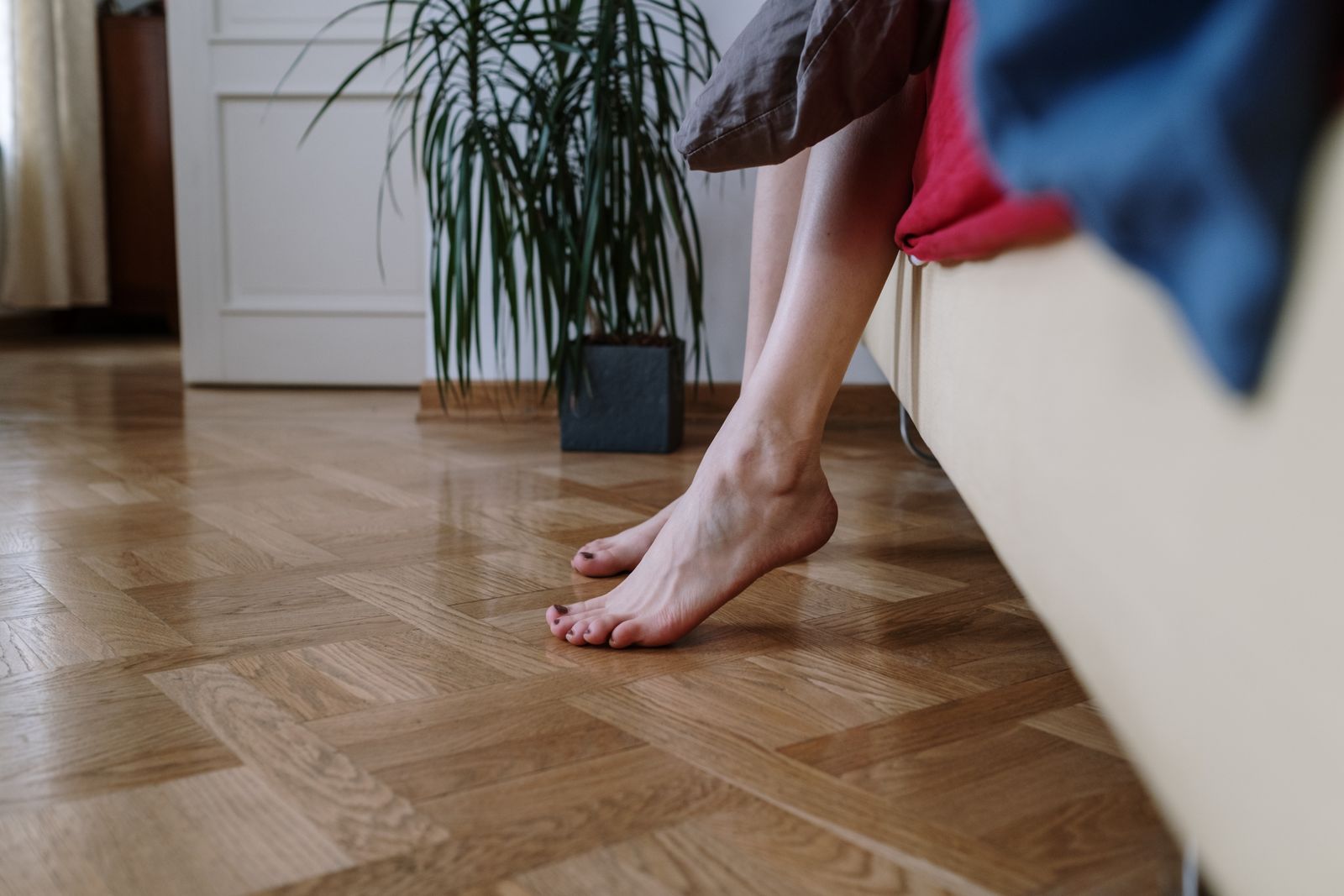
Morning heel pain is a classic sign of plantar fasciitis.
For more on that morning pain, see why your heel hurts with your first steps in the morning.
What is Class IV laser therapy?
Class IV laser therapy, also called photobiomodulation, uses high-power infrared light to reach deep tissue and support the body’s own healing response. It’s drug-free and needle-free.
At Adisi, we use the LightForce XLi, a 40-watt, FDA-cleared Class IV laser with two wavelengths (810 nm and 980 nm). Lower-power “cold lasers” run below half a watt, so a Class IV laser can deliver a treatment dose to deeper tissue in less time. Learn more on our laser therapy page.
Does laser therapy help plantar fasciitis? What the research says
Several studies support laser for plantar fasciitis heel pain:
- High-power laser plus usual care beat usual care alone. In a randomized trial, adults with plantar fasciitis got either usual care or usual care plus nine high-power laser treatments over three weeks (at 10 or 25 watts). Average pain in the laser groups dropped from 4.5 to 2.8, compared with 4.0 to 3.8 with usual care alone. Function improved more with laser too, and the gains held through six months (Ketz et al., 2024, International Journal of Sports Physical Therapy).
- A review of six randomized trials found laser significantly lowered heel pain by the end of treatment, and the relief lasted up to three months (Wang et al., 2019, Medicine).
- Laser vs. shockwave, head to head. In a randomized trial of 32 people, both high-intensity laser and radial shockwave significantly reduced plantar fasciitis pain over three weeks of twice-weekly sessions, and the laser group did better on one measure of daily function (Thammajaree et al., 2023, Lasers in Medical Science).
- A 2026 review of 10 studies with 803 patients concluded that shockwave, high-intensity laser, and low-level laser all showed similar effectiveness for chronic plantar fasciitis (Alotaibi et al., 2026, Lasers in Medical Science).
Is laser therapy or shockwave better for plantar fasciitis?
Both work, and they work differently. A 2026 review of five randomized trials found no difference in pain relief between high-intensity laser and shockwave, with a small trend toward better foot function with shockwave (Wu et al., 2026, Bioengineering).
| Class IV laser | Shockwave therapy | |
|---|---|---|
| What it uses | High-power infrared light | Acoustic pressure waves |
| How it feels | Gentle, soothing warmth | Rhythmic tapping, some discomfort |
| Session length | About 10–15 minutes | About 20 minutes |
| Typical schedule | 2–3 times a week | 6-session protocol |
| Often a good fit for | Sore, inflamed heels; people who want a very comfortable treatment | Long-standing heel pain, heel spurs, pain that keeps coming back |
Shockwave remains our go-to treatment for long-standing plantar fasciitis. You can read more in our guide to shockwave therapy for plantar fasciitis in Hinsdale and on our shockwave therapy page.
Can I combine laser and shockwave for plantar fasciitis?
Yes. At Adisi, chronic plantar fasciitis is often treated with shockwave as the main treatment, with Class IV laser (and sometimes TECAR) used to calm local inflammation and improve tissue mobility between shockwave sessions. Dr. Petzel decides the mix after your exam, based on how long you’ve had heel pain and how your tissue responds.
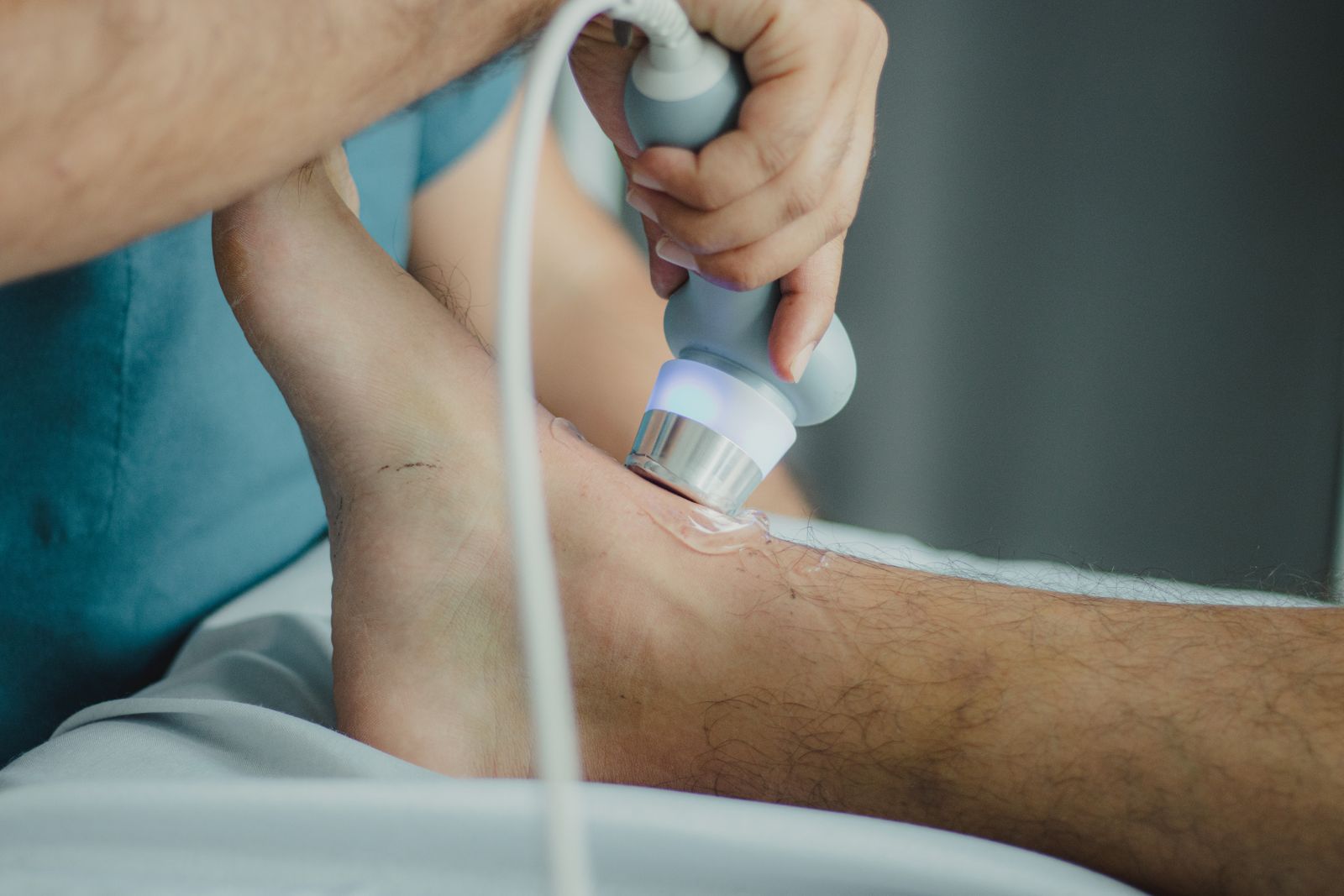
Hands-on care for heel and ankle pain.
What does laser therapy for heel pain feel like?
Most patients describe a pleasant, progressive warmth over the heel and arch. There are no needles, no tapping, and no downtime, so you can walk out and go back to your day. You’ll wear protective glasses during treatment.
How many laser sessions do I need for plantar fasciitis?
Many patients notice improvement within 3 to 5 sessions. Sessions are usually scheduled 2 to 3 times a week. Because plantar fasciitis is a chronic, degenerative problem, it typically needs 15 to 20 sessions for lasting results. Dr. Petzel builds your plan at the first visit and adjusts it as you respond.
Is laser therapy safe for plantar fasciitis?
For most adults, yes. Class IV laser is FDA-cleared and non-invasive, and the studies above reported it was well tolerated. A few precautions:
- Eye protection is always worn, since the laser shouldn’t shine into the eyes.
- Tell Dr. Petzel if you are pregnant, have a history of cancer, take medications that make you sensitive to light, or have reduced feeling in your feet (for example, from diabetes), so he can adjust or choose another treatment.
What else helps plantar fasciitis heal?
Laser and shockwave work best with a few simple habits:
- Stretch the calf and arch before your first steps in the morning
- Wear supportive shoes at home instead of going barefoot on hard floors
- Ease back gradually on long walks, runs, or long shifts on your feet
If your heel pain keeps returning, read why plantar fasciitis keeps coming back.
Laser therapy for plantar fasciitis near me in Hinsdale
Adisi Health Center treats heel pain for adults from Hinsdale and nearby Oak Brook, Burr Ridge, Clarendon Hills, Western Springs, Downers Grove, Westmont, and La Grange. Dr. Steve Petzel, DC, has served the area since 2012 and offers Class IV laser, Storz Medical radial and focused shockwave, EMTT, and Winback TECAR under one roof. No referral is needed.
Adisi Health Center
534 Chestnut Street, Suite 240, Hinsdale, IL 60521
(630) 887-1900
FAQ: Laser therapy for plantar fasciitis
Does laser therapy help plantar fasciitis?
Yes. Randomized trials and reviews show high-power laser reduces plantar fasciitis heel pain and improves function, with relief lasting months in several studies.
What is Class IV laser therapy?
Class IV laser therapy, or photobiomodulation, uses high-power infrared light to reach deep tissue and support healing. Adisi uses the 40-watt LightForce XLi.
Is laser therapy or shockwave better for plantar fasciitis?
Reviews comparing them found similar pain relief. Shockwave showed a small edge in foot function in one review, and laser is very comfortable. Many patients do best with shockwave as the main treatment and laser as support.
How many laser sessions do I need for plantar fasciitis?
Many people notice improvement in 3 to 5 sessions. Chronic plantar fasciitis typically needs 15 to 20 sessions, 2 to 3 times a week, for lasting results.
Does laser therapy for heel pain hurt?
No. Most patients feel a gentle, soothing warmth, and there’s no downtime afterward.
Can I combine laser therapy and shockwave for heel pain?
Yes. Dr. Petzel often uses laser between shockwave sessions to calm inflammation and improve tissue mobility in chronic plantar fasciitis.
Where can I get laser therapy for plantar fasciitis near Oak Brook or Downers Grove?
Adisi Health Center at 534 Chestnut Street, Suite 240, in Hinsdale offers Class IV laser therapy and shockwave for heel pain and is a short drive from Oak Brook, Downers Grove, Burr Ridge, Clarendon Hills, Western Springs, Westmont, and La Grange.
Related reading
- Laser therapy in Hinsdale
- Shockwave therapy in Hinsdale
- Shockwave vs. cortisone for plantar fasciitis
- Heel spur shockwave therapy
- Tennis elbow: shockwave vs. laser study
If heel pain is slowing you down, you’re welcome to book a visit or call (630) 887-1900.
This article is for education only and is not medical advice. Results vary.
