
Can’t Lift Your Arm? Shockwave Therapy for Frozen Shoulder in Hinsdale
Short answer: Yes, shockwave therapy can help frozen shoulder. Research shows it can ease shoulder pain, improve how well you can use your arm, and help you get back range of motion, especially when it’s combined with the right stretching and exercise. At Adisi Health Center in Hinsdale, Dr. Steve Petzel treats frozen shoulder with Storz Medical radial and focused shockwave, and you can start with our $249 New Patient Special, which includes your exam and your first shockwave treatment. Call (630) 887-1900.
What is frozen shoulder?
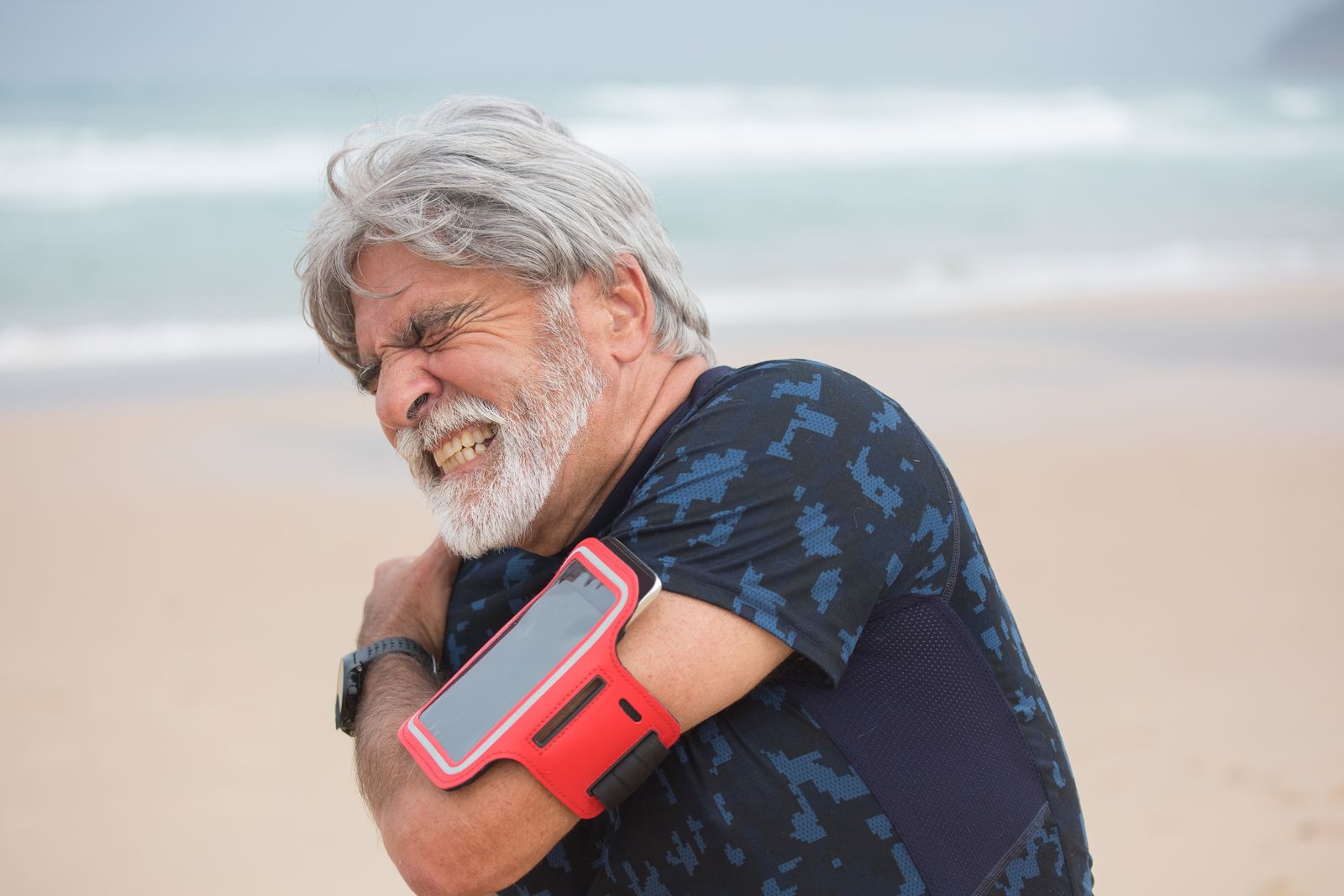
Frozen shoulder, also called adhesive capsulitis, happens when the capsule of connective tissue around your shoulder joint becomes thick, tight, and inflamed. The shoulder slowly gets painful and stiff, and you lose the ability to move it fully, even when someone else tries to move it for you.
Common signs of frozen shoulder include:
- You can’t lift your arm above your head, or reach a high shelf
- Reaching behind your back to tuck in a shirt, fasten a bra, or grab your wallet is hard or impossible
- A deep, dull ache in the shoulder or upper arm
- Pain at night, especially when you roll onto that side
- Stiffness that keeps getting worse over weeks or months, even without an injury
Frozen shoulder is most common in adults between about 40 and 65, it affects women more often than men, and it’s much more common in people with diabetes or thyroid problems. It can also start after a period of not moving the arm much, like after an injury or surgery.
How long does frozen shoulder last without treatment?
Frozen shoulder often moves through three stages:
- Freezing: pain builds and motion starts to disappear
- Frozen: pain may ease a little, but the shoulder stays very stiff
- Thawing: motion slowly returns
The frustrating part is that this can take one to three years, and some people never get all of their motion back. That’s a long time to give up golf, tennis, swimming, lifting your grandkids, or a good night’s sleep. That’s why many people look for ways to calm the pain and get moving again sooner.
Does shockwave therapy work for frozen shoulder?
The research is encouraging. Here’s what three studies found:
- A 2022 review of 20 randomized trials: Adding shockwave to usual frozen shoulder care gave better pain relief right away and in the short term, plus better shoulder function right after treatment, compared with usual care alone. The authors concluded that shockwave “seems to be beneficial” for frozen shoulder by easing pain and improving function (Zhang et al., Orthopaedic Journal of Sports Medicine, 2022; PubMed 35141337).
- A 2025 randomized, sham-controlled trial: 30 people with frozen shoulder did 6 weeks of physical therapy, with either real radial shockwave or a fake (sham) shockwave. The real shockwave group had less pain right after treatment and at 12 weeks, less disability at 12 weeks, and better shoulder motion, including reaching up, out to the side, and rotating the arm (Sharahili and Alzahrani, Saudi Medical Journal, 2025; PubMed 40628437).
- A 2020 trial in people with diabetes: 103 diabetic patients with frozen shoulder got either 4 weekly sessions of radial shockwave or one cortisone injection into the joint. By 12 weeks, the shockwave group had better shoulder function and less pain than the injection group, with similar gains in motion. The authors suggested shockwave may be a safe alternative to steroid injections for people with diabetes (El Naggar et al., Journal of Shoulder and Elbow Surgery, 2020; PubMed 32553435).
That last study matters for a lot of people. Frozen shoulder is more common with diabetes, and cortisone shots can raise blood sugar, so having a non-injection option is helpful.
How does shockwave help a frozen shoulder?
Shockwave therapy uses strong sound-wave pulses to stimulate your body’s own healing response. At Adisi Health Center, that means increasing blood flow, breaking down scar tissue, and activating collagen production in the tissues around the shoulder.
For frozen shoulder, Dr. Petzel often combines two types of shockwave:
- Focused shockwave concentrates energy at a precise depth, which helps reach the deeper tissues around the shoulder joint
- Radial shockwave spreads energy over a broader area, which suits the tight muscles and trigger points around the shoulder blade, neck, and upper arm that tense up to guard a stiff shoulder
Learn more about the difference in radial vs. focused shockwave explained.
Is it frozen shoulder or a rotator cuff problem?
They can feel alike, but there’s a key difference. With a rotator cuff problem, the shoulder hurts when you lift your arm, but someone else can usually move it through its full range. With frozen shoulder, the joint is truly stiff, so it won’t go further even when someone else gently moves it for you.
Shoulder pain can also come from calcific tendinitis (calcium deposits in a tendon) or a pinched nerve in the neck. Dr. Petzel examines your shoulder, neck, and upper back to figure out what’s really going on before recommending treatment. If you have calcium deposits, see calcific tendinitis and shockwave, or read more about shoulder pain treatment in Hinsdale.
How many shockwave sessions does frozen shoulder need?
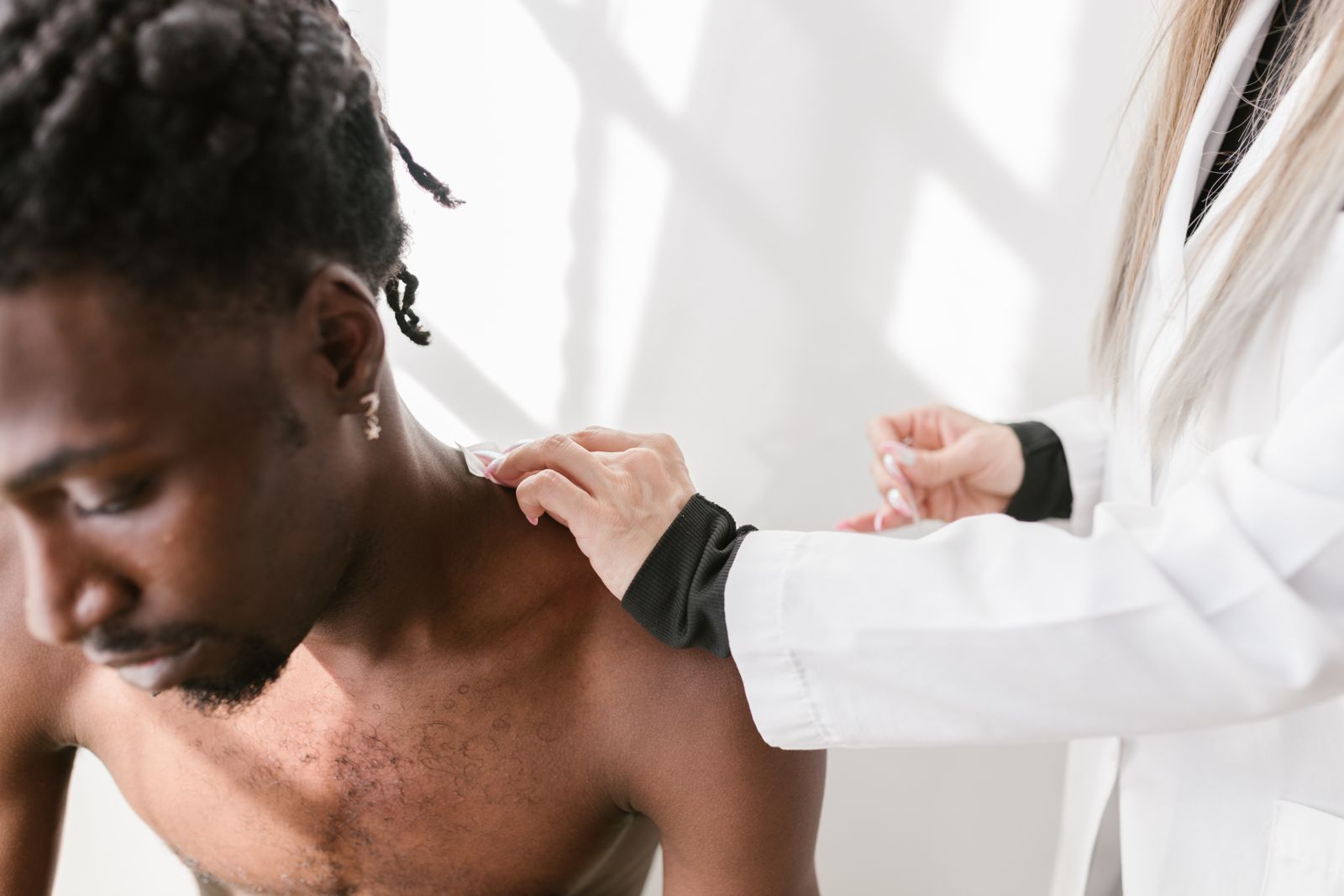
At Adisi Health Center, most patients see significant improvement after 6 sessions, each about 20 minutes and spaced about a week apart. Many people report a noticeable difference by sessions 3 or 4. Dr. Petzel builds your personalized plan from your exam, since a shoulder that has been stiff for a year may need a different plan than one that started stiffening last month.
What does a shockwave session feel like?
Most people feel only mild discomfort, often described as a strong tapping over the shoulder. Sessions are quick and non-invasive, with no needles and no downtime, so you can drive home and go about your day. We recommend avoiding high-impact activity for 24 to 48 hours after each session. See does shockwave therapy hurt? for more.
What can I do at home to help my frozen shoulder?
These habits support your progress between visits:
- Keep the shoulder moving gently with the stretches Dr. Petzel recommends, several times a day, without forcing through sharp pain
- Use heat before stretching to help the shoulder loosen up
- Sleep with a pillow under your arm or hugged to your chest so the shoulder isn’t pulled into a painful position
- Keep blood sugar under control if you have diabetes
- Build back activity gradually, like short practice swings before a full round of golf
How much does shockwave therapy cost in Hinsdale?
Shockwave at Adisi Health Center is simple cash-pay pricing, with HSA and FSA accepted:
- $249 New Patient Special: includes a full exam, health history review, and your first shockwave treatment
- 6-session protocol: $1,050 (about $175 per session, saves $150)
- 10-pack: $1,650 (about $165 per session)
- Single session: $200 per treatment area
No referral is needed and same-week openings are often available. For more, see what shockwave therapy costs in Hinsdale.
What if my frozen shoulder is severe, or I have pain in more than one area?
If your shoulder has been stiff for a long time, the pain is severe, or you also have neck, back, elbow, hip, or knee problems, our Recovery Memberships are the most complete way to recover faster. Both plans let you combine up to 4 therapies per visit, including shockwave, Class IV laser, EMTT, and TECAR, and the Premium plan includes 2 shockwave sessions per week. It’s a serious, accelerated recovery plan for people who want to treat every problem area at once and get back to golf, reaching overhead, and sleeping through the night.
Who shouldn’t get shockwave therapy?
Shockwave is non-invasive, but it isn’t right for everyone. It may not be a good fit if you:
- Are pregnant
- Have a bleeding disorder or take blood thinners
- Have an infection, open wound, or tumor in the treatment area
- Have a pacemaker or other implanted device near the treatment site
- Have had a cortisone shot in the area recently. You must wait at least 6 weeks after your last cortisone shot before starting shockwave.
Dr. Petzel reviews your health history and examines your shoulder before any treatment. Get checked promptly rather than waiting if your shoulder pain started after a fall or hard hit, if your arm suddenly became weak or you can’t lift it at all, or if you have numbness, tingling, fever, redness, or swelling. Call 911 if shoulder or arm pain comes with chest pressure, shortness of breath, sweating, or nausea, since those can be signs of a heart problem.
Frequently asked questions
Does shockwave therapy work for frozen shoulder?
Research is encouraging. A 2022 review of 20 randomized trials found that adding shockwave to usual care improved short-term pain and function, and a 2025 sham-controlled trial found less pain, less disability, and better motion at 12 weeks.
How many shockwave sessions does frozen shoulder need?
At Adisi Health Center, most patients see significant improvement after 6 sessions, each about 20 minutes and spaced about a week apart. Many notice a difference by sessions 3 or 4.
Is shockwave better than a cortisone shot for frozen shoulder?
In a 2020 trial of 103 people with diabetes and frozen shoulder, 4 weekly shockwave sessions led to better function and less pain at 12 weeks than a single cortisone injection, with similar gains in motion. Dr. Petzel can help you decide what fits your situation.
How long does frozen shoulder last?
Without treatment, frozen shoulder can take one to three years to work through its freezing, frozen, and thawing stages, and some people never get all their motion back. Many people choose treatment to ease pain and get moving sooner.
Can I get shockwave for frozen shoulder if I have diabetes?
Often, yes. Frozen shoulder is more common with diabetes, and research in diabetic patients is encouraging. Dr. Petzel reviews your full health history first.
Does shockwave for frozen shoulder hurt?
Most people feel only mild discomfort, like a strong tapping. There are no needles and no downtime.
How much does shockwave therapy cost in Hinsdale?
The $249 New Patient Special includes your exam and first shockwave treatment. A 6-session protocol is $1,050, a 10-pack is $1,650, and a single session is $200 per treatment area. HSA and FSA are accepted.
Do I need a referral?
No. You can book directly, and same-week openings are often available.
Do you treat patients from outside Hinsdale?
Yes. Patients come to our office at 534 Chestnut Street, Suite 240 in downtown Hinsdale from Oak Brook, Burr Ridge, Clarendon Hills, Western Springs, Downers Grove, Westmont, La Grange, and nearby towns.
Related reading: Calcific tendinitis of the shoulder and shockwave, shoulder pain treatment from a Hinsdale chiropractor, shockwave for shoulder pain relief, shockwave for neck and shoulder trigger points, and non-invasive shoulder pain treatments
Ready to get your shoulder moving again?
The sooner you start, the sooner you can reach overhead, swing a club, and sleep through the night again. Book your $249 New Patient Special, which includes your exam and first shockwave treatment, at adisihealth.com/schedule-an-appointment, call Adisi Health Center at (630) 887-1900, or email DrPetzel@AdisiHealth.com. Learn more about shockwave therapy in Hinsdale.
References
- Zhang R, Wang Z, Liu R, Zhang N, Guo J, Huang Y. Extracorporeal shockwave therapy as an adjunctive therapy for frozen shoulder: a systematic review and meta-analysis. Orthop J Sports Med. 2022;10(2):23259671211062222. PubMed 35141337
- Sharahili TM, Alzahrani HA. Effect of radial extracorporeal shockwave therapy combined with evidence-based physical therapy for adhesive capsulitis of the shoulder: a randomized controlled trial. Saudi Med J. 2025;46(7):816-824. PubMed 40628437
- El Naggar TEDM, Maaty AIE, Mohamed AE. Effectiveness of radial extracorporeal shock-wave therapy versus ultrasound-guided low-dose intra-articular steroid injection in improving shoulder pain, function, and range of motion in diabetic patients with shoulder adhesive capsulitis. J Shoulder Elbow Surg. 2020;29(7):1300-1309. PubMed 32553435
This article is for education only and is not medical advice. Results vary. Prices are current as of October 2026.
