
Is It Plantar Fasciitis or Something Else? Common Causes of Heel Pain and When Shockwave Therapy in Hinsdale Helps
By Dr. Steve Petzel, DC, Adisi Health Center, Hinsdale, IL
Most pain on the bottom of the heel is plantar fasciitis. But heel fat pad pain, insertional Achilles pain, tarsal tunnel (nerve) pain, and stress fractures can feel similar. At Adisi Health Center in Hinsdale, Dr. Steve Petzel examines your heel first. Shockwave therapy is used for chronic plantar fasciitis and insertional Achilles pain.
“Plantar fasciitis” has become the go-to label for almost any heel pain. Often that’s right. But when a treatment isn’t working, it’s worth asking whether the label fits. Patients come to our office at 534 Chestnut Street from Hinsdale, Oak Brook, Clarendon Hills, and Western Springs, and a careful heel exam is always the first step. Here’s how the common causes of heel pain differ, and when plantar fasciitis treatment with shockwave therapy in Hinsdale makes sense.
How do I know if my heel pain is plantar fasciitis?
Plantar fasciitis is irritation and thickening of the plantar fascia, the thick band of tissue that runs from your heel bone to your toes along the bottom of your foot.
Classic signs include:
- Sharp pain on the inner, bottom part of the heel
- Pain that’s worst with the first steps in the morning or after sitting, then eases a bit as you move
- Pain that comes back after long periods of standing or walking
- Tenderness when the inner front of the heel is pressed
Imaging can back up the diagnosis. A systematic review found that people with chronic heel pain have a plantar fascia about 2 mm thicker than people without pain. A thickness over 4.0 mm on ultrasound points to plantar fasciitis (McMillan et al., 2009). The same review found heel spurs are strongly linked with pain under the heel. If you’ve been told you have a spur, read heel spur or plantar fasciitis?
What else can cause heel pain besides plantar fasciitis?
Five common causes, compared:
| Cause | Where it hurts | What it usually feels like | Is shockwave used? |
|---|---|---|---|
| Plantar fasciitis | Inner, bottom of the heel | Sharp with first steps; worse after rest or long standing | Yes, for chronic cases that haven’t improved with other care |
| Insertional Achilles pain | Back of the heel, where the tendon attaches | Stiff and sore; shoes rub; worse going uphill or on stairs | Yes, it’s well studied |
| Heel fat pad pain | Center of the heel pad | Deep, bruise-like ache; worse barefoot on hard floors | Usually not first; cushioning and footwear come first |
| Tarsal tunnel (nerve) pain | Inner ankle and sole | Burning, tingling, or numbness; can be worse at night | Needs a nerve evaluation first |
| Heel stress fracture | The heel bone itself, often both sides | Worsens with activity; pain when the heel is squeezed | Needs imaging and protected loading first |
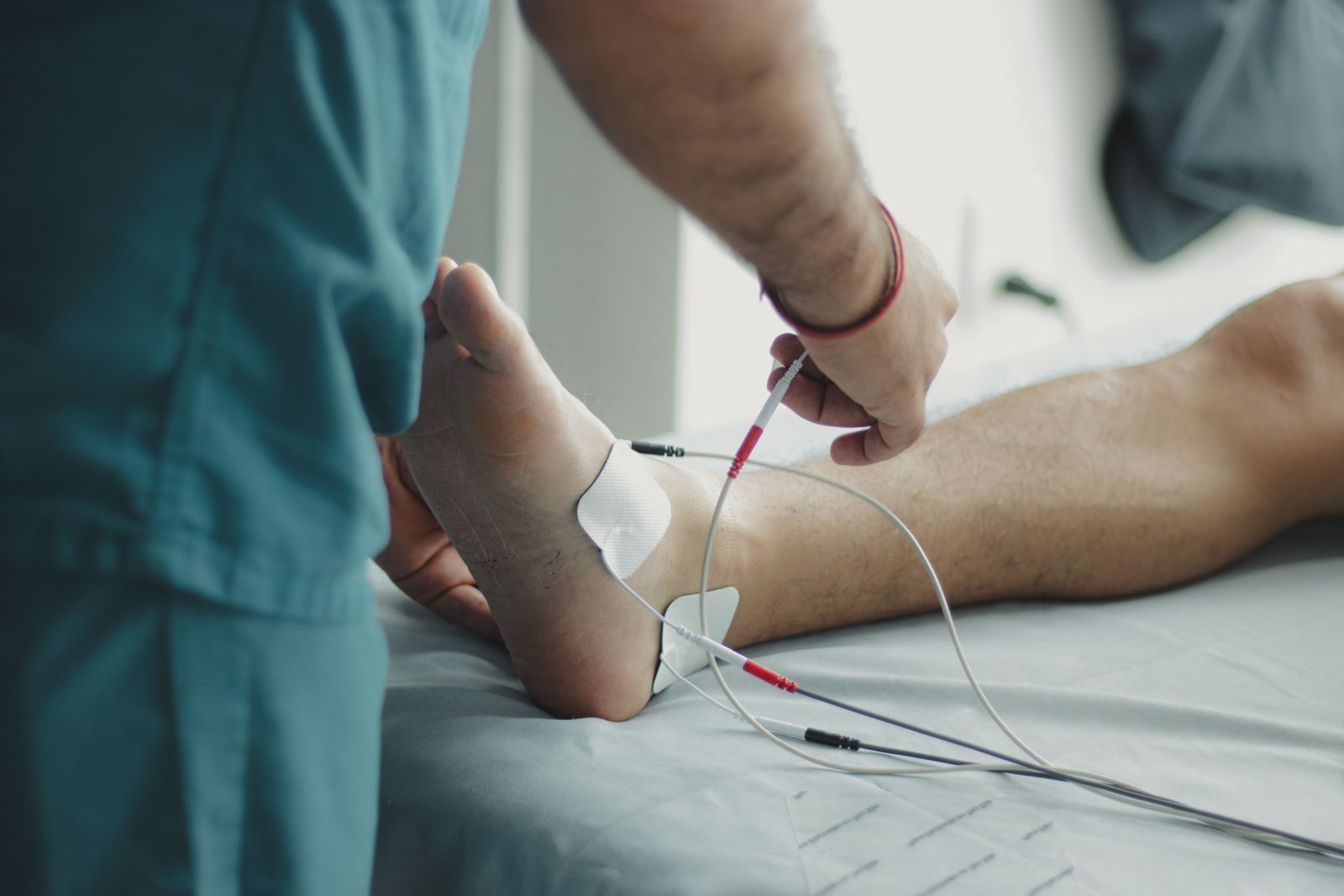
Where your heel hurts, and how, is the first clue to what’s causing it.
What does heel fat pad pain feel like?
Heel fat pad syndrome is pain from the cushion of fat under your heel bone when it thins out, shifts, or gets bruised.
It tends to feel like a stone bruise right in the middle of the heel, not toward the inside. It’s often worse walking barefoot on tile or hardwood, and it doesn’t always have the classic first-step pattern. A scoping review called heel fat pad syndrome possibly the second leading cause of pain under the heel. It found that certain pain features, and a thin fat pad on ultrasound, can help tell it apart from plantar fasciitis (Chang et al., 2022). The first steps are usually cushioning, supportive shoes, and adjusting how much time you spend on hard surfaces.
Is it insertional Achilles pain or plantar fasciitis?
Insertional Achilles tendinopathy is wear and irritation where the Achilles tendon attaches to the back of the heel bone.
The key difference is location: the back of the heel, not the bottom. There may be a tender bump, and the back of your shoes may rub. This is one heel problem where shockwave has strong research support. In a randomized trial of 50 people whose pain hadn’t improved after injections, medication, and physical therapy, 64% of the shockwave group were completely recovered or much improved at 4 months, compared with 28% of the exercise group. The results held at one year (Rompe et al., 2008). Read more in pain in the back of your heel.
Could my heel pain be a nerve problem like tarsal tunnel syndrome?
Tarsal tunnel syndrome is pressure on the tibial nerve as it passes through a narrow channel on the inner side of the ankle.
Nerve pain feels different from tissue pain. Watch for:
- Burning, tingling, “pins and needles,” or numbness
- Symptoms that spread into the arch or sole
- Pain that can show up at night or at rest
If your heel pain sounds like this, it needs a nerve-focused evaluation before any treatment plan. Pain between the toes in the ball of the foot is a different nerve problem; see Morton’s neuroma.
How do I know if I have a heel stress fracture?
A calcaneal stress fracture is a small crack in the heel bone from repeated impact or from bone that has become weaker, such as with osteoporosis.
Signs include heel pain that keeps getting worse with activity, pain when the sides of the heel are squeezed, and a recent jump in walking, running, or time on your feet. These fractures can be missed early. In a 2026 study of 123 adults age 60 and older with heel pain and no injury, 8.1% had a heel insufficiency fracture. Six of the ten fractures needed an MRI to find them after X-rays came back normal or unclear. All of them healed without surgery (Nozaka & Miyakoshi, 2026).
A suspected stress fracture needs proper imaging and protected loading first. Shockwave has been studied for slow-healing bone stress injuries in athletes, which we cover in stress fractures and shockwave, but that is a separate decision made after diagnosis.
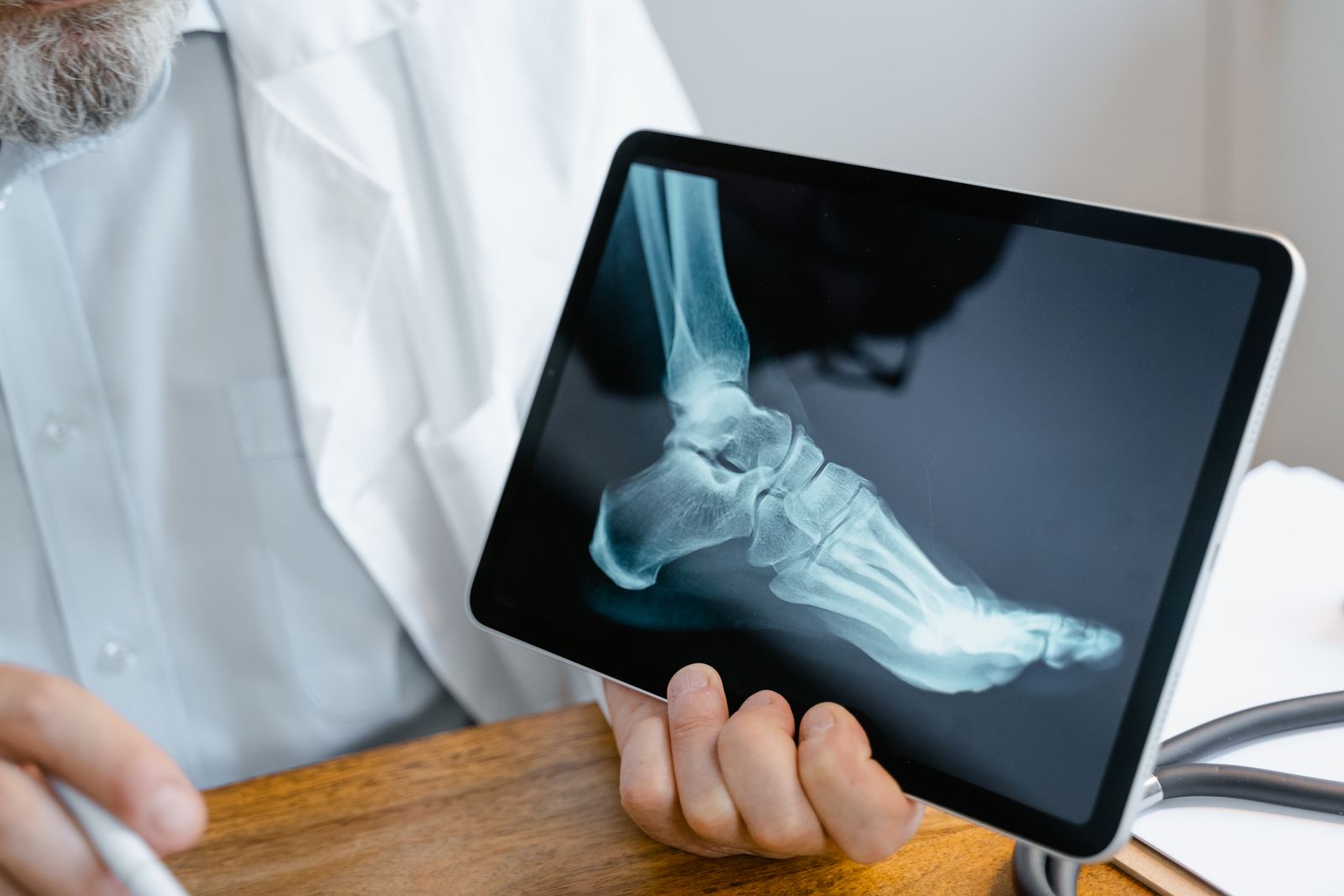
When heel pain doesn’t fit the plantar fasciitis pattern, imaging may be the next step.
When does shockwave therapy help heel pain in Hinsdale?
Shockwave therapy (extracorporeal shockwave therapy, or ESWT) sends acoustic pressure waves into injured tissue to trigger the body’s own repair response.
Shockwave is a good fit when the exam points to:
- Chronic plantar fasciitis, especially heel pain that has lasted 3 months or more despite stretching, shoes, or inserts
- Insertional Achilles tendinopathy at the back of the heel
The plantar fasciitis research is strong:
- FDA multicenter trial: In 250 people with stubborn plantar fasciitis, three weekly sessions of focused shockwave reduced heel pain by 69.2%, compared with 34.5% with placebo, at 12 weeks (Gollwitzer et al., 2015).
- Meta-analysis of 7 randomized trials: Shockwave was safe and effective for chronic plantar fasciitis that hadn’t responded to at least 3 months of other care. Improvement showed up at 12 weeks and lasted up to 12 months (Aqil et al., 2013).
At Adisi Health Center we use Storz Medical radial and focused shockwave devices. Most plans involve about 6 sessions spaced about a week apart, with 20-minute follow-up visits and no downtime. Learn more about plantar fasciitis shockwave therapy in Hinsdale.
When should heel pain be checked right away?
Don’t wait on heel pain that comes with:
- A fall, a twist, or a “pop,” followed by swelling or trouble putting weight on the foot
- Numbness, or spreading tingling, especially if you have diabetes
- Redness, warmth, or fever
- Pain that’s severe at night or at rest and keeps getting worse
Is shockwave therapy safe?
Shockwave therapy is non-invasive and well tolerated. Most people feel only mild discomfort during treatment, and there’s no downtime. Some people notice temporary soreness, redness, or swelling in the treated area. Shockwave isn’t right for everyone. It’s typically avoided over open wounds or active infection, over tumors, during pregnancy, and in people with certain bleeding disorders or on blood thinners. It also isn’t the starting point for an unhealed fracture or a nerve problem that hasn’t been diagnosed. That’s why Dr. Petzel does a full exam and health history first. Read more in Is shockwave therapy safe?
Where can I get heel pain and shockwave therapy near me in Hinsdale?
Adisi Health Center offers radial and focused shockwave therapy in downtown Hinsdale, a short drive from Oak Brook, Burr Ridge, Clarendon Hills, Western Springs, Downers Grove, Westmont, and La Grange. If you’ve been searching for “shockwave therapy near me in Hinsdale,” your first visit includes a full exam and health history so we can find out what’s really causing your heel pain. No referral is needed. Visit our shockwave therapy page to learn more.
Adisi Health Center
534 Chestnut Street, Suite 240
Hinsdale, IL 60521
(630) 887-1900
Frequently asked questions
How do I know if my heel pain is plantar fasciitis?
Plantar fasciitis usually causes sharp pain on the inner, bottom part of the heel that’s worst with the first steps in the morning or after sitting. An exam, and sometimes ultrasound, confirms it.
What else can cause heel pain besides plantar fasciitis?
Common causes include heel fat pad syndrome, insertional Achilles tendinopathy, tarsal tunnel syndrome (a pinched nerve at the inner ankle), and heel stress fractures. Each one feels a little different and needs a different plan.
What does heel fat pad pain feel like?
It usually feels like a deep bruise in the center of the heel and is often worse walking barefoot on hard floors. Plantar fasciitis pain is usually more toward the inner heel.
How can I tell nerve pain from plantar fasciitis?
Nerve pain, such as tarsal tunnel syndrome, tends to burn, tingle, or cause numbness, and it may spread into the arch or show up at night. Plantar fasciitis is usually a sharp or aching pain without numbness.
Which heel problems does shockwave therapy treat?
Shockwave therapy is mainly used for chronic plantar fasciitis and insertional Achilles tendinopathy at the back of the heel. Clinical trials support both uses.
Can a heel stress fracture be treated with shockwave right away?
No. A suspected heel stress fracture needs proper imaging and protected loading first. Any other treatment is decided after the diagnosis is clear.
I live in Burr Ridge. Where can I get heel pain treatment near me?
Adisi Health Center at 534 Chestnut Street, Suite 240, in Hinsdale offers heel pain exams and radial and focused shockwave therapy, a short drive from Burr Ridge, Oak Brook, and Western Springs. No referral is needed.
If your heel pain isn’t behaving like plantar fasciitis, we’d be glad to take a look. You can book a visit or call (630) 887-1900.
References
- McMillan AM, Landorf KB, Barrett JT, Menz HB, Bird AR. Diagnostic imaging for chronic plantar heel pain: a systematic review and meta-analysis. J Foot Ankle Res. 2009. PubMed 19912628
- Chang AH, Rasmussen SZ, Jensen AE, Sørensen T, Rathleff MS. What do we actually know about a common cause of plantar heel pain? A scoping review of heel fat pad syndrome. J Foot Ankle Res. 2022. PubMed 35974398
- Rompe JD, Furia J, Maffulli N. Eccentric loading compared with shock wave treatment for chronic insertional Achilles tendinopathy. A randomized, controlled trial. J Bone Joint Surg Am. 2008. PubMed 18171957
- Nozaka K, Miyakoshi N. Calcaneal insufficiency fracture: an underrecognized cause of atraumatic heel pain in older adults. Clin Pract. 2026. PubMed 42645144
- Gollwitzer H, et al. Clinically relevant effectiveness of focused extracorporeal shock wave therapy in the treatment of chronic plantar fasciitis: a randomized, controlled multicenter study. J Bone Joint Surg Am. 2015. PubMed 25948515
- Aqil A, Siddiqui MR, Solan M, Redfern DJ, Gulati V, Cobb JP. Extracorporeal shock wave therapy is effective in treating chronic plantar fasciitis: a meta-analysis of RCTs. Clin Orthop Relat Res. 2013. PubMed 23813184
