
Why Does My Buttock Hurt When I Sit? Piriformis Syndrome and Shockwave Therapy in Hinsdale
By Dr. Steve Petzel, DC, Adisi Health Center, Hinsdale, IL
A deep ache in one buttock that gets worse when you sit or drive is often piriformis syndrome, an irritated hip muscle pressing near the sciatic nerve. At Adisi Health Center in Hinsdale, Dr. Steve Petzel, DC, uses shockwave therapy, a non-invasive treatment that randomized trials show can ease piriformis pain.
If you’ve ever had to shift side to side in your car on the way to Oak Brook, or stand up halfway through a movie because one side of your seat felt like it was sitting on a golf ball, you know this pain. It’s one of the more frustrating problems we see in Hinsdale, because it’s easy to mistake for a back problem, a hip problem, or “just sciatica.” This guide explains what piriformis syndrome is, how it differs from other causes of buttock pain, and what the research says about piriformis syndrome shockwave therapy in Hinsdale. It’s written for patients in Hinsdale, Burr Ridge, Clarendon Hills, Western Springs, Westmont, and Downers Grove, and for anyone searching “piriformis treatment near me.”

What is piriformis syndrome?
Piriformis syndrome is deep buttock pain caused by a tight or irritated piriformis muscle, a small muscle under the glutes that can press on or irritate the nearby sciatic nerve.
The piriformis runs from the base of your spine (the sacrum) to the top of your thigh bone and helps rotate the hip outward. The sciatic nerve passes right next to it, and in some people through it. When the muscle gets tight, overworked, or develops painful trigger points, it can cause local buttock pain and sometimes pain that travels down the back of the thigh.
It’s worth knowing that piriformis syndrome is a diagnosis of exclusion. There’s no single test for it, so a careful exam to rule out other causes matters.
Why does my buttock hurt when I sit?
Sitting puts direct pressure on the deep buttock muscles and keeps the hip bent, which can squeeze an already irritated piriformis. Common signs of piriformis syndrome include:
- A deep, aching pain in one buttock
- Pain that’s worse after sitting, especially on hard seats or long drives
- Pain when climbing stairs, getting out of a car, or crossing your legs
- Tenderness when you press deep into the middle of the buttock
- Sometimes tingling or aching down the back of the thigh
Common triggers we see in Hinsdale and the western suburbs include long commutes and desk days, running or walking hills, golf and pickleball (lots of hip rotation), a recent jump in activity, or a fall onto the buttock.
Is it piriformis syndrome or sciatica?
Sciatica is a symptom, not a diagnosis: it means pain along the sciatic nerve, which most often comes from the low back but can also come from the piriformis region. Several conditions cause pain in the buttock, and they’re treated differently:
| Possible cause | Where it usually hurts | Typical clues |
|---|---|---|
| Piriformis syndrome | Deep in the middle of one buttock | Worse with sitting and hip rotation; tender deep in the buttock; low back often feels fine |
| Sciatica from the low back | Low back, buttock, and down the leg, often below the knee | Back pain or stiffness; symptoms change with bending or back movement |
| High hamstring tendinopathy | The “sit bone” at the bottom of the buttock | Pain sitting on hard seats; hurts with running, lunges, and bending forward |
| Hip bursitis / gluteal tendinopathy | Outside of the hip | Pain lying on that side; hurts climbing stairs |
| SI joint pain | Just beside the base of the spine, one side | Pain rolling over in bed or getting out of a car |
If your pain is more on the outside of the hip, read our guide to hip bursitis pain when lying on your side. If it sits right on the sit bone, see high hamstring tendinopathy and sit bone pain. If it’s more of a back-and-leg pattern, our sciatica chiropractor in Hinsdale guide is the better place to start.
Does shockwave therapy work for piriformis syndrome?
Shockwave therapy (extracorporeal shockwave therapy, or ESWT) is a non-invasive treatment that sends acoustic pressure waves into painful muscle or tendon tissue to calm pain and kick-start the body’s healing response. Research on shockwave for piriformis syndrome is newer than for heel or elbow pain, but the randomized trials so far are encouraging:
- Shockwave vs. a cortisone shot (2023): In a randomized trial of 35 people with piriformis syndrome, three radial shockwave sessions were compared with one ultrasound-guided steroid injection. Both groups improved in pain and quality of life. The shockwave group had already improved by the first follow-up, when the injection group had not yet, and results were similar at 12 weeks. The authors noted that shockwave is relatively non-invasive with fewer side effects (Ahadi 2023).
- Shockwave vs. dry needling (2026): In a randomized trial of 48 adults (average age about 50), three shockwave sessions plus stretching and three dry-needling sessions plus stretching both significantly improved pain, disability, and leg function at 1 and 3 months, with no difference between them. The researchers suggested shockwave as a good alternative, especially for people who’d rather avoid needles (Dede 2026).
- A second shockwave vs. injection trial (2026): In 70 patients who also did home stretching, both shockwave and an ultrasound-guided steroid injection improved pain and function, and the researchers concluded the two may work similarly well (Fu 2026).
- Shockwave for muscle trigger points: A meta-analysis of 8 controlled studies (571 patients, mostly with neck and upper-back muscle pain) found less pain and a higher pain threshold after shockwave than after comparison treatments such as trigger point injections and dry needling (Wu 2022).
The takeaway: in head-to-head trials, shockwave helped piriformis pain about as well as injections or needling, without a needle or a steroid. For more on how shockwave treats tight, knotted muscle, see shockwave for trigger points in the neck and shoulders.
How is piriformis syndrome treated in Hinsdale at Adisi Health Center?
Every new patient starts with a free consult so we can talk through your pain and whether our care is a good fit. From there, Dr. Petzel does a hands-on exam of your low back, hips, and buttock, and uses on-site X-rays when they’re needed, so we’re treating the real source of your pain and not just the spot that hurts.
If piriformis syndrome is the likely cause, a typical plan may include:
- Shockwave therapy. We use FDA-cleared Storz Medical radial and focused shockwave. Sessions take about 15 to 20 minutes and are spaced about one week apart. A standard protocol is 6 treatments, and many patients report significant improvement by sessions 3 to 4.
- Chiropractic care for the low back, pelvis, and hips when joint restrictions are adding to the problem.
- A simple home stretching program. In all three piriformis trials above, shockwave was paired with stretching, so we do the same.
- Everyday changes like breaking up long sits and adjusting your car seat or desk setup.
There’s no downtime, and no referral is needed. For patients with severe pain, or with buttock pain plus other problem areas like the low back or a hip, our wellness memberships are built as a serious, accelerated-recovery option with more frequent visits. Learn more about the technology on our shockwave therapy page.
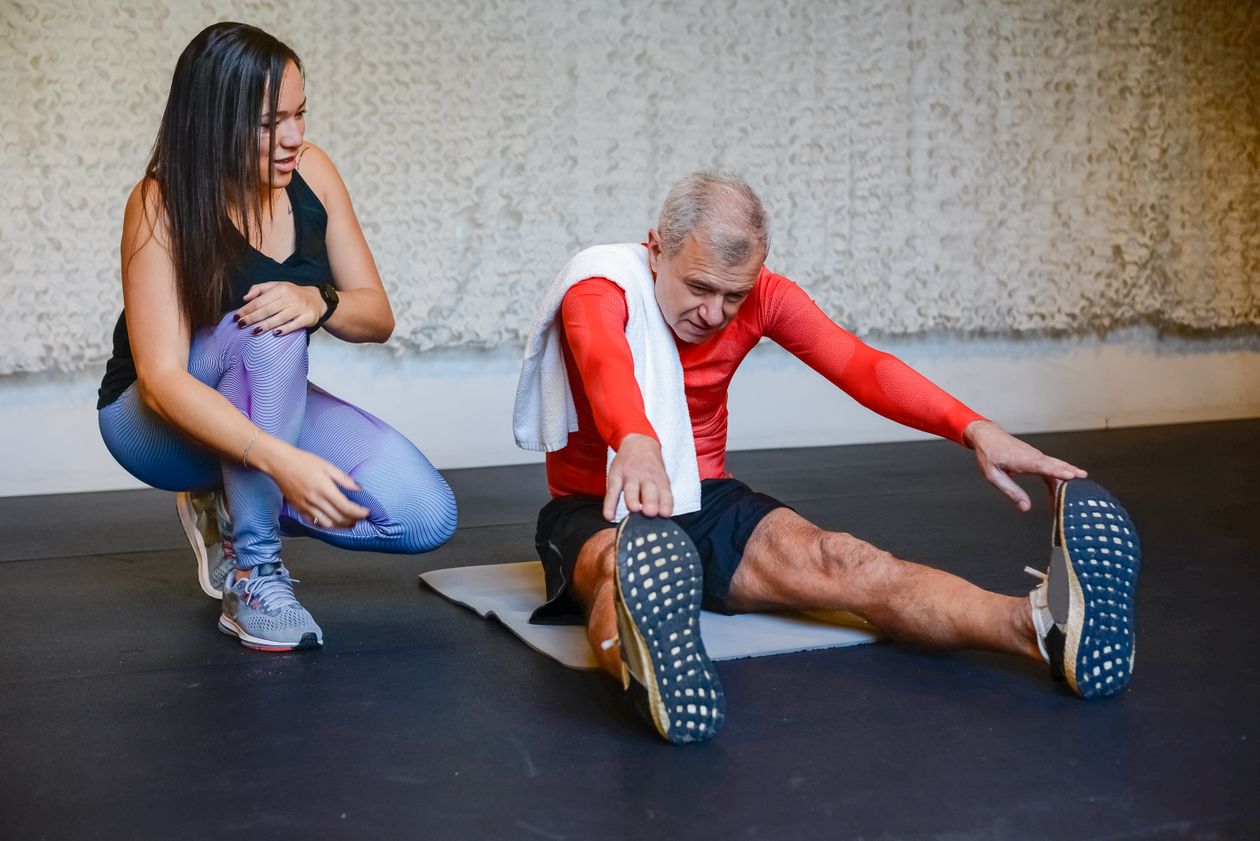
What can I do at home for piriformis pain?
While you’re getting care, these simple habits often help:
- Get up every 30 to 45 minutes when you’re sitting for work or driving.
- Take your wallet out of your back pocket before you sit or drive.
- Stretch gently, such as a figure-four stretch lying on your back, holding without forcing into sharp pain.
- Ease back into running, hills, and golf rather than stopping completely or pushing through.
- Notice your triggers (long drives, certain chairs, crossing your legs) and tell us at your visit.
Who should not have shockwave therapy?
Shockwave is low risk, and mild, short-lived soreness in the treated area is the most common side effect. It still isn’t right for everyone. It’s commonly avoided or postponed with:
- Pregnancy
- Cancer or a tumor in or near the treatment area
- A bleeding disorder or blood-thinning medication (this needs to be discussed first)
- An infection, open wound, or skin condition over the area
- A pacemaker or other implanted device near the area
Get checked promptly, and seek urgent care if needed, for buttock or leg pain with weakness or foot drop, numbness in the groin or inner thighs, new bladder or bowel changes, fever, unexplained weight loss, or pain after a significant fall or accident. These are not signs of a simple muscle problem. For more, read is shockwave therapy safe?
Where can I get piriformis syndrome treatment near me in Hinsdale?
Adisi Health Center, 534 Chestnut Street, Suite 240, Hinsdale, IL 60521, (630) 887-1900. Dr. Steve Petzel, DC, is the clinic’s sole provider and has cared for patients in Hinsdale since July 2012. We’re a short drive from Oak Brook, Burr Ridge, Clarendon Hills, Western Springs, Westmont, La Grange, and Downers Grove, and we offer both radial and focused shockwave on site.
Frequently asked questions
Why does my buttock hurt when I sit?
A common cause is piriformis syndrome, where a tight or irritated piriformis muscle deep in the buttock is squeezed by sitting and can irritate the nearby sciatic nerve. High hamstring tendinopathy, low back problems, and SI joint pain can feel similar, so an exam is the best way to know.
What is piriformis syndrome?
Piriformis syndrome is deep buttock pain caused by a tight or irritated piriformis muscle, a small hip muscle that sits right next to the sciatic nerve. It often hurts more with sitting, driving, and hip rotation.
Is it piriformis syndrome or sciatica?
Sciatica describes pain along the sciatic nerve, which most often starts in the low back. Piriformis syndrome is one possible cause of sciatic-type pain that starts in the buttock instead. Piriformis pain is usually centered deep in one buttock and is worse with sitting, while back-related sciatica often comes with back symptoms and pain below the knee.
Does shockwave therapy work for piriformis syndrome?
Randomized trials show shockwave therapy improved pain, disability, and quality of life in people with piriformis syndrome, with results similar to a steroid injection or dry needling, and without a needle or medication.
Is shockwave better than a cortisone shot for piriformis syndrome?
In the trials so far, both helped and results were similar over follow-up. In one trial the shockwave group improved sooner, and the researchers noted shockwave is non-invasive with fewer side effects. Dr. Petzel can help you decide which approach fits you.
How many shockwave sessions will I need for piriformis pain?
A standard shockwave protocol at Adisi Health Center is 6 sessions about one week apart, and many patients report significant improvement by sessions 3 to 4. Your exam determines the right plan for you.
I live in Oak Brook. Where can I get piriformis syndrome treatment near me?
Adisi Health Center at 534 Chestnut Street, Suite 240, in Hinsdale offers radial and focused shockwave therapy and chiropractic care, a short drive from Oak Brook, Burr Ridge, and Western Springs. No referral is needed.
If a deep ache in your buttock is making it hard to sit, drive, or enjoy your game, book a visit or call (630) 887-1900.
