
New 2026 Tennis Elbow Study: Shockwave to the Elbow Plus Shoulder and Forearm Trigger Points Beat Elbow-Only Treatment
Short answer: A randomized trial published on November 19, 2026, in Open Medicine treated 110 adults with tennis elbow with radial shockwave therapy. Both groups got better. But the group whose shockwave also targeted tight trigger points in the shoulder and forearm muscles, not just the sore spot on the elbow, had less pain and better arm function at every follow-up through 6 months (Lu et al., 2026). At Adisi Health Center in Hinsdale, Dr. Steve Petzel offers radial and focused shockwave for tennis elbow, with no physician referral needed. Call (630) 887-1900.
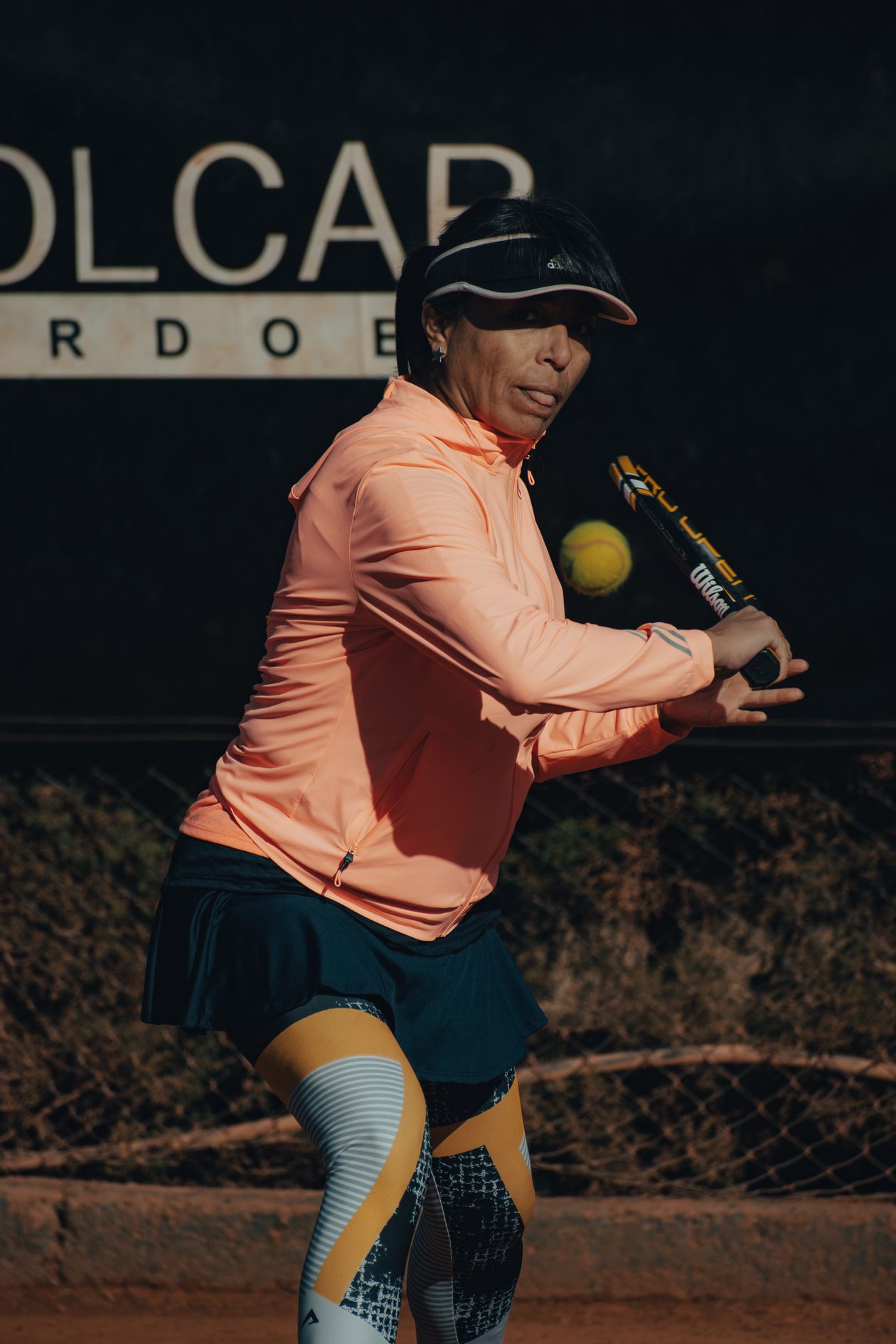
What did the new tennis elbow study test?
Tennis elbow (lateral epicondylitis) is pain on the outside of the elbow where the forearm muscles that lift your wrist attach. Most shockwave protocols aim the treatment right at that painful spot.
The researchers, from the First Affiliated Hospital of Soochow University in China, asked a different question: what if tennis elbow is not only an elbow problem? When the muscles that rotate the shoulder, or other muscles along the forearm, get tight and develop trigger points (tender “knots”), they may change how force travels down the arm and keep overloading the elbow tendon.
So they compared two ways of giving the same amount of shockwave:
| Elbow-only group (55 patients) | Whole-arm “trigger point chain” group (55 patients) | |
|---|---|---|
| Where the shockwave went | 2,000 pulses around the painful spot on the outside of the elbow | 500 pulses at the elbow, then 170 to 250 pulses on each trigger point found in the shoulder and forearm muscles |
| Total pulses per session | 2,000 | 2,000 |
| Schedule | 5 sessions, once a week | 5 sessions, once a week |
| Type of shockwave | Radial | Radial |
To find the trigger points, the team tested how the patient’s shoulder, elbow, and wrist moved, then felt for tender, tight nodules in the muscles involved. These included the rotator cuff muscles on the back of the shoulder blade (infraspinatus and teres minor), muscles that turn the shoulder inward (subscapularis and teres major), and the forearm muscles.
Who was in the study:
- Adults 18 and older with tennis elbow for at least 3 months
- Average age about 49 to 50; about 70% were women
- No pain medicine, cortisone shots, or physical therapy for the elbow in the 2 weeks before starting
- The person measuring the results didn’t know which group each patient was in
106 of the 110 patients (53 per group) finished the study, with check-ups right after the fifth session and again at 3 and 6 months.
What did the study find?
Both kinds of shockwave worked. Pain and function improved significantly over time in both groups. On a 0-to-10 pain scale, typical (median) pain started around 5.5 in both groups.
The whole-arm trigger point group did better at each follow-up:
| Result | Elbow-only shockwave | Elbow + trigger point shockwave |
|---|---|---|
| Pain (0-10), after the 5th session | 3.04 | 2.56 |
| Pain (0-10), at 3 months | 2.13 | 1.44 |
| Pain (0-10), at 6 months | 1.26 | 0.76 |
| Arm disability score (DASH, lower is better), at 6 months | 15.98 | 7.74 |
| Elbow function score (Mayo, higher is better), at 6 months | 78.04 | 89.23 |
Pain values are medians. All between-group differences shown were statistically significant.
Safety: Only one patient (0.9%) had a side effect, a short-lived increase in pain sensitivity after treatment that went away on its own within 7 days.
The authors concluded that both standard and trigger point-targeted shockwave are effective for tennis elbow, and that adding the trigger point approach gave greater and longer-lasting improvement in pain and arm function. They also noted that this was a single-center study and that larger trials are needed to confirm the results.
What does this mean if you have tennis elbow?
Three practical takeaways:
- Shockwave helped tennis elbow in both groups. By 6 months, median pain had dropped to around 1 out of 10 or less in both groups. That fits earlier research: a network meta-analysis of 40 randomized trials found shockwave beat placebo for pain relief out to 12 months and ranked first of the treatments studied for restoring grip strength (Liu et al., 2022, Arthroscopy).
- The elbow may not be the whole story. If your shoulder blade muscles or forearm muscles are tight and tender, treating them along with the elbow may give you a better result, especially for everyday tasks like gripping, lifting, and carrying.
- A good exam matters. The trigger point group’s advantage came from first checking how the shoulder, elbow, and wrist move, then treating what was found. That’s a hands-on assessment, not a one-size-fits-all routine.
If you’ve had elbow pain for months, keep reaching for a gallon of milk with a wince, or can’t finish a round of golf or a tennis match comfortably, this study is good news. Shockwave remains one of the best-studied non-surgical, no-needle options, and treating the whole arm may make it even more effective.
How does Adisi Health Center treat tennis elbow with shockwave?
At Adisi Health Center, Dr. Petzel uses the Storz DUOLITH SD1, which offers both focused and radial shockwave in one system:
- Focused shockwave targets the irritated tendon where it attaches to the outside of the elbow.
- Radial shockwave spreads over a wider area, which suits tight forearm muscles and trigger points around the shoulder blade, like the ones treated in this study.
Your first visit starts with an exam of your elbow, forearm, wrist, shoulder, and neck, because a pinched nerve in the neck or a shoulder problem can feed into elbow pain. On-site X-ray is available when needed. Here’s what to know:
- No physician referral is needed for shockwave.
- New patients start with a visit that includes the consultation, exam, X-rays if needed, findings, and first treatment.
- Shockwave block: a standard protocol is 6 sessions, usually about a week apart, adjusted to how you respond.
- Insurance: Adisi is in-network with BCBS PPO for chiropractic care; shockwave is a self-pay service.
- Not sure yet? Book a free 20-minute phone consultation to talk it through with Dr. Petzel first.
If your elbow pain is severe, has lasted a long time, or comes with other problem areas like your shoulder, neck, or the other elbow, our wellness memberships are built as a serious, accelerated-recovery option, with more frequent visits that can combine shockwave with other therapies.
Who should not have shockwave therapy?
Shockwave is low risk. The most common side effects are mild, short-lived soreness or redness in the treated area. It still isn’t right for everyone. It’s commonly avoided or postponed with:
- Pregnancy
- Cancer or a tumor in or near the treatment area
- A bleeding disorder or blood-thinning medication (this needs to be discussed first)
- An infection, open wound, or skin condition over the treatment area
- A pacemaker or other implanted device near the treatment area
- A recent cortisone shot in the same spot. Shockwave waits at least 6 weeks after the last cortisone shot.
Get checked promptly for elbow pain after a fall or injury, a visible deformity, swelling with fever, or numbness, tingling, or weakness in the hand. For more, read is shockwave therapy safe?
Where can I get shockwave therapy for tennis elbow near me in Hinsdale?
Adisi Health Center, 534 Chestnut Street, Suite 240, Hinsdale, IL 60521, (630) 887-1900. Dr. Steve Petzel, DC, is the clinic’s sole provider and has cared for patients in Hinsdale since 2012. We’re a short drive from Oak Brook, Burr Ridge, Clarendon Hills, Western Springs, Westmont, La Grange, and Downers Grove. Hours are Monday through Thursday, 10am to 7pm, and Friday, 10am to 2pm.
Frequently asked questions
What did the November 2026 tennis elbow shockwave study find?
In a randomized trial of 110 adults with tennis elbow, both elbow-only shockwave and shockwave that also targeted shoulder and forearm trigger points reduced pain and improved function. The trigger point group had lower pain and better arm function after treatment and at 3 and 6 months.
Does shockwave therapy work for tennis elbow?
Research supports it. In the 2026 trial, pain and function improved significantly in both shockwave groups, and a 2022 network meta-analysis of 40 randomized trials found shockwave beat placebo for pain relief and ranked first for grip strength recovery.
Can tight shoulder or forearm muscles make tennis elbow worse?
They may. The 2026 study’s authors think tight muscles and trigger points in the shoulder and forearm can change how force travels down the arm and keep overloading the elbow tendon. Treating those trigger points along with the elbow gave better results in their trial.
How many shockwave sessions does tennis elbow need?
The 2026 study used 5 weekly sessions. At Adisi Health Center, a standard protocol is 6 sessions, usually about a week apart, adjusted to how you respond after your exam.
Is shockwave safe for tennis elbow?
For most adults, yes. In the 2026 trial, only 1 of 110 patients had a side effect, a short-lived increase in pain sensitivity that resolved within 7 days. Tell Dr. Petzel if you’re pregnant, take blood thinners, or have cancer in the treatment area.
Do I need a referral for shockwave on my elbow in Hinsdale?
No. You can book shockwave at Adisi Health Center without a physician referral. New patients can start with a visit that includes treatment, or a free 20-minute phone consultation.
Related reading: Shockwave therapy for tennis elbow, tennis elbow: shockwave vs. laser study, shockwave for neck and shoulder trigger points, golfer’s elbow treatment, does shockwave therapy hurt?, and shockwave therapy in Hinsdale
Ready to grip, lift, and swing without elbow pain?
If tennis elbow is getting in the way of work, golf, tennis, or carrying groceries, we’d be glad to help. Book a visit, schedule a free 20-minute phone consultation, or call Adisi Health Center at (630) 887-1900.
References
- Lu M, Guo F, Mao J, Huang L. A randomized controlled trial of extracorporeal shockwave therapy targeting chain-reaction myofascial trigger points in patients with lateral epicondylitis. Open Med (Wars). 2026;21(1):20261562. Published November 19, 2026. doi:10.1515/med-2026-1562. PubMed 43054965 | Free full text (PMC13781207)
- Liu WC, Chen CT, Lu CC, et al. Extracorporeal shock wave therapy shows superiority over injections for pain relief and grip strength recovery in lateral epicondylitis: a systematic review and network meta-analysis. Arthroscopy. 2022;38(6):2018-2034.e12. doi:10.1016/j.arthro.2022.01.025. PubMed 35093494
This article is for education only and is not medical advice. Results vary.
