
Shockwave Therapy for Knee Arthritis in Hinsdale: What the Research Shows
Short answer: Shockwave therapy (extracorporeal shockwave therapy, or ESWT) sends acoustic pulses into the tissues around an arthritic knee to calm pain and improve movement. A placebo-controlled trial from Beijing and several meta-analyses, including large reviews from China and Taiwan, found ESWT reduced knee osteoarthritis pain and improved function scores, with no serious side effects reported. It does not regrow cartilage. At Adisi Health Center in Hinsdale, Dr. Steve Petzel uses Storz Medical radial and focused shockwave, often alongside Class IV laser and EMTT.
What is shockwave therapy for knee arthritis?
Shockwave therapy is a non-invasive treatment. A handheld applicator delivers short, high-energy sound waves through the skin into the tendons, ligaments, and bone around the knee joint. There are no needles, no medication, and no downtime.
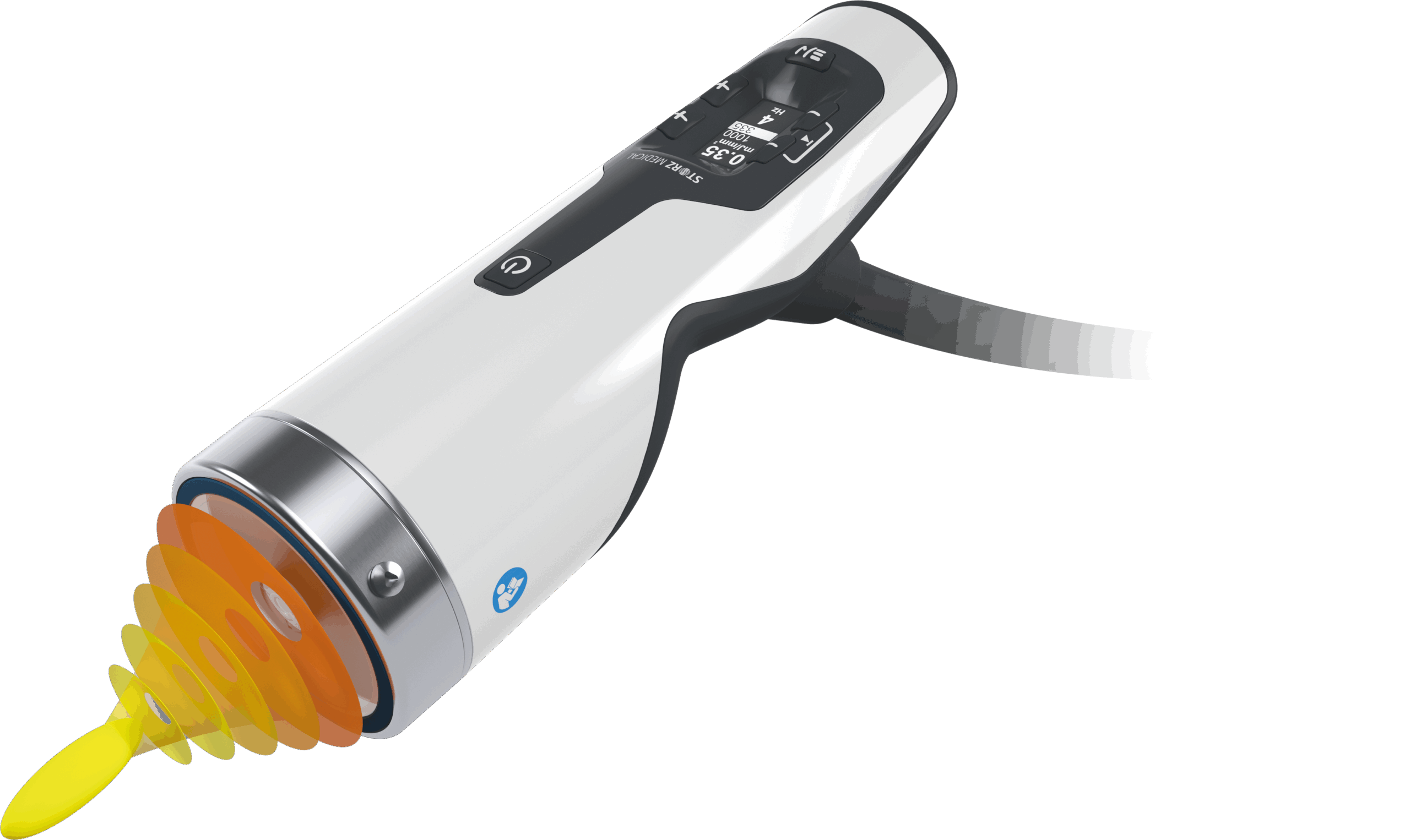
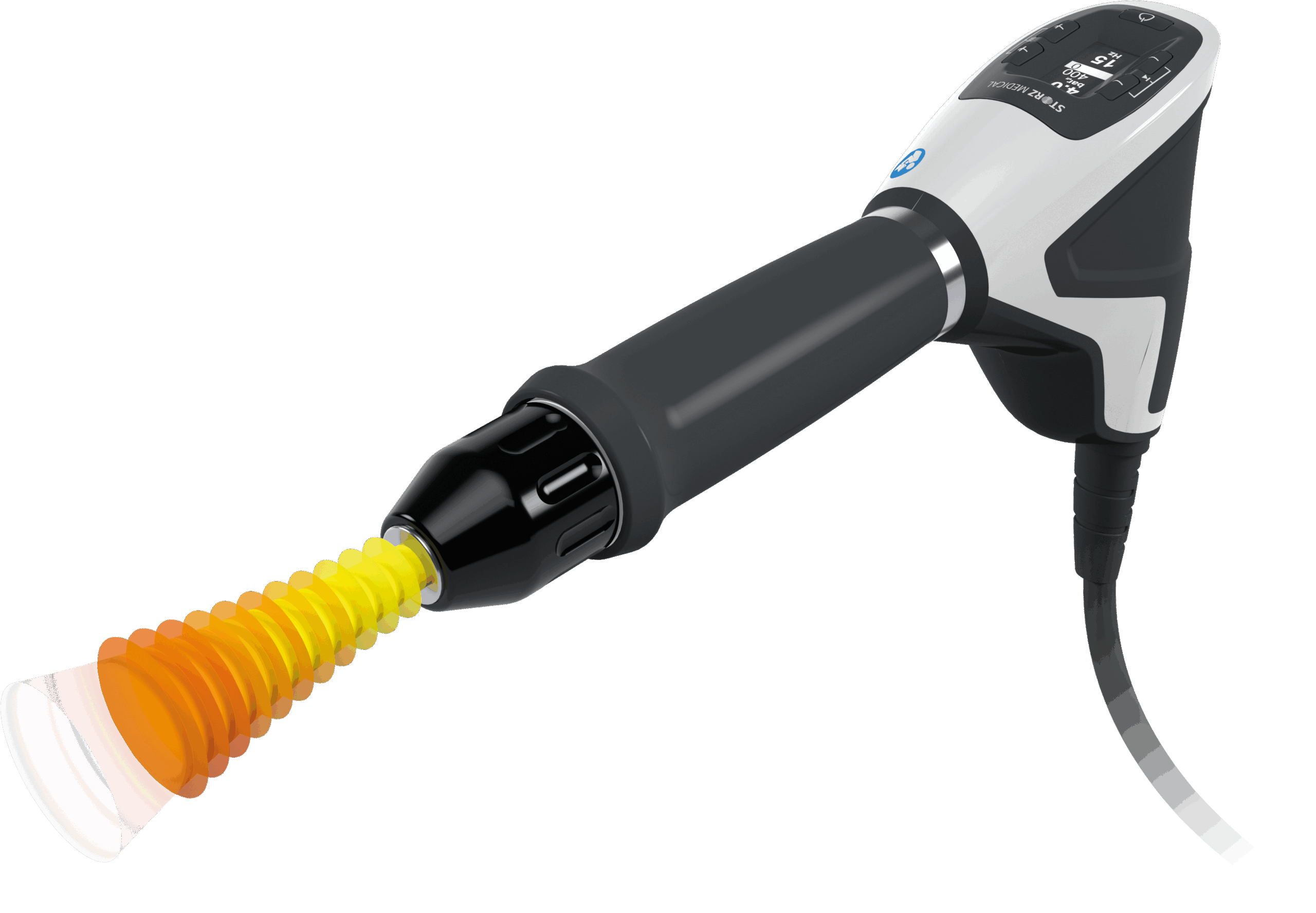
At Adisi Health Center we use two Storz Medical heads:
- Radial shockwave spreads energy over a wider, shallower area. It’s useful for the muscles and tendons that tighten up around a painful knee.
- Focused shockwave concentrates energy at a specific depth, so it can reach deeper structures near the joint line.
Most follow-up sessions take about 20 minutes, and a typical course is 6 treatments.
How does shockwave help an arthritic knee?
Researchers are still working out the exact mechanisms. The effects most often described in the literature include:
- Calming pain signals in the treated area
- Increasing local blood flow to tissues that heal slowly
- Loosening tight, irritated soft tissue around the joint so the knee moves more easily
What it won’t do: shockwave therapy does not rebuild worn cartilage. None of the studies below measured cartilage regrowth in people. They measured pain and function, and those are what improved.
What does the research say about shockwave for knee osteoarthritis?
Much of the clinical research on ESWT for knee osteoarthritis comes from China. Here are the studies we rely on:
1. Placebo-controlled trial, Beijing (2013). Researchers randomized 70 patients with knee osteoarthritis to real shockwave (4 weekly sessions) or a sham treatment. At 12 weeks, average pain scores in the shockwave group dropped from 7.56 to 3.83 on a 10-point scale. Lequesne and WOMAC function scores also improved, and shockwave beat placebo for pain on movement at every checkpoint. No adverse events were reported. (Zhao et al., Journal of Surgical Research, 2013. PubMed 23953895)
2. Meta-analysis of 50 trials, Taiwan (2019). This review pooled 50 randomized trials with 4,844 patients, including studies from Chinese journal databases. Shockwave significantly improved treatment success rates, pain, and WOMAC physical function. Energy level and length of follow-up predicted how well it worked. (Liao et al., Clinical Rehabilitation, 2019. PubMed 31066293)
3. Meta-analysis, Shandong Provincial Hospital (2020). Combining 6 studies with 589 patients, this review found ESWT significantly reduced pain and improved WOMAC scores at 4, 8, and 12 weeks, without a higher risk of side effects. (Ma et al., International Journal of Surgery, 2020. PubMed 31978648)
4. Meta-analysis of 14 trials, Spain (2020). Across 782 participants, moderate-quality evidence showed shockwave reduced pain by about 1.7 cm on a 10 cm scale and improved WOMAC by about 14 points. Medium energy density worked best. The authors called it effective in the short term with few minor side effects. (Avendaño-Coy et al., International Journal of Surgery, 2020. PubMed 32798759)
Bottom line: Across these studies, shockwave consistently improved knee arthritis pain and function over weeks to a few months. Most follow-up periods were short (about 12 weeks), so results beyond that are less well studied.
Who is a good candidate for shockwave knee treatment?
You may be a good fit if you:
- Have mild to moderate knee osteoarthritis or “wear and tear” knee pain
- Have knee stiffness and pain with stairs, walking, or getting up from a chair
- Have tried rest, exercise, or pain pills without enough relief
- Want to avoid or delay injections or surgery
- Want a treatment with no downtime so you can keep working and staying active
Who shouldn’t get shockwave therapy?
Dr. Petzel reviews your health history before any treatment. Shockwave is generally not used:
- During pregnancy
- Over a known or suspected tumor or cancer
- Over an active infection or open wound
- With a bleeding disorder or blood-thinning medication, unless cleared first
- Over a knee replacement or other metal implant in the treatment area, unless cleared first
- Over growth plates in children and teens
Common, mild side effects include temporary soreness, redness, tingling, or minor bruising. These usually fade within a day or two.
What does a shockwave visit look like at Adisi Health?
- Free phone consult. A quick call with Dr. Petzel to see whether shockwave fits your knee.
- New patient evaluation ($249). A full exam, health history review, and your first treatment.
- 20-minute follow-up sessions. You’ll feel firm tapping over the knee. Intensity is adjusted to your comfort, and you can drive home and get on with your day.
- Tracking progress. Many patients notice a change by sessions 3–4. A full course is usually 6 sessions.
Pricing: Shockwave is $200 per session, or $1,050 for a 6-session pack. For ongoing care, the Recovery Membership ($1,299/month) and Premium ($2,199/month) include shockwave with other therapies. Both have a 3-month minimum. See our pricing page for details.

Can shockwave be combined with laser or EMTT for knee arthritis?
Yes. Knee arthritis rarely has a single cause of pain, so Dr. Petzel often combines therapies in one visit:
- Class IV laser therapy: the 40-watt LightForce XLi calms inflammation deep in the joint. We covered the laser research in Laser Therapy for Knee Arthritis Pain in Hinsdale.
- EMTT: Storz Magnetolith electromagnetic transduction therapy reaches the whole joint area.
- Winback TECAR: deep heating and circulation for stiff tissue.
Laser, EMTT, and TECAR sessions are $115 each, or less with 10- and 20-session packs.
Knee arthritis treatment near Hinsdale and the western suburbs
Adisi Health Center is at 534 Chestnut St, Suite 240, in downtown Hinsdale. We see patients from Hinsdale, Oak Brook, Burr Ridge, Clarendon Hills, Western Springs, Downers Grove, and Westmont. Most of these towns are a 5–15 minute drive away, and same-week appointments are often available.
When should you see an orthopedist instead?
Shockwave is a conservative option. See an orthopedic specialist if your knee:
- Locks, catches, or gives way regularly
- Swells suddenly or becomes hot and red
- Can’t bear weight, or was injured in a fall or accident
- Has severe, bone-on-bone arthritis that has stopped responding to conservative care
We’ll tell you honestly if your knee needs imaging or a surgical opinion, and we’re happy to coordinate with your doctor.
Frequently asked questions
Does shockwave therapy work for knee arthritis?
Randomized trials and meta-analyses, including a placebo-controlled trial from Beijing, found shockwave reduced knee osteoarthritis pain and improved function scores over about 12 weeks.
Does shockwave therapy regrow knee cartilage?
No. The studies cited here measured pain and function, not cartilage regrowth. Shockwave aims to reduce pain and help the knee move better.
How many shockwave sessions does a knee need?
A typical course at Adisi Health is 6 sessions. In the 2013 trial, patients received 4 weekly sessions.
Does shockwave therapy for the knee hurt?
Most patients feel firm tapping and mild discomfort. Intensity is adjusted to your comfort, and there’s no downtime.
How much does shockwave cost in Hinsdale?
At Adisi Health Center, shockwave is $200 per session or $1,050 for a 6-session pack. The new patient evaluation is $249 and includes your first treatment.
Is shockwave covered by insurance?
Shockwave is cash pay. HSA and FSA cards are accepted.
Can I combine shockwave with laser therapy?
Yes. Dr. Petzel often pairs shockwave with Class IV laser, EMTT, or TECAR in the same visit.
Who should not get shockwave on the knee?
People who are pregnant, have cancer or infection in the area, or have a bleeding disorder. Anyone with a metal implant in the treatment area or open growth plates should be cleared first.
Ready to find out if shockwave can help your knee?
Call (630) 887-1900, schedule an appointment, or contact us for a free phone consult with Dr. Petzel. Learn more about shockwave therapy at Adisi Health.
This article is for educational purposes and isn’t a substitute for a personal medical evaluation.
