
Why Does My Thumb Hurt When I Lift Something? Shockwave Therapy for De Quervain’s Tenosynovitis in Hinsdale
Short answer: If the thumb side of your wrist hurts when you lift a coffee cup, pick up a grandchild, or turn a doorknob, it may be De Quervain’s tenosynovitis, irritation of the tendons that lift and extend your thumb. Shockwave therapy is a non-invasive, needle-free option, and a 2024 review of 14 randomized trials found it improved pain more than placebo and ranked highest among the nonsurgical options studied during the first several months. At Adisi Health Center in Hinsdale, Dr. Steve Petzel uses FDA-cleared Storz Medical radial and focused shockwave for stubborn tendon pain.
What is De Quervain’s tenosynovitis?
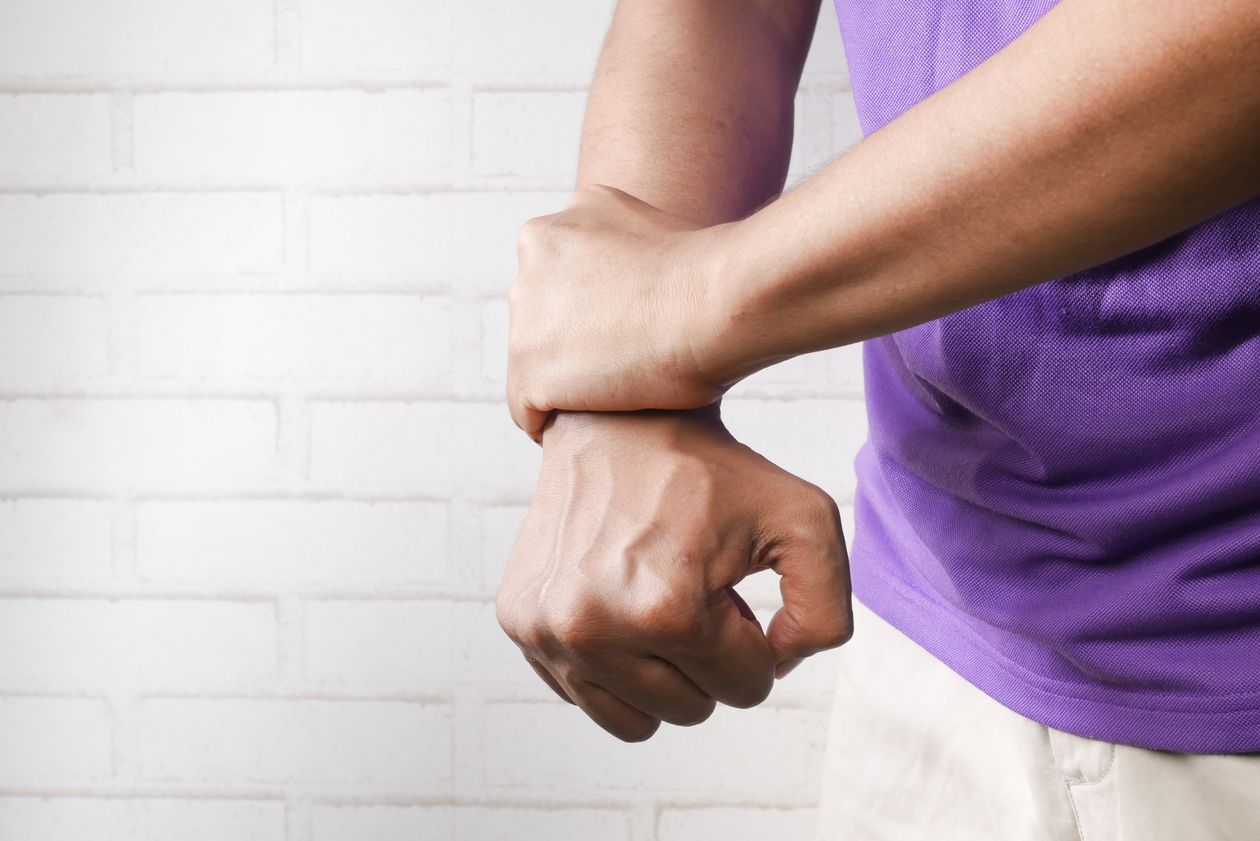
Two tendons, the abductor pollicis longus and the extensor pollicis brevis, slide through a tight tunnel on the thumb side of your wrist. When that tunnel gets irritated, everyday lifting, gripping, or twisting can light up pain right at the base of the thumb or along the thumb-side wrist.
People sometimes call this “mommy’s thumb” because lifting a child is a classic trigger. It also shows up in grandparents, gardeners, golfers, racquet-sport players, and anyone who repeats a pinch-and-lift motion at a desk or on a phone.
Why does my thumb hurt when I lift something?
Typical signs of De Quervain’s include:
- Pain on the thumb side of the wrist or at the base of the thumb
- A sharp pull when you lift a pot, a grocery bag, a child, or even a mug
- Pain turning a key, opening a jar, wringing out a cloth, or texting
- Tenderness, and sometimes swelling, along that thumb-side groove
- Pain that makes you change how you pick things up
It is not the same as carpal tunnel, which more often causes numbness and tingling in the fingers, or arthritis at the base of the thumb. Overlapping wrist and hand problems are common, which is why a proper exam matters before you start treatment.
What does research say about shockwave therapy for De Quervain’s?
Shockwave therapy (also called extracorporeal shockwave therapy, or ESWT) has growing research support as a needle-free option for this condition:
- A 2024 network meta-analysis of 14 randomized trials compared nonsurgical treatments for De Quervain’s tenosynovitis. In the short term (within six weeks), shockwave therapy produced a statistically significant improvement in pain scores compared with placebo and ranked highest among the options studied. It remained the top-ranked option for pain into the medium term (six weeks to six months). The authors still described a corticosteroid injection plus a short period of immobilization as a primary treatment and said shockwave can be considered a secondary option (Chong et al., 2024, The Journal of Hand Surgery).
- A 2025 systematic review of shockwave therapy for hand conditions found that, in De Quervain’s, shockwave improved pain and function in the short and mid-term. One study in that review found shockwave and a local corticosteroid injection to be equally effective, and no adverse effects were reported in the De Quervain’s studies (Al-Mousllie et al., 2025).
- A randomized trial of 60 adults compared shockwave with high-intensity laser therapy. Both groups had significant improvements in rest pain, pain with movement, hand function, and grip at three weeks and again at three months. The authors concluded that both treatments are safe and effective (Karakuzu Güngör and Güngör, 2025, Turkish Journal of Physical Medicine and Rehabilitation).
Taken together, the research supports shockwave as a non-invasive option for thumb-side wrist pain, especially if you want to avoid a needle or have not gotten lasting relief from rest, a splint, or an injection.
How does shockwave therapy help De Quervain’s thumb pain?
Shockwave therapy sends acoustic pressure waves into the painful tissue to stimulate the body’s own healing response, including blood flow and collagen remodeling around the irritated tendon sheath. At Adisi, we have both Storz Medical radial and focused shockwave units on-site. Focused shockwave concentrates energy at a precise depth, and radial shockwave treats a broader area around the sore tendons and nearby tight forearm muscles. You can read more about the difference between radial and focused shockwave.
Dr. Petzel chooses the approach after examining your wrist and thumb, rather than using a one-size-fits-all setting.
How many shockwave sessions do I need for De Quervain’s?
Most patients see significant improvement after 6 sessions, each about 20 minutes and spaced roughly one week apart. Some people notice a difference sooner, and healing often continues for weeks after the last session. Your plan is set after your exam.
If you also have elbow tendon pain from the same gripping and lifting pattern, see our posts on tennis elbow shockwave therapy and golfer’s elbow.
What can I do to calm De Quervain’s pain?
Shockwave works best when you also take stress off the irritated tendons:
- Ease off the motion that flares it. Repeated lifting with the thumb, twisting jars, and pinch-and-carry tasks keep the tunnel irritated.
- Change how you pick things up when you can, using your whole hand instead of a narrow pinch.
- A thumb-and-wrist splint is a common first step many people try, because it rests the two tendons that slide through that tight tunnel.
- Build back gradually. Once pain settles, return to lifting and gripping a little at a time instead of all at once.
If numbness and tingling in the fingers are your main symptoms rather than thumb-side lifting pain, start with our carpal tunnel guide.
Is shockwave therapy safe for De Quervain’s?
Yes, for most adults. In the hand-condition review above, no adverse effects were reported in the De Quervain’s studies. Across shockwave research more broadly, the most common side effects are temporary local pain and mild redness. Some people also notice brief soreness, swelling, or bruising. Most patients go right back to daily activities, and we recommend avoiding high-impact or highly aggravating activity for 24 to 48 hours after each session.
Shockwave is usually avoided during pregnancy, over cancer or an infection, or near a pacemaker or other implanted device, and bleeding disorders or blood thinners need to be discussed first. Learn more in is shockwave therapy safe? and what a shockwave session feels like.
What happens at your first visit?
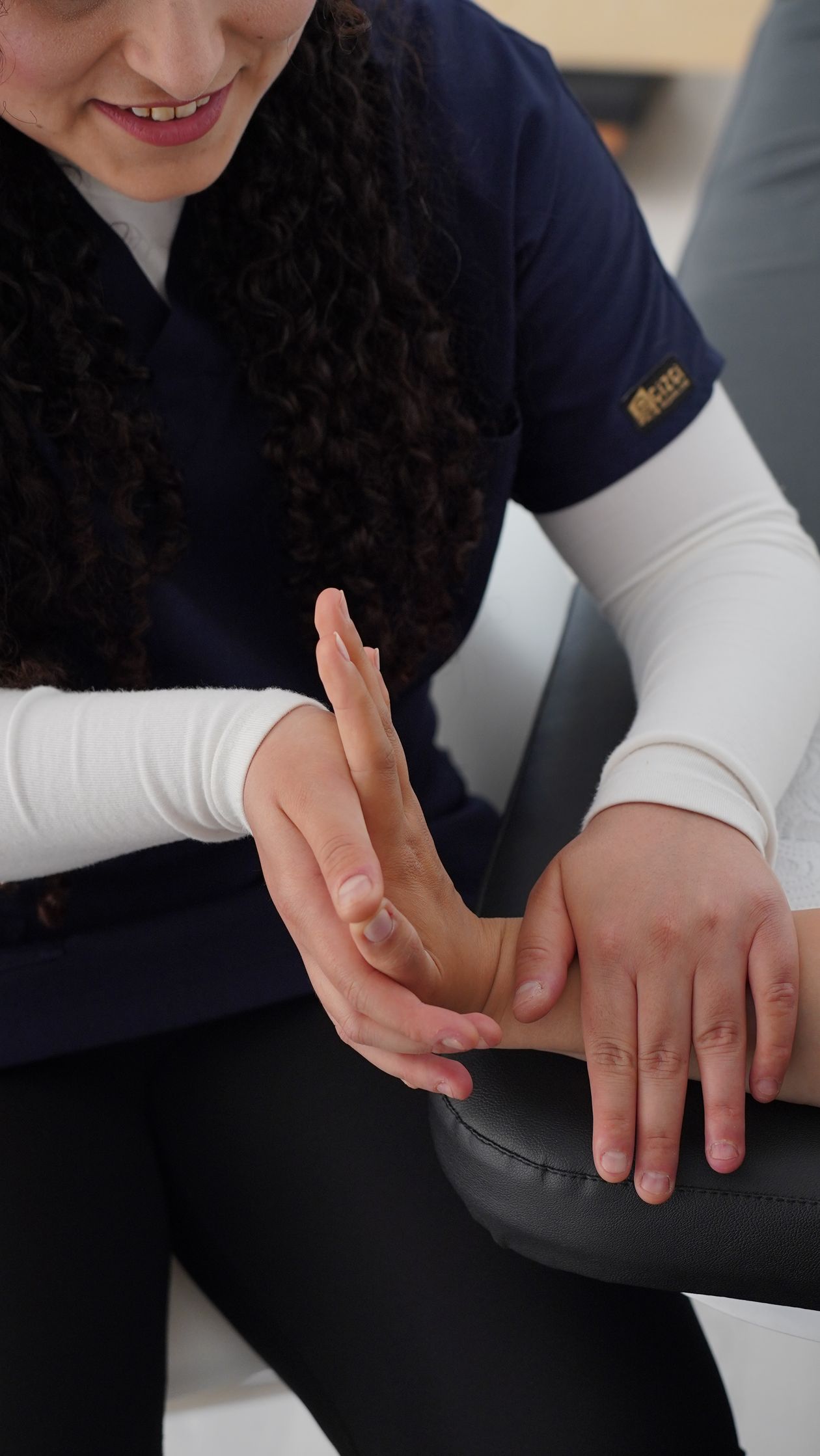
Your first visit includes a full exam and health history review so Dr. Petzel can confirm what is causing your thumb or wrist pain and whether shockwave is a good fit.
Shockwave therapy for De Quervain’s near Hinsdale
Adisi Health Center is at 534 Chestnut Street, Suite 240, in Hinsdale, and we see patients with thumb and wrist tendon pain from Oak Brook, Burr Ridge, Clarendon Hills, Western Springs, Downers Grove, Westmont, and La Grange. Learn more on our shockwave therapy page.
FAQ: De Quervain’s thumb pain and shockwave therapy
Why does my thumb hurt when I lift something?
Often because the two tendons that lift and extend your thumb are irritated where they pass through a tight tunnel on the thumb side of the wrist. That condition is called De Quervain’s tenosynovitis.
What is De Quervain’s tenosynovitis?
It is irritation of the abductor pollicis longus and extensor pollicis brevis tendons in the first extensor compartment of the wrist. Pain shows up at the base of the thumb or along the thumb-side wrist, especially with lifting, gripping, or twisting.
Can shockwave therapy help De Quervain’s?
Research suggests yes. A 2024 network meta-analysis of 14 randomized trials found shockwave improved pain more than placebo and ranked highest among the nonsurgical options studied in the short and medium term.
Is shockwave better than a cortisone shot for De Quervain’s?
Not necessarily. One review found a study in which shockwave and a local corticosteroid injection were equally effective. The 2024 analysis ranked shockwave highest for pain in the first months, while still describing injection plus a short period of immobilization as a primary treatment. Shockwave is a needle-free alternative if you want to avoid an injection or did not get lasting relief from one.
How many shockwave sessions are needed for De Quervain’s?
Most patients see significant improvement after about six sessions, spaced roughly a week apart. Dr. Petzel sets your plan after your exam.
Is there downtime after shockwave therapy?
Most patients go right back to daily activities. We recommend avoiding highly aggravating lifting or twisting for 24 to 48 hours after each session.
Where can I get shockwave therapy for thumb pain near Oak Brook or Downers Grove?
Adisi Health Center in Hinsdale offers Storz Medical radial and focused shockwave and serves Oak Brook, Burr Ridge, Clarendon Hills, Western Springs, Downers Grove, Westmont, and La Grange.
Related reading
- Shockwave therapy in Hinsdale
- Tennis elbow shockwave therapy
- Golfer’s elbow treatment
- Carpal tunnel and Class IV laser
- Is shockwave therapy safe?
If thumb or wrist pain is getting in the way of lifting the things you need to lift, you’re welcome to book a visit or call (630) 887-1900.
